The Neva at St Petersburg (Leningrad) in the Winter — History & Facts
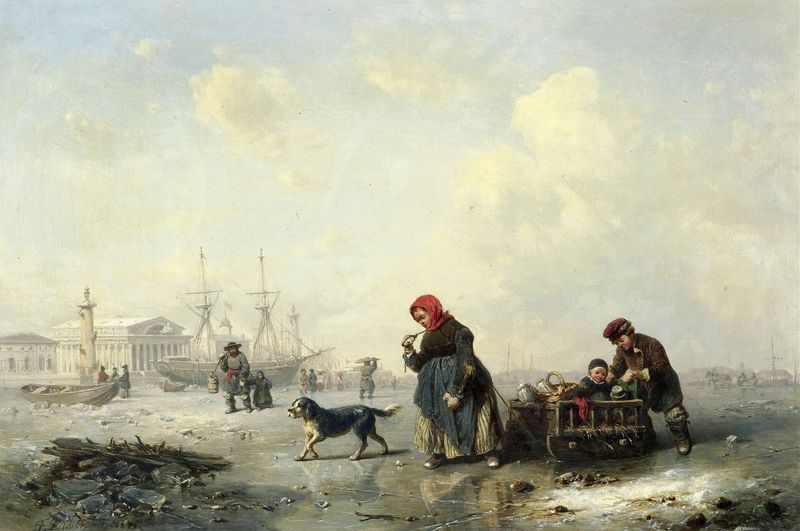
Could beauty survive in a century of chaos? Look to the delicate strokes of icy blue and pristine white, where the Neva River unfurls beneath a blanket of snow. Notice how the soft contours of the landscape cradle the city, merging the frosty waters with the majestic architecture of St. Petersburg.
The subtle play of light dances across the canvas, illuminating the fragile beauty of winter, while clouds loom overhead, hinting at a tempestuous history yet to unfold. The composition invites contemplation, with the skyline elegantly framed against the serene flow of the river. A stark contrast emerges between the tranquility of the scene and the potential tumult that lies beneath its surface. The artist’s choice of color, especially the interplay of whites and grays, evokes a sense of stillness, while the distant hint of warmer hues teases the promise of hope amidst the cold.
Each brushstroke carries with it the weight of a city and a moment suspended in time. Theodor Hildebrandt painted this piece in 1844, a time when Russia was experiencing significant social and political upheaval. The artist was deeply engaged with themes of national identity and the relationship between humanity and nature. Living in St.
Petersburg, he captured not just a winter scene but a reflection of a society poised on the brink of change, where the serenity of the landscape belied the unrest simmering just out of sight. In this work, Hildebrandt encapsulated a complex narrative of resilience and beauty amid the chaos of history.