The Northern Whale Fishery; The ‘Swan’ and ‘Isabella’ — History & Facts
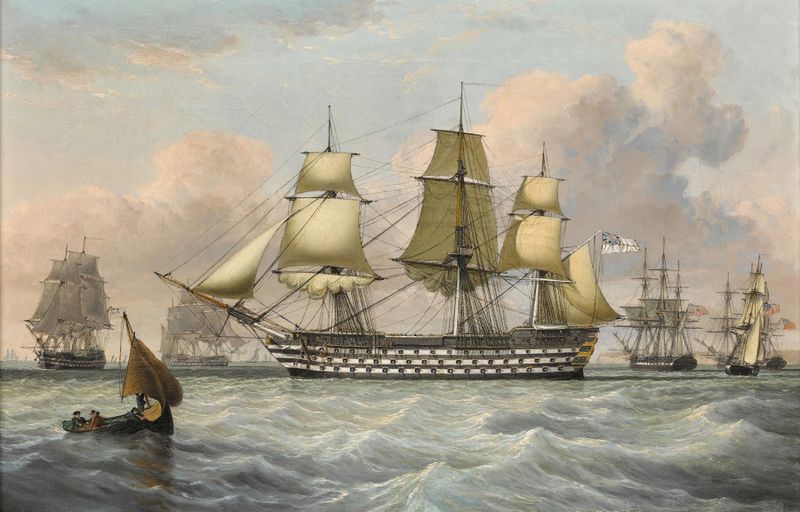
Can paint confess what words never could? In the tumultuous depths of the sea, a hidden madness brews beneath the surface, framed in layers of reality and chaos. Look to the center, where the hulking vessels, the 'Swan' and the 'Isabella,' dominate the canvas, their sails taut against an unseen wind. The rich, dark hues of the ocean contrast sharply with the vibrant whites and blues of the ships, capturing the tension between man and nature. Notice how the swirling waves, in their frothy turmoil, almost seem to echo the frantic energy of the fishermen—each brushstroke a testament to their struggle against the relentless sea.
The sky looms overhead, a tapestry of gray, suggesting both foreboding and possibility, as light dances precariously on the water’s surface. The painting wrestles with the duality of ambition and despair. The men’s fervent pursuit of the elusive whale speaks to an insatiable hunger—both for glory and the profound madness that lingers at the edges of their existence. The tension between the tranquility of the horizon and the chaos of the waves underscores the precarious balance between life and death, success and ruin.
Each detail, from the men’s intense expressions to the monstrous presence of the whale lurking beneath, reveals a deeper commentary on humanity’s relentless quest for dominance over nature, often at great personal cost. In the early 1840s, Ward painted this work while residing in Hull, a bustling port town deeply intertwined with the whaling industry. The era was marked by both innovation and exploitation, as maritime ventures flourished amidst growing tensions in the art world surrounding realism. Ward's return to his nautical roots at this time reflects not only his personal experiences but also the broader cultural shifts as artists sought to capture the raw intensity of modern life.