The Nunnery Fahr near Zurich at the River Limmat — History & Facts
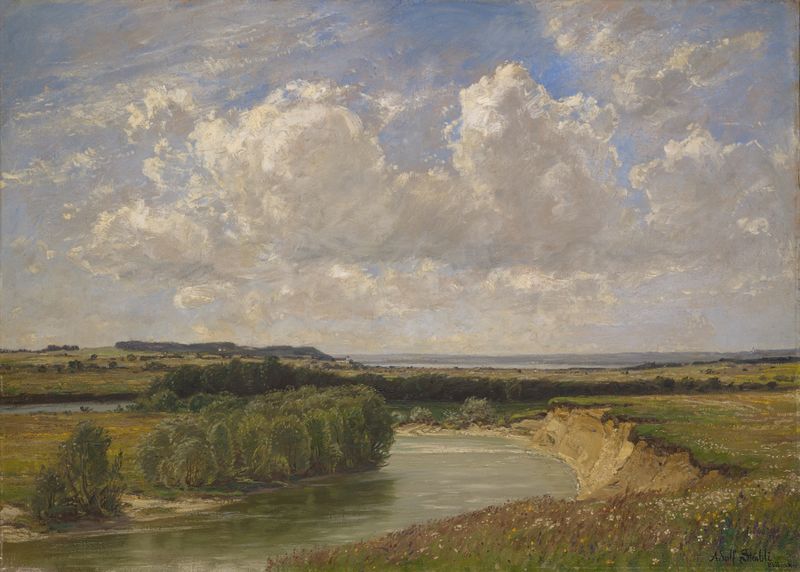
Did the painter know this moment would outlive them? The fragility of time is woven into the very fabric of The Nunnery Fahr near Zurich at the River Limmat, where stillness reigns, yet life pulses beneath the surface. Look to the center of the canvas, where the nunnery stands resolutely, its serene facade reflecting in the gentle ripples of the river. Notice how the soft hues of blue and green merge, creating a tranquil backdrop that invites contemplation. The brushstrokes are fluid yet deliberate, capturing the delicate interplay between light and shadow; the sun filters through the trees, illuminating patches of water with a shimmering gold that contrasts the cooler tones of the waterway. This scene encapsulates an emotional tension between permanence and transience.
The steady architecture of the nunnery suggests stability, while the flowing river symbolizes the relentless passage of time. Observe the figures in the foreground, seemingly absorbed in their world, embodying a moment of introspection against the backdrop of a landscape that has witnessed countless seasons. Each detail invites reflection on life’s fleeting nature and the quiet resilience that endures through change. In 1876, while painting this piece, Adolf Stäbli was immersed in the Swiss landscape, drawn to themes of tranquility and spirituality.
During this period, he was exploring the natural beauty of his homeland, seeking to capture the essence of still moments amidst an evolving world of art. This painting reflects his dedication to portraying the harmonious relationship between humanity and nature, a testament to the fleeting yet impactful moments that define existence.