The Ohio River near Wheeling, West Virginia — History & Facts
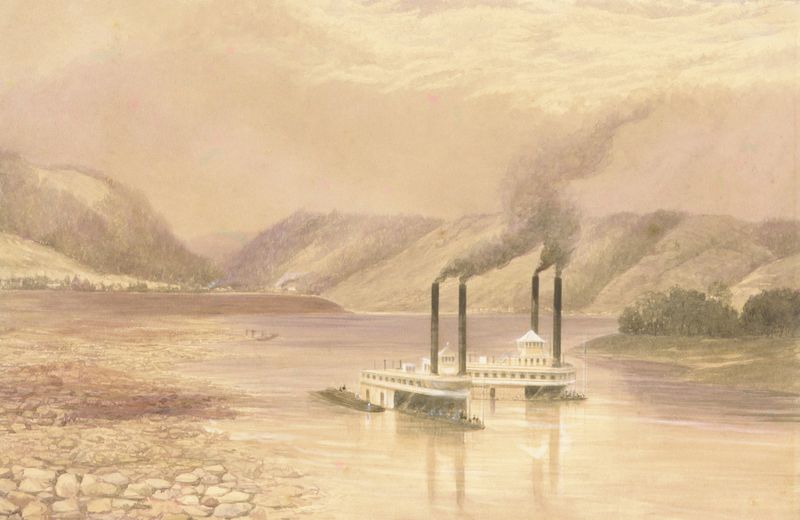
What if silence could speak through light? In The Ohio River near Wheeling, West Virginia, the stillness of the natural world seems to whisper secrets only the attentive can hear. Look to the center where the river unfolds like a shimmering ribbon under the gentle embrace of the sun. The soft hues of blue and gold reflect the sky's tranquility, creating a harmonious blend that invites the eye to drift along its surface. Notice the trees on the banks, their dark green foliage providing contrast against the luminous waters, acting as guardians of the serene landscape.
The delicate brushwork captures the ethereal quality of light filtering through the leaves, adding a tactile richness that pulls the viewer into this peaceful moment. Beyond its picturesque beauty lies a meditation on solitude and introspection. The calm river serves as a metaphor for the uncharted depths of one's thoughts, while the distant horizon hints at the journey ahead—both literally and figuratively. The juxtaposition of vibrant colors against muted tones evokes an emotional tension, inviting reflection on the contrasts between presence and absence, movement and stillness.
It’s a visual symphony where silence reigns, yet stirs the soul. Created between 1859 and 1860, the artist was immersed in the romanticism and realism that characterized American landscape painting of the period. Working during a time of great change in America, the tranquil portrayal of the Ohio River reflected both the natural beauty and the burgeoning industrial landscape that would soon alter the environment. Cranstone’s focus on light and atmosphere is a testament to his engagement with the evolving art movement, positioning him as a key figure in capturing the essence of American scenery.