The Ohio River near Wheeling, West Virginia — History & Facts
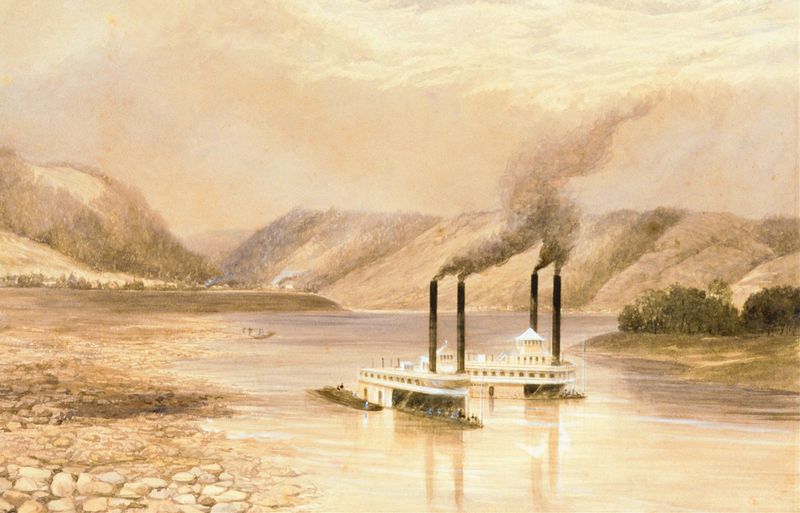
In the gentle sway of form and color, movement breathes life into stillness, capturing the essence of a moment that transcends time. Focus on the sweeping contours of the Ohio River as it meanders through the landscape, directing your gaze toward the shimmering water that glistens under the soft embrace of the afternoon sun. Notice how the vibrant greens of the lush banks contrast with the deep blues of the river, painting a vivid scene that invites contemplation. The brushwork flows with an almost palpable energy, suggesting both tranquility and the relentless current of nature’s passage. In the foreground, the interplay between light and shadow hints at a deeper narrative.
The ripples in the water symbolize the ceaseless movement of life, while the still trees stand sentinel, a contrast between the fluid and the fixed. It speaks to both the beauty and impermanence of the world, as if the artist is inviting viewers to reflect on their place within this vast, dynamic landscape. Lefevre James Cranstone painted this piece between 1859 and 1860 during a time of significant change in American art, as Romanticism was giving way to Realism. Residing in a country grappling with its own identity, he found inspiration in the natural beauty surrounding him.
The Ohio River near Wheeling serves not only as a geographic landmark but also as a representation of the spirit of exploration and the evolving relationship between man and nature.