
The Pond At Dusk — History & Facts
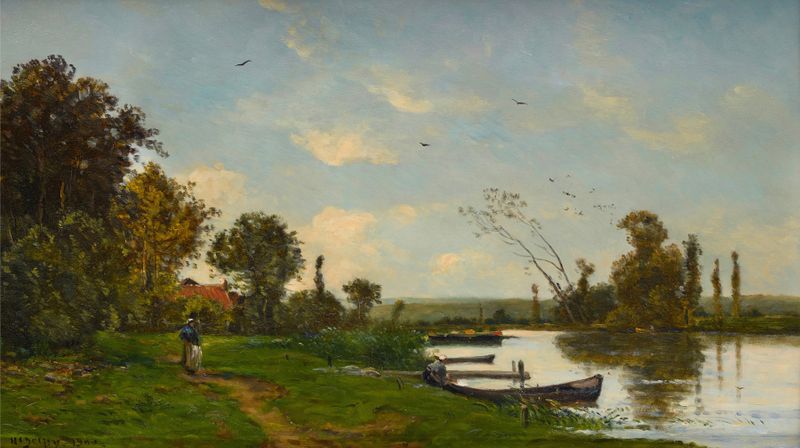
Is this a mirror — or a memory? In the shimmering twilight, the surface of the water in The Pond At Dusk reflects more than just the fading light; it captures the essence of hope that lingers in the air. Each brushstroke beckons the viewer to pause and consider the fleeting moments that shape our experience of nature and self. Look to the center of the canvas, where the pond lies, a serene expanse encircled by trees whose silhouettes dance gently against the dusky sky. The warm hues of orange and deepening blue intermingle, creating a harmonious yet poignant palette.
Notice how the edges of the water ripple softly, mirroring the colors above, suggesting an intimate connection between sky and earth. The artist’s technique, with its delicate layering, invites the eye to explore the tranquility of this enchanted moment captured in time. Yet, hidden within this calm facade is a tension that resonates deeply. The contrast between the vibrant colors and the encroaching darkness speaks to the balance of hope and uncertainty.
The ripples in the water, while beautiful, suggest movement and change — a reminder that as day fades into night, new possibilities arise. The looming silhouettes of the trees, cast against the soft glow, embody the insecurities and fears that often accompany transitions, hinting at the complexities of life itself. Hippolyte Camille Delpy painted this work during a time when he was influenced by the Impressionist movement, likely in the late 19th century. Living in Paris, he navigated the rapidly changing landscape of art, where traditional methods were giving way to exploration of light and color.
While exact dates of this piece remain uncertain, it reflects the artist's dedication to capturing the nuances of nature and the emotional undertones of a moment, a hallmark of his evolving style.
More Artworks by Hippolyte Camille Delpy
Browse all →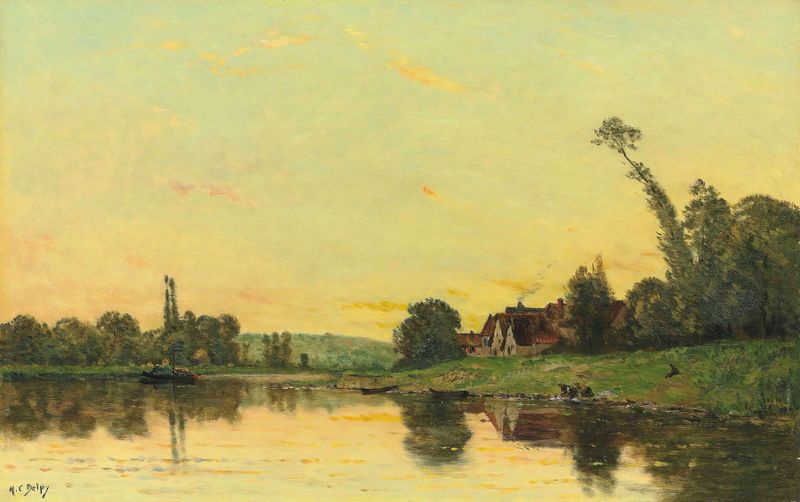
Soleil Couchant à Portejoie
Hippolyte Camille Delpy
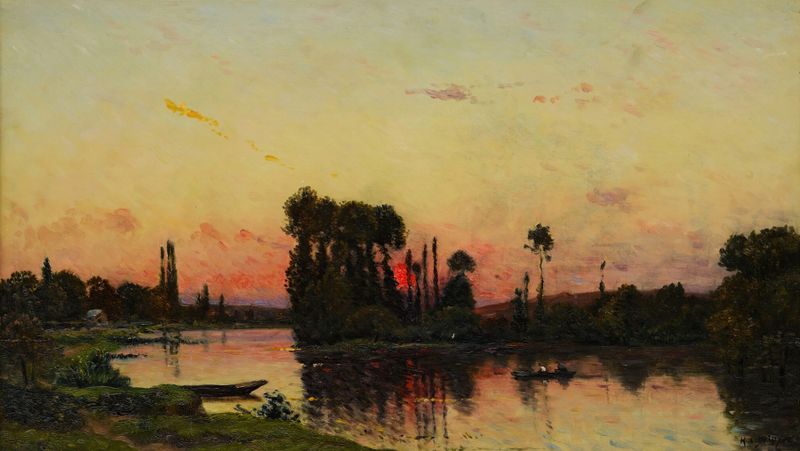
Coucher du soleil sur le rivage
Hippolyte Camille Delpy

Bord de la Seine à Rangiport, le matin
Hippolyte Camille Delpy

A river landscape at dusk
Hippolyte Camille Delpy
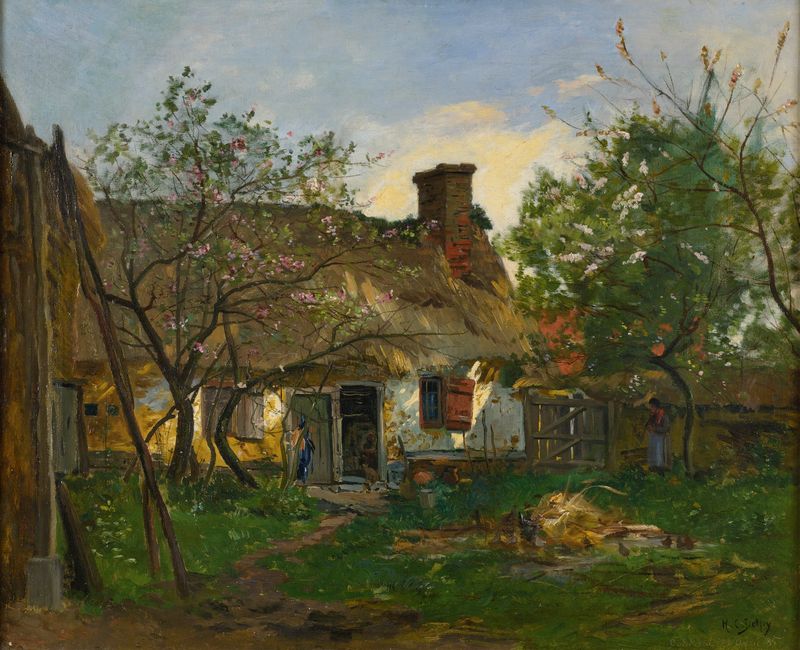
La Chaumiere à Berneval
Hippolyte Camille Delpy

Sunset
Hippolyte Camille Delpy
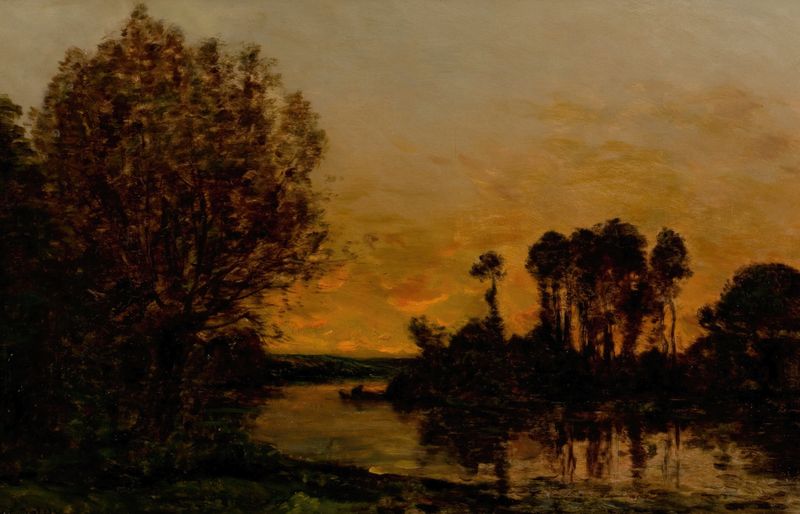
Un Soleil Couchant au Rive
Hippolyte Camille Delpy
A path along the river
Hippolyte Camille Delpy

Bateau Sur L’oise
Hippolyte Camille Delpy

Canal De Pantin
Hippolyte Camille Delpy





