
The road from Calcutta to Patna with an elephant and a camel — History & Facts
In the delicate interplay between man and beast, where the mundane is cloaked in the sacred, divinity whispers through the landscape. The journey depicted by the artist invites us to ponder the spiritual connections that bind us to nature and one another. Look to the left of the canvas, where the gentle curve of the road beckons the eye. Here, an elephant strides gracefully, its massive presence softened by the cool hues of twilight.
Next, direct your gaze to the right, where a solitary camel ambles along, embodying both solitude and strength. The palette harmonizes earth tones with bursts of vivid color, conveying a warm embrace of the setting sun that drapes the scene in both vibrancy and shadow. This careful orchestration of light and composition emphasizes the journey not just as a physical path, but as a metaphor for spiritual exploration. Within the scene, contrasting elements emerge: the grandeur of the elephant and the quiet endurance of the camel embody different aspects of divinity and life’s journey.
The road itself symbolizes a passage toward enlightenment, while the muted expressions on the travelers' faces evoke introspection and possibility. Such details whisper to us about the coexistence of power and humility in the natural world, carved out within this tranquil moment. Sir Charles D'Oyly created this work during a time when British artists were increasingly influenced by Indian landscapes and culture. His artistic endeavors in India, from the late 18th century into the early 19th century, were marked by a desire to capture the essence of the land and its people.
This period saw a growing appreciation for Eastern aesthetics among Western artists, as they sought to blend their artistic traditions with the rich tapestry of Indian life.
More Artworks by Sir Charles D'Oyly
Browse all →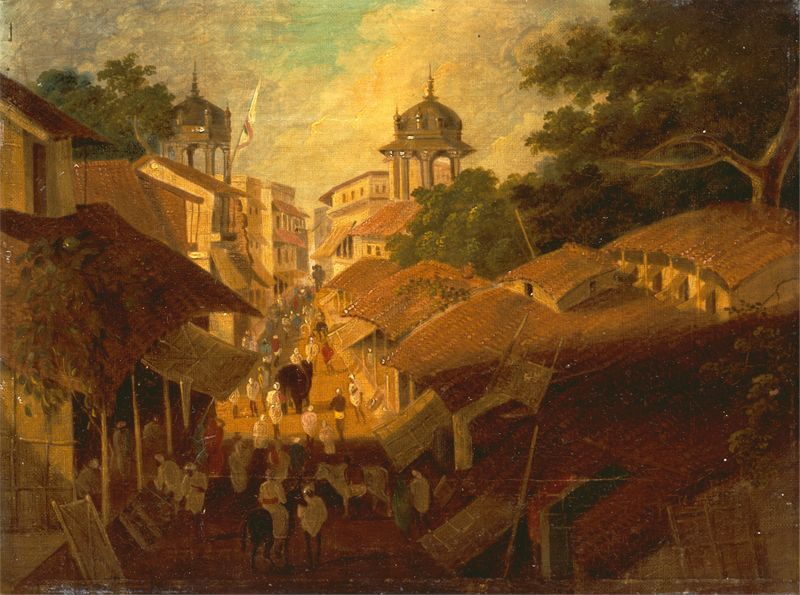
Street in Patna
Sir Charles D'Oyly
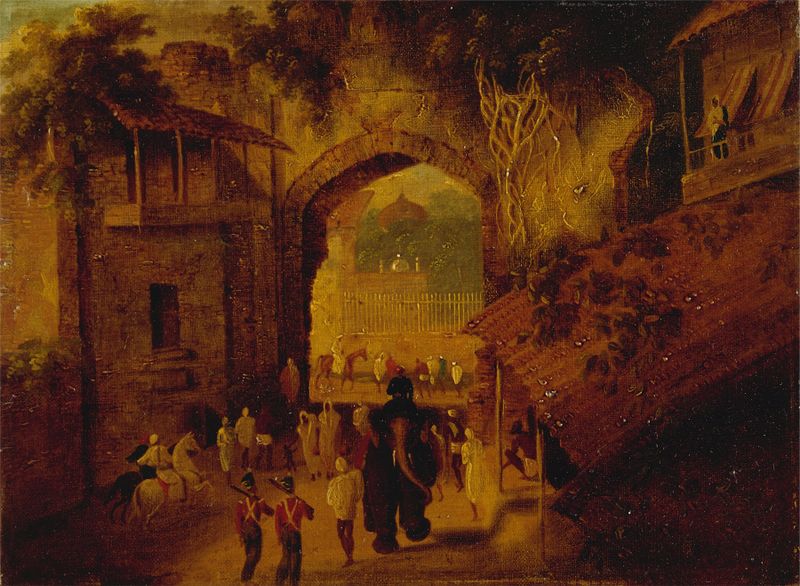
East Gateway, Patna
Sir Charles D'Oyly
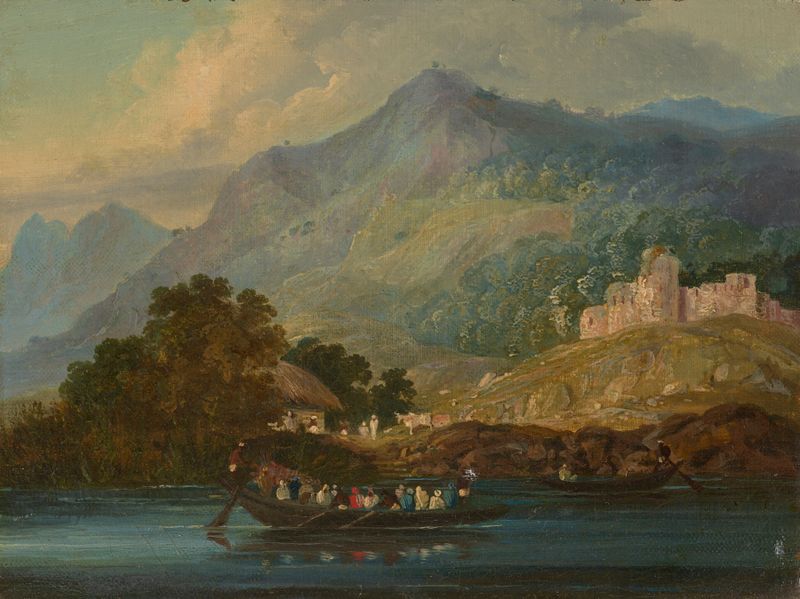
Hilly landscape with figures in a boat on the river Ganges
Sir Charles D'Oyly

The rock at Jahangira on the Ganges
Sir Charles D'Oyly
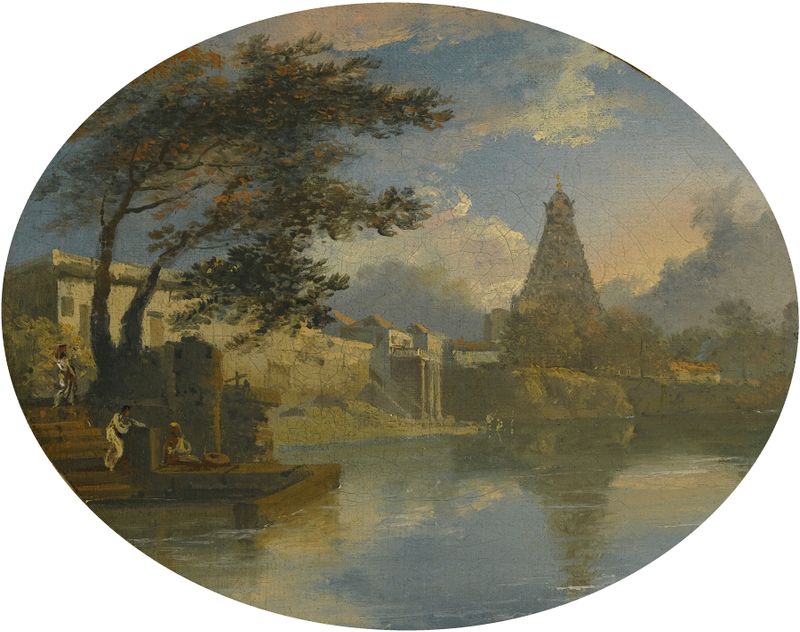
View Of Thanjavur, India, With The Brihadeeswarar Temple
Sir Charles D'Oyly
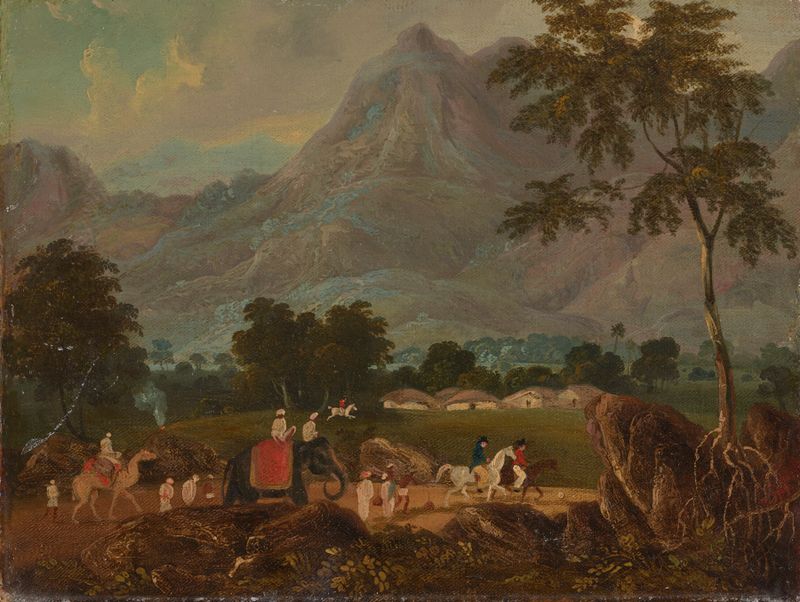
The road from Calcutta to Patna with an elephant and a camel
Sir Charles D'Oyly

The rock at Jahangira on the Ganges
Sir Charles D'Oyly
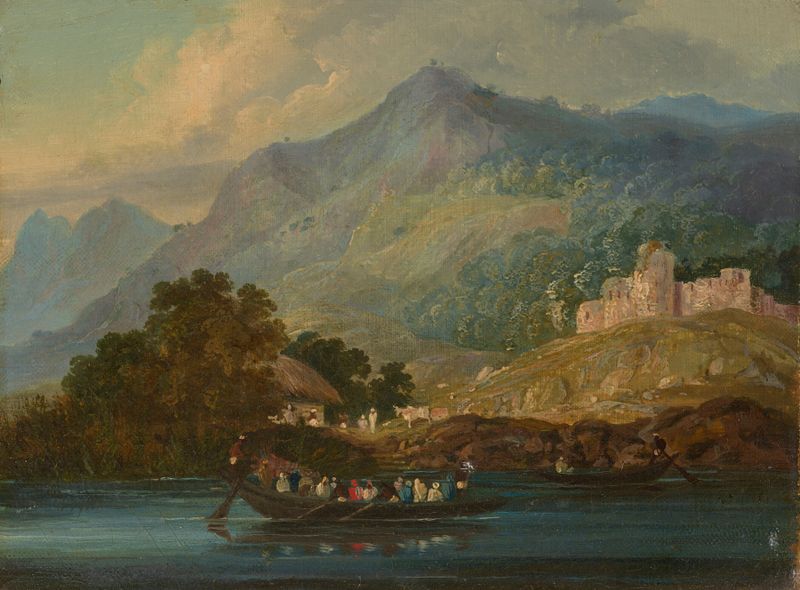
Hilly landscape with figures in a boat on the river Ganges
Sir Charles D'Oyly

An encampment at dusk
Sir Charles D'Oyly
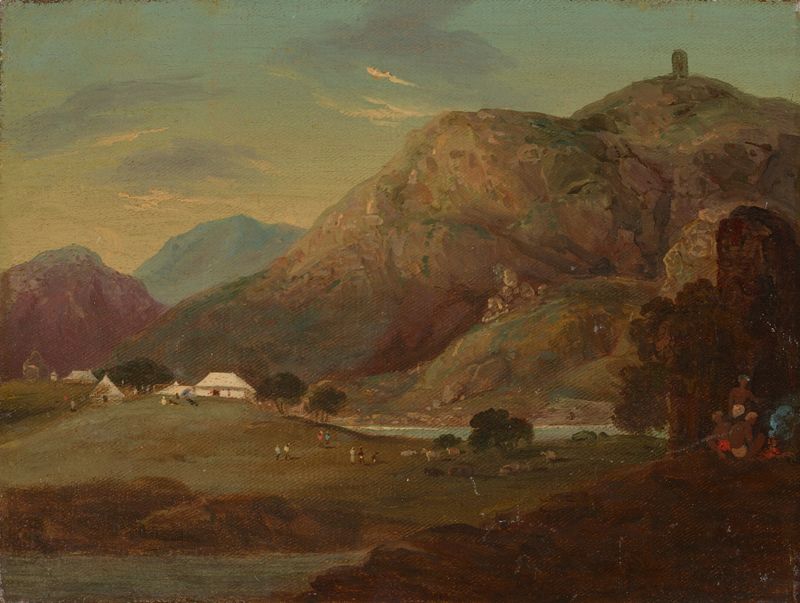
An encampment by a river at dusk
Sir Charles D'Oyly





