The Ruins of the Aqueduct Aniene Nuovo near Tivoli — History & Facts
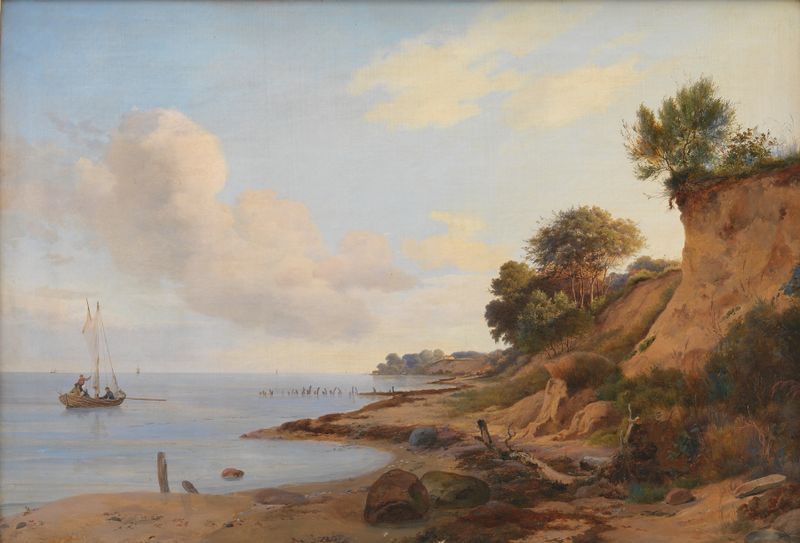
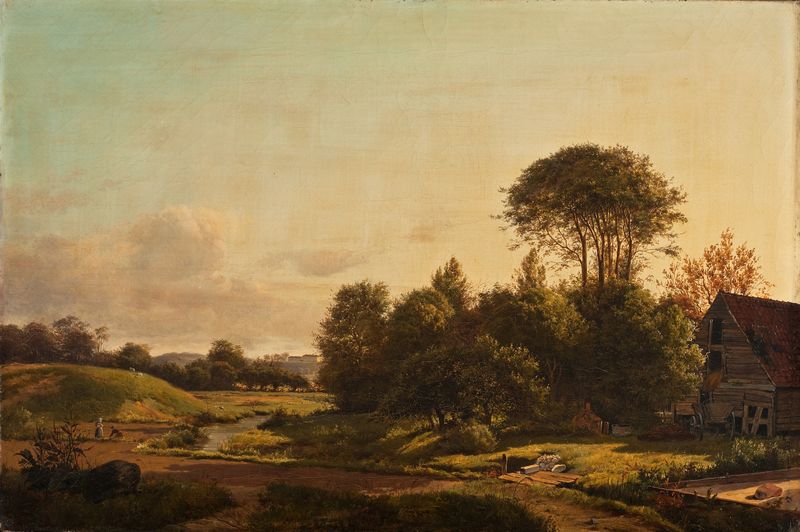
Who listens when art speaks of silence? In the stillness of The Ruins of the Aqueduct Aniene Nuovo near Tivoli, a haunting emptiness reverberates, inviting introspection and contemplation. Look to the left, where the weathered arches of the aqueduct rise majestically against a pale sky. Their crumbling stonework hints at a once-thriving structure now surrendered to nature's embrace. Notice the subtle shades of green and brown that permeate the landscape, contrasting with the cold gray of the ruins.
The artist employs delicate brushwork to capture the texture of decay, while soft light bathes the scene, evoking a sense of serene melancholy. As you explore the painting further, consider the juxtaposition of grandeur and desolation. The aqueduct, a symbol of human ingenuity, stands testament to both triumph and inevitable decline. Small figures in the foreground, dwarfed by the monumental ruins, evoke a profound sense of solitude, a reminder of humanity's transient existence.
This delicate balance between nature's reclamation and architectural legacy highlights the passage of time and the fragility of human endeavors. Anders Christian Lunde painted this work between 1842 and 1847, a period marked by a burgeoning interest in romanticism and the sublime within nature. Working in Italy, he sought to capture the essence of the ancient landscape, which was experiencing a revival of classical ideals. At this time, the art world was in flux, with artists like Lunde responding to the emotional depths of ruin and beauty, solidifying the evocative presence of decay in their works.