View Of Frederiksberg Palace From The Vicinity Of Ladegaardsvej — History & Facts
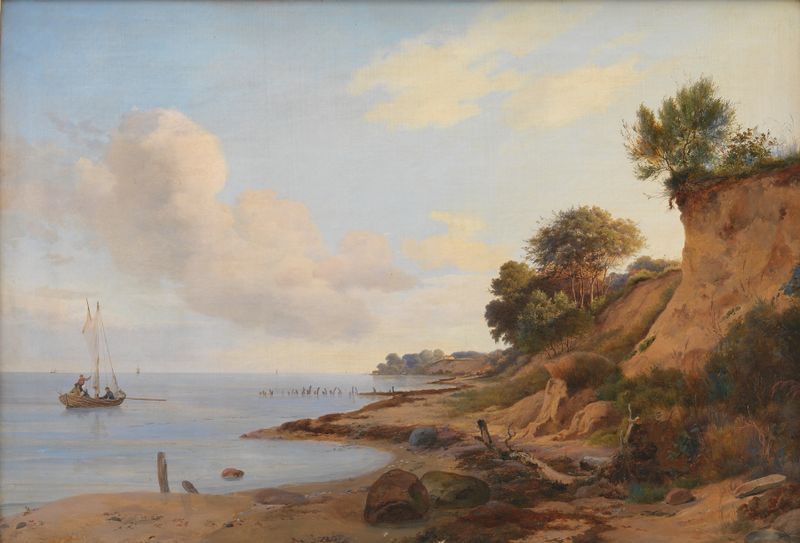
Can paint confess what words never could? In the stillness of Anders Christian Lunde's work, a profound silence speaks volumes, inviting contemplation in every brushstroke. Look to the center where Frederiksberg Palace rises majestically against a backdrop of soft clouds and gentle hues. The lush greenery surrounding the palace, rendered in rich greens and muted browns, directs your gaze to the architectural grandeur that looms above. Notice how the sunlight bathes the palace's façade, illuminating its intricate details while casting elongated shadows that dance across the ground, creating a dynamic interplay between light and form. As you delve deeper, observe the quiet tension between nature and man-made structures.
The serene landscape evokes a sense of calm, yet the presence of the grand palace hints at human ambition and the complexities of power. The gentle curves of the trees frame the palace, suggesting a harmony between civilization and nature, yet there's an underlying suggestion of distance, an emotional chasm between the two realms. This duality invites viewers to reflect upon the weight of history and the passage of time. Lunde painted this piece in Copenhagen during 1839-1840, a period marked by a burgeoning interest in Romanticism across Europe.
At this time, the artist was immersed in a vibrant cultural milieu, reflecting a growing appreciation for landscape painting and the exploration of personal and national identity. This work embodies not only Lunde’s artistic development but also captures the essence of a city steeped in history, positioned at the crossroads of nature and civilization.