
The Scuola di San Marco, Venice — History & Facts
Did the painter know this moment would outlive them? In the cacophony of Venice, where water and light dance in eternal chaos, the essence of history pulses through The Scuola di San Marco. Look to the left, where the intricate façade of the building stands prominently against a backdrop of vivid azure skies. Notice how the artist expertly employs light, illuminating the ornate details of the architecture, while shadows hint at the mysteries hidden within. The delicate balance of warm ochres and cool blues gives life to the scene, drawing your eye along the flowing lines of the architecture that cradle the heart of Venice. Yet, beneath this seemingly serene spectacle lies a tumult of emotions.
The juxtaposition of solid stone against the fluidity of the water suggests a tension between permanence and transience—an echo of the city’s fragile existence. Small figures in the foreground bustle about, their hurried movements contrasting sharply with the grandeur of their surroundings, reminding us of the continuous cycle of life amidst chaos, where every passing moment holds a story untold. In 1830, while capturing this essence, the painter was immersed in the rich artistic traditions of Venice, experiencing a period that celebrated the city’s cultural legacy. The romanticism of the time infused his work with a yearning for beauty amidst the chaos of societal changes.
As industrialization began to ripple through Europe, Joyant's brush sought to immortalize the timeless elegance of a Venice that stood on the brink of transformation.
More Artworks by Jules-Romain Joyant
Browse all →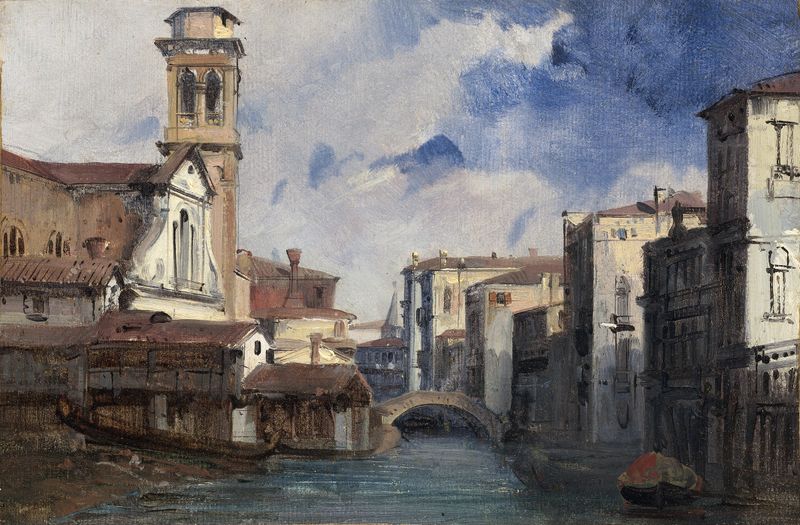
More Architecture Art
Browse all →
The statue of Liberty
Frédéric Auguste Bartholdi

View of Houses in Delft, Known as ‘The Little Street’
Johannes Vermeer

View of Houses in Delft, Known as ‘The Little Street’
Johannes Vermeer

The Cathedral in Rouen. The portal, Grey Weather
Claude Monet

The yellow house
Vincent van Gogh

The Church in Auvers-sur-Oise, View from the Chevet
Vincent van Gogh