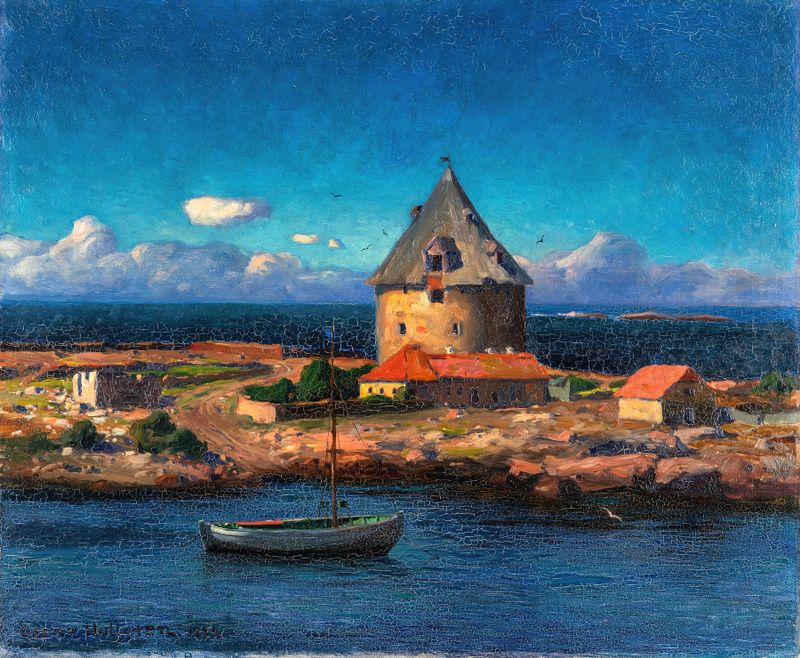
The Sea Near Christiansø — History & Facts
In the quiet realm of creation, it becomes a vessel for truth, reflecting the emotions and thoughts of the artist onto its surface. Each stroke, a whisper; each color, a heartbeat. What stories lie beneath the paint, eager to be unveiled? Look closely to the left at the delicate interplay of blues and greens that dance together, embodying the restless spirit of the sea.
The horizon stretches across the canvas, inviting the eye to wander towards a distant, serene paradise. Notice how the brushwork captures the movement of the waves, with soft, sweeping strokes transitioning seamlessly from stillness to vigor. The gentle gradient of the sky, transitioning from a pale cerulean to deeper azure, evokes a sense of tranquility, punctuated only by the occasional splash of white, hinting at the energy just beneath the surface. Beneath this serene facade lies a deeper tension — the interplay between chaos and calm.
The tumultuous sea reflects the artist's internal struggles, suggesting a longing for peace amidst the unpredictability of life. Additionally, the absence of human figures creates a haunting solitude, echoing the isolation often felt in moments of creation. Yet, the painting also speaks to possibility, as the vastness of the ocean invites contemplation of journeys yet to be taken. In 1935, Oscar Hullgren painted this evocative piece during a period of personal exploration and artistic experimentation.
Living in Sweden, he was influenced by the vibrant art movements of his time, seeking to capture a connection to nature that resonated deeply within him. As both an artist and observer, he was part of a broader dialogue about the role of landscape in expressing human emotion, a theme that would come to define much of his work.