The South West Wind, Gorleston — History & Facts
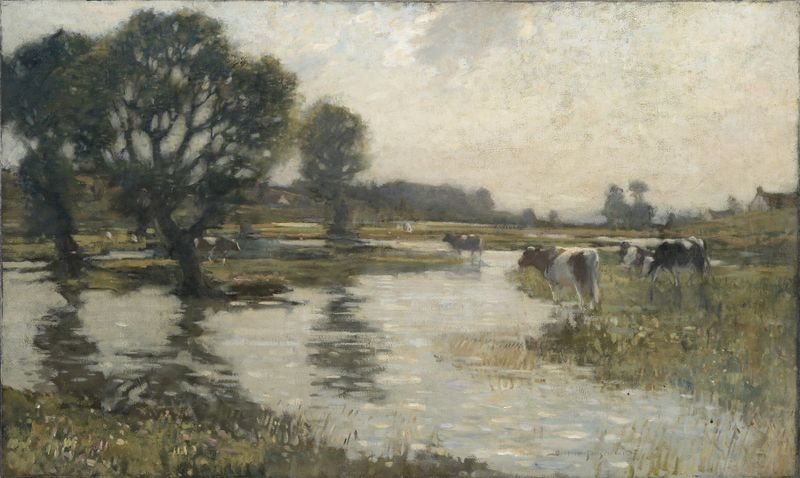
In The South West Wind, Gorleston, the stillness of nature whispers of silent forces, inviting contemplation and introspection. Look to the lower left corner where the restless waves churn and foam with a sense of urgent energy. From there, your gaze should drift upward, tracing the intricate dance of clouds painted with soft grays and whites, merging seamlessly into the horizon. Notice how the muted palette evokes a tranquil mood, while the brushstrokes create a rhythmic undulation, suggesting the wind’s invisible caress upon the seascape. Within this serene canvas lies a tension between chaos and calm.
The waves crash wildly, yet the overall composition maintains an alluring balance, embodying the calm before a storm. Delve into the interplay of light—subtle glimmers on the water's surface mingle with shadows cast by the clouds, hinting at nature’s duality. Each stroke conveys emotion, revealing the artist's quest for harmony amidst tumult, as if he captures a moment suspended in time. In 1920, Bertram Priestman painted this piece while residing in England, a time when the art world was shifting toward modernism.
The aftermath of World War I lingered, influencing artists to seek solace in nature and evoke the sublime. Priestman, a member of the Royal Society of British Artists, focused on landscapes that reflected both beauty and the underlying emotions of the era, seeking to communicate the power and serenity of the natural world through his art.