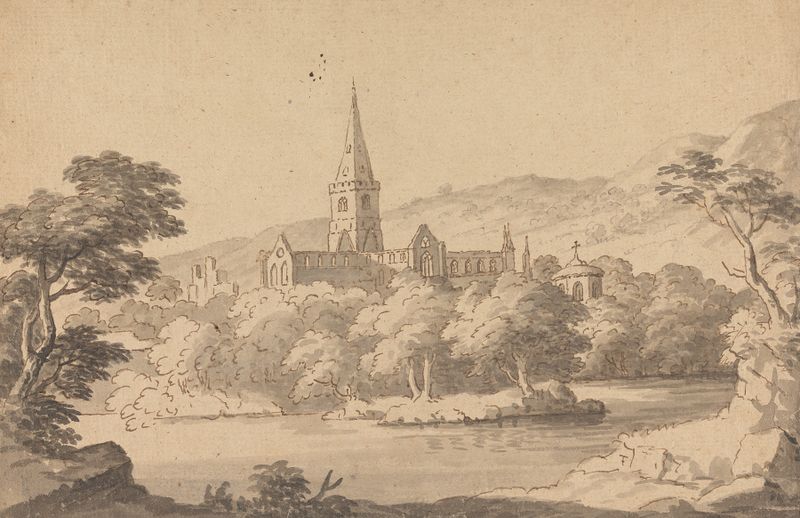
The Southeast view of Rose Castle in Cumberland — History & Facts
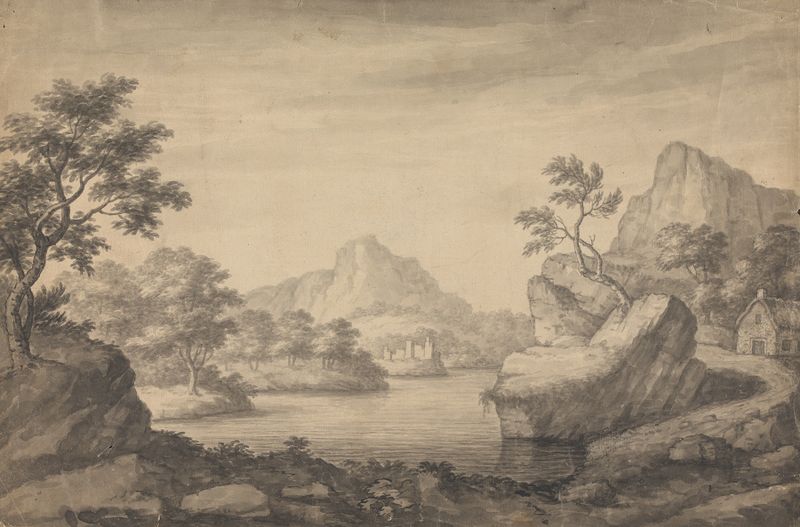
Could a single brushstroke hold eternity? In The Southeast view of Rose Castle in Cumberland, movement flows through the landscape, capturing a moment that feels both serene and alive, inviting contemplation. Focus first on the gentle undulations of the hills, where each stroke of emerald and gold beckons the eye to explore the garden's edges and the castle’s stone façade. Notice how the sunlight dances across the rooftops, casting intricate shadows that lead your gaze toward the horizon. The meticulous attention to detail in the trees' delicate branches and the billowing clouds overhead creates a harmonious balance, evoking a sense of tranquility that contrasts with the energy of the natural world. Within the composition, there lies a juxtaposition between permanence and transience.
The sturdy structure of the castle represents stability and heritage, while the fluttering leaves and soft clouds remind us of the passage of time and the fleeting nature of beauty. This tension speaks to the artist’s understanding of the landscape as a living entity, one that breathes and adapts through the seasons. Each element, from the flowing river to the distant mountains, contributes to a greater narrative of coexistence and change. In 1765, Captain John Bernard Gilpin completed this work while navigating the realms of landscape painting in England, a period marked by a growing appreciation for the sublime beauty of nature.
As an artist who often painted en plein air, he was influenced by the Romantic movement that valued emotion and individual experience. His time at Rose Castle not only reflected his personal journey but also encapsulated a cultural shift towards a deeper connection with the natural world.