Church in a Landscape — History & Facts
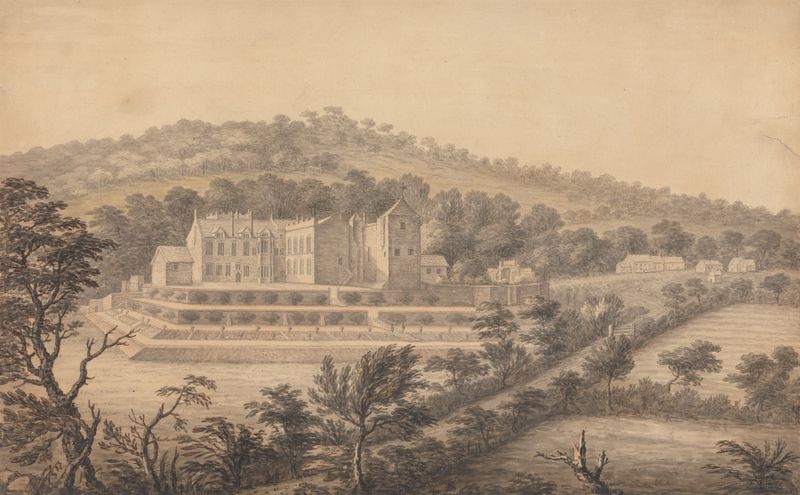
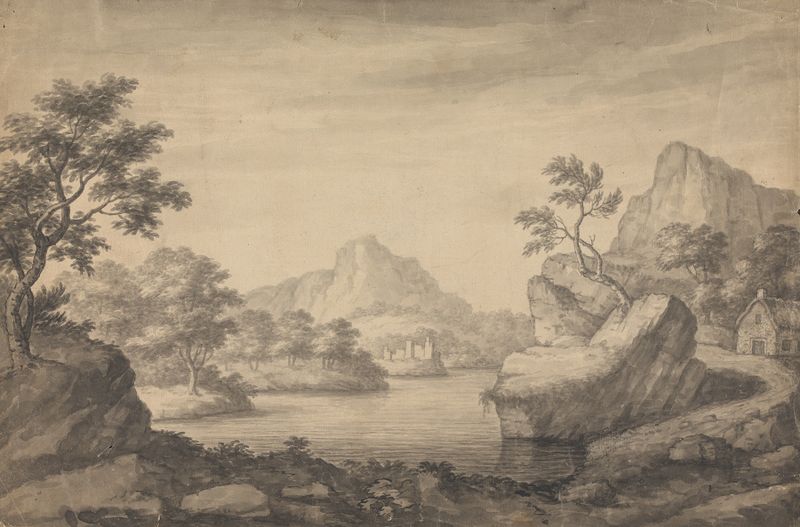
Could a single brushstroke hold eternity? In the stillness of Church in a Landscape, an expansive silence envelops the viewer, inviting contemplation. The vastness of the landscape, punctuated by the serene church, speaks volumes without uttering a word. Look to the horizon, where soft hues of green and earth meet a delicate sky tinged with pastel shades. Notice how the church, rendered with gentle precision, stands steadfast amidst the rolling hills.
The artist employs a subtle interplay of light and shadow, allowing the warm glow of the setting sun to caress the structure, while the cooler tones of the landscape breathe life into the scene. Each stroke is meticulously crafted, inviting the eye to roam the canvas and embrace the tranquil reverie. Within this pastoral setting lies a delicate tension between the earthly and the divine. The church, a symbol of faith and solace, contrasts sharply with the expansive, untamed nature surrounding it, suggesting a dialogue between humanity and the divine.
The stillness of the scene evokes a sense of solitude, yet the vibrant hues hint at the promise of renewal and peace, revealing layers of emotional depth in simplicity. In his career, the artist painted Church in a Landscape during a period rich with Romantic ideals. Set in the 19th century, the work reflects a time when artists sought to capture nature’s beauty and its spiritual significance. With an emphasis on landscape painting, he embraced the emotional resonance of the world around him, capturing the essence of both the church and its surrounding environment amidst a shifting art landscape.