The Spanish Armada off the English Coast in 1588 — History & Facts
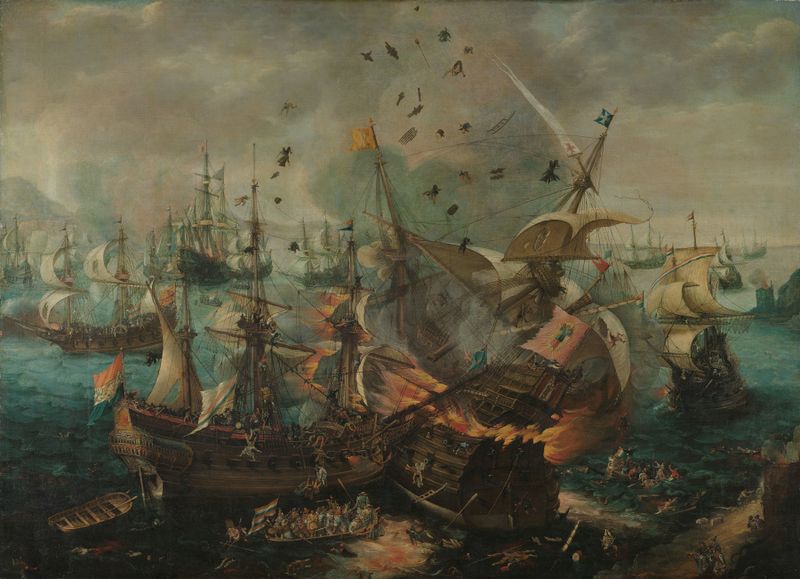
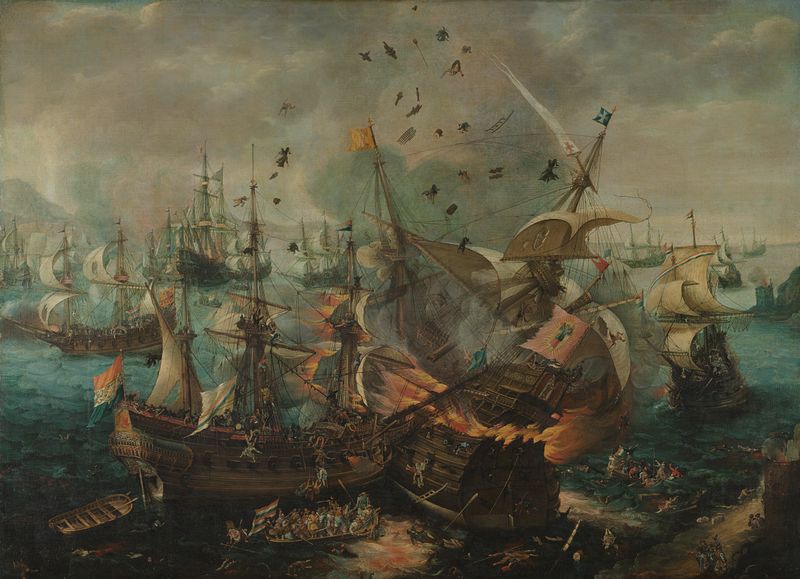
What secret hides in the quiet of the canvas? A fragile moment captured between power and vulnerability, where the weight of history feels almost tangible. Look to the horizon, where ships pepper the sea like fallen leaves on a vast, blue canvas. The sprawling clouds above, a mix of greys and whites, create a sense of foreboding while the sunlight spills across the water, illuminating the intricate details of the vessels. Notice how the artist captures the movement of the waves, swirling with both anticipation and turmoil.
Each ship, rendered with precision, evokes a unique narrative of its crew, caught in the balance of hope and fear on the cusp of a monumental clash. The composition here reveals contrasting themes: the grandeur of the Armada against the backdrop of the English coast embodies both ambition and impending doom. The stillness of the water belies the chaos ready to unfold, emphasizing the fragility of peace in the face of looming conflict. Small figures aboard the ships hint at human stories — warriors, traders, and navigators, each grappling with their destiny as they sail into uncertain waters. In the early 1620s, while Cornelis Claesz van Wieringen painted this piece, Europe was enveloped in the aftermath of the Thirty Years' War, reflecting political and social turbulence.
Living in Amsterdam, van Wieringen was part of a thriving maritime culture, where the memory of the Spanish Armada still resonated as a powerful symbol of struggle and resilience. This artwork not only represents a historical event but also mirrors the artist’s world, imbued with a sense of introspection and a reminder of humanity's delicate balance in the face of history's tides.