The Steps of Santa Maria della Salute — History & Facts
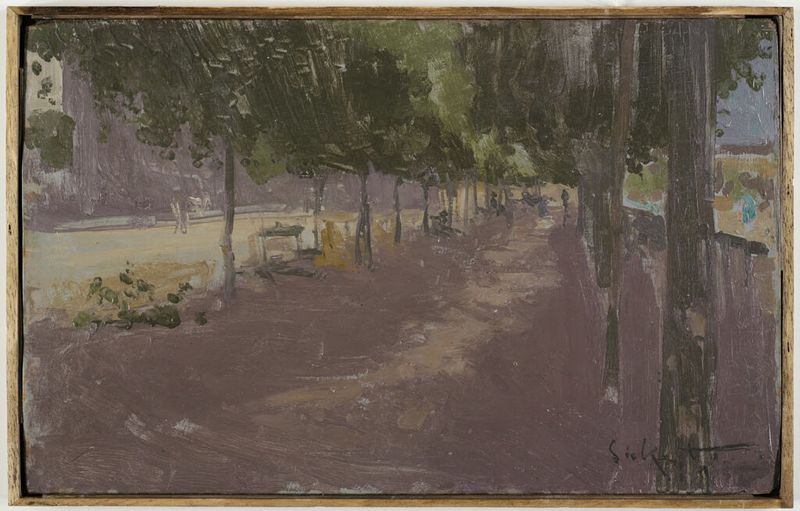
Could a single brushstroke hold eternity? In The Steps of Santa Maria della Salute, the act of painting becomes a doorway into a world where madness and beauty intertwine, inviting contemplation of both the chaos of the mind and the sanctity of the sacred. Focus your gaze on the foreground where a chaotic yet rhythmic swirl of figures ascends the grand steps. The somber palette of earthy browns and muted whites allows a palpable tension to resonate among the crowd, each brushstroke meticulously capturing hurried gestures and fleeting expressions. Notice how the light, barely filtering through the haze, bathes the scene in a ghostly glow, suggesting a deeper significance to their pilgrimage—an embodiment of human struggle against the vastness of the unknown. Amid the throng, contrasts emerge: the juxtaposition of the towering architecture against the frailty of the figures reflects the grandeur of faith against the madness of daily life.
The indistinct faces hint at universal experiences of longing and despair, suggesting the shared burdens of existence. Details like the worn edges of the steps evoke a history of countless journeys, underscoring the tension between the sacred space and the chaotic human experience that surrounds it. In the early 1900s, Sickert lived in London, immersed in a world grappling with modernity and its discontents. This period marked a significant evolution in his artistic style, influenced by his interest in depicting urban life and psychological depth.
While the world outside was succumbing to industrial madness, Sickert sought to encapsulate the serene yet tumultuous nature of human emotion, making this work a contemplation of both the sacred and the chaotic.