
Le Marché aux Bestiaux, Dieppe — History & Facts
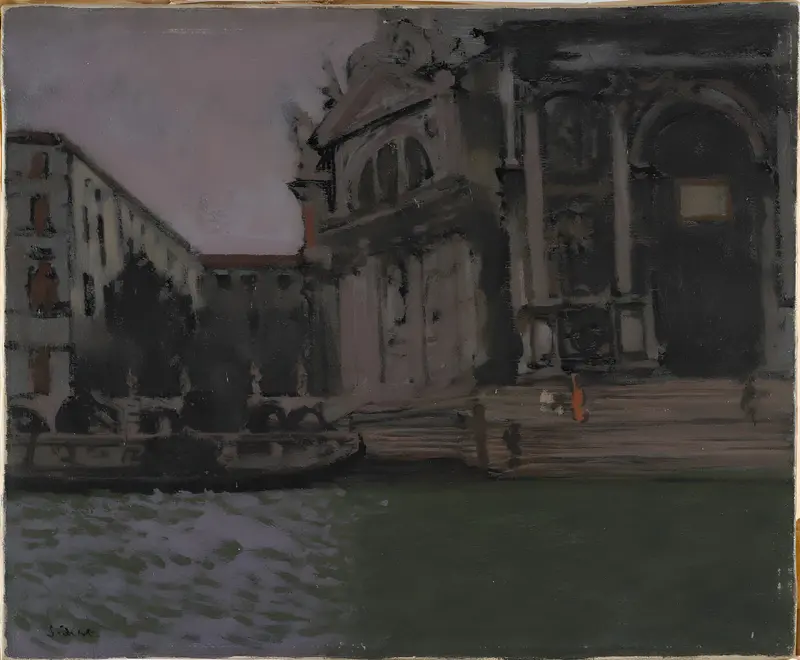
Is this a mirror — or a memory? In Le Marché aux Bestiaux, Dieppe, the boundaries between the past and present blur, inviting us to explore the essence of creation itself. Focus on the bustling market scene at the center of the canvas, where figures intertwine amidst vibrant hues of ochre and deep greens. Notice how the light filters through the canopy, casting intricate shadows that dance on the earth. The composition draws the eye to the varied expressions of the people, each revealing their own unique stories, while the lively clamor of livestock fills the air, almost audible within the painted confines. Beneath the surface, the artwork unfolds layers of meaning: the contrast between the serenity of the idyllic market and the underlying chaos of life.
The juxtaposition of movement and stillness suggests a fleeting moment captured for eternity, evoking the complexities of time and existence. The artist’s brushstrokes breathe vitality into every figure, while the colors resonate with the pulse of life itself. Each detail — from the weathered faces to the ruffled feathers of the animals — encapsulates the essence of creation and community. Walter Sickert painted this work around 1886 while living in Dieppe, a coastal town teeming with artistic potential.
At this time, he was becoming a prominent figure in the Impressionist movement, influenced by his experiences in London and Paris. The painting reflects not only his artistic evolution but also the vibrant social dynamics of the era, as markets became focal points of community life, filled with the hopes, struggles, and daily endeavors of ordinary people.
More Artworks by Walter Sickert
More Genre Scene Art

Banquet of the Officers of the St George Civic Guard
Frans Hals

Rembrandt and Saskia in the Scene of the Prodigal Son
Rembrandt van Rijn

Bal du moulin de la Galette
Pierre-Auguste Renoir

Quadrille at the Moulin Rouge
Henri de Toulouse-Lautrec

A Burial at Ornans
Gustave Courbet

When Will You Marry?
Paul Gauguin