The Thousand Guinea Match Between Henry Bradley’s Brig The Water Witch And Lord Belfast’s Schooner Galatea — History & Facts
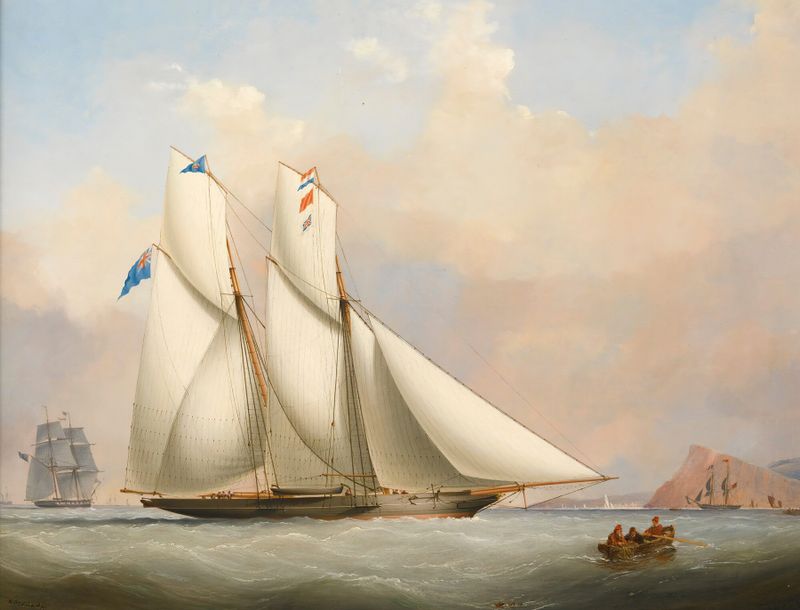
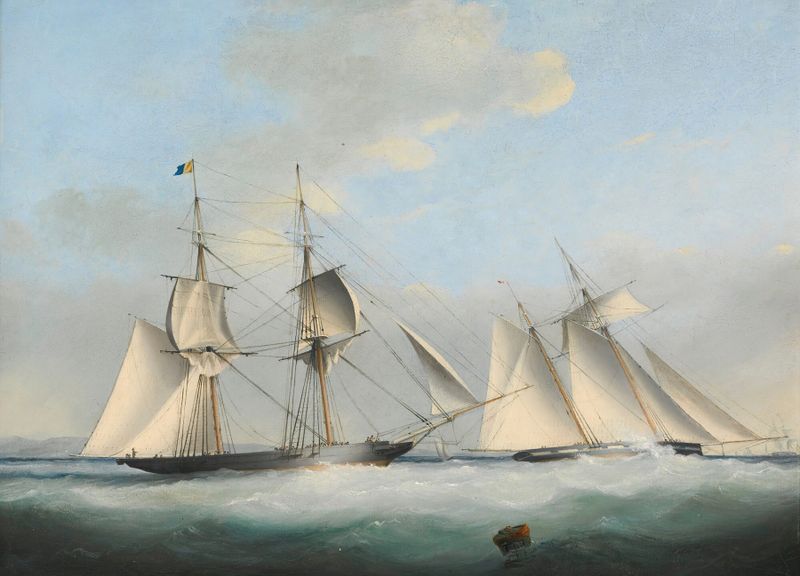
Who listens when art speaks of silence? In the midst of chaos, a calm unfolds, revealing the intricate dance of competition among great vessels at sea. Look closely at the horizon, where the sun pours golden light over the turbulent waters, illuminating the sails of two grand ships: Henry Bradley’s Water Witch and Lord Belfast’s Galatea. Notice the meticulous detail in the rigging, the tension in the ropes, and how the waves curl around the hulls, each brushstroke capturing not just the vessels, but the very essence of maritime struggle. The subtle blues and greens of the ocean contrast sharply with the bright whites and warm hues of the ships, embodying the dichotomy of chaos and order. Hidden within this tableau are layers of meaning.
The boats, locked in a race, symbolize ambition and rivalry, yet their placement in the painting conveys a sense of impending confrontation, tantalizingly close yet not quite explosive. Look for the scattered figures on deck, their gestures hinting at the frantic energy of the moment, while the expansive sky looms overhead, suggesting that nature itself is an uninvited participant in this clash of human will. Nicholas Matthew Condy created this work during a period when maritime exploration and competition were at their peak, likely in the early 19th century. Living in a time of burgeoning industrialism and naval advancements, he captured not just a race, but the spirit of an age defined by ambition and turmoil in the art world.
It reflects the romantic fascination with the sea, where chaos and beauty coalesce, inviting viewers to ponder their own narratives within this historical context.