
The Triumph of David over Goliath — History & Facts
What first seizes the eye in The Triumph of David over Goliath is the theatrical sweep of the landscape, a stage set for a drama of victory and spectacle. The painting draws you into a world where a single youth, almost lost in the grandeur of rock and sky, becomes the quiet center of a nation's jubilation. Light pours through a natural arch, spotlighting David as he strides forward, Goliath’s head in hand, while the crowds to the left erupt in music and dance.
The composition guides you from the shadowed, clustered onlookers to the sunlit hero, then outwards to the parade of soldiers and nobles on horseback, their banners unfurling against the vast blue. This is the world of the early seventeenth century, when artists like Adriaen van Stalbemt painted biblical triumphs not only as religious lessons but as celebrations of civic and personal virtue. Created between 1618 and 1619, this work belongs to a moment when collectors, often wealthy merchants or minor nobility, sought such scenes to adorn their homes—reminders of faith, courage, and the rewards of divine favor. The painting’s panoramic scale and intricate detail reflect the tastes of the era, when Flemish painters delighted in weaving together landscape, narrative, and pageantry.
History has kept few traces of this particular canvas’s early journey, but its survival in a major collection invites us to linger, tracing each figure and asking how victory and spectacle were imagined four centuries ago.
More Artworks by Adriaen van Stalbemt

Countryside landscape with staffage
Adriaen van Stalbemt
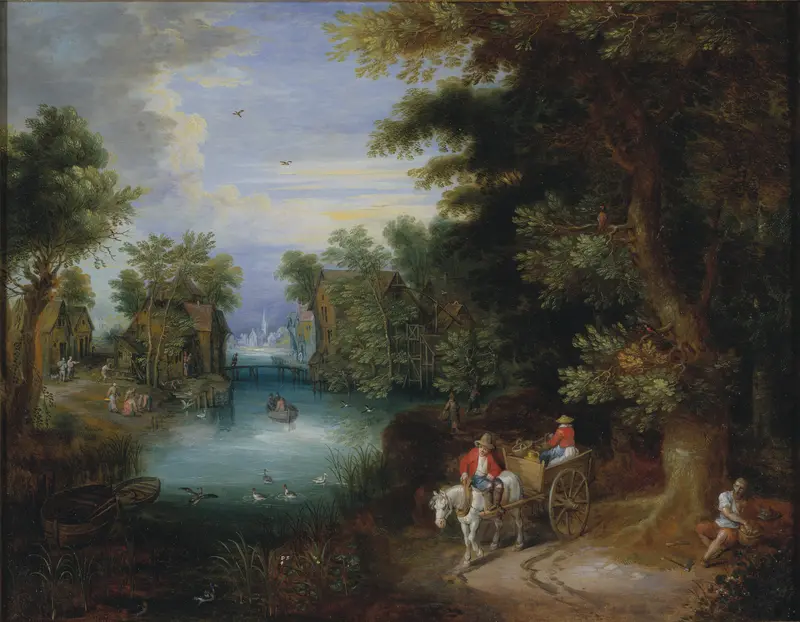
River Landscape with Peasants
Adriaen van Stalbemt
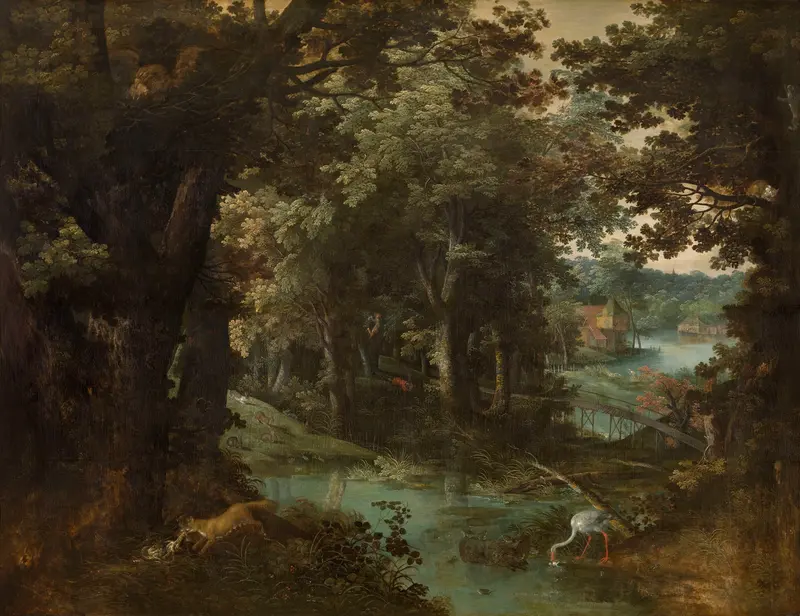
Landscape with Beast Fables
Adriaen van Stalbemt
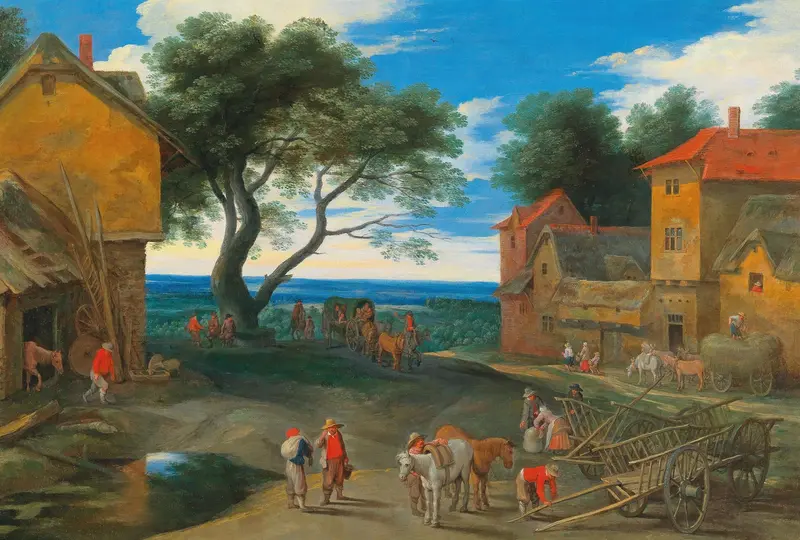
Travellers in a landscape with buildings
Adriaen van Stalbemt
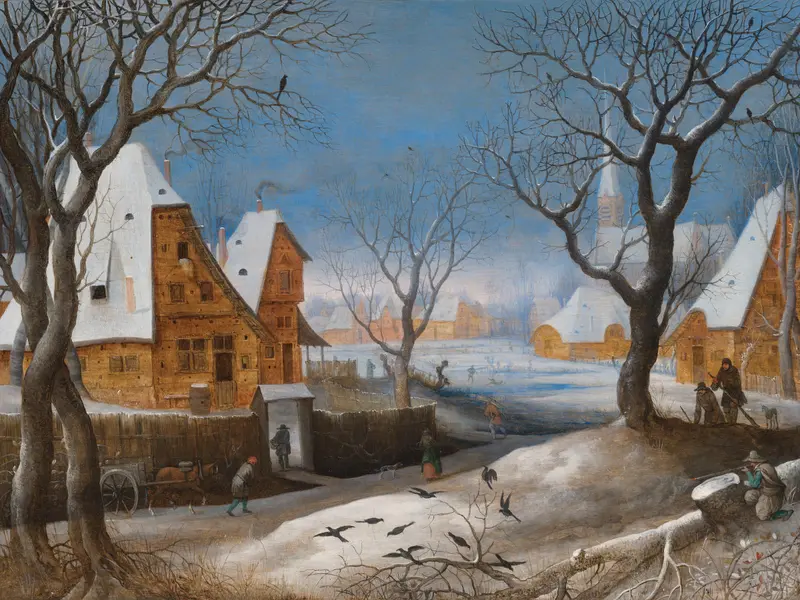
A winter landscape, with figures in a village
Adriaen van Stalbemt
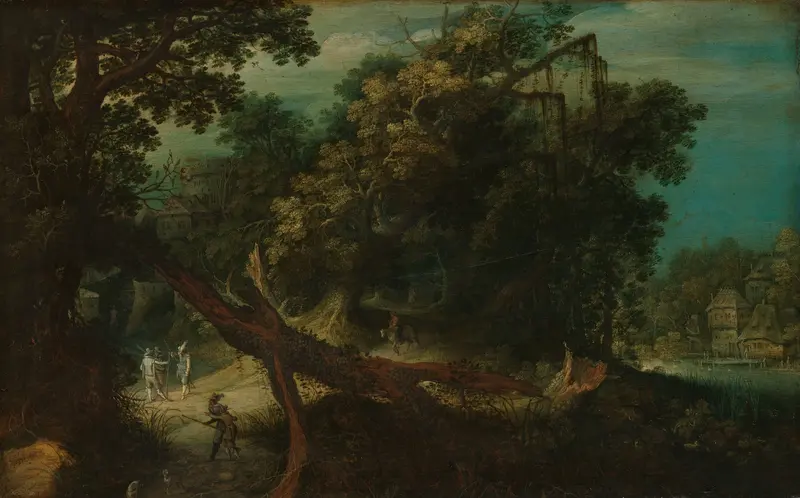
Shooters in a Forest Glade
Adriaen van Stalbemt
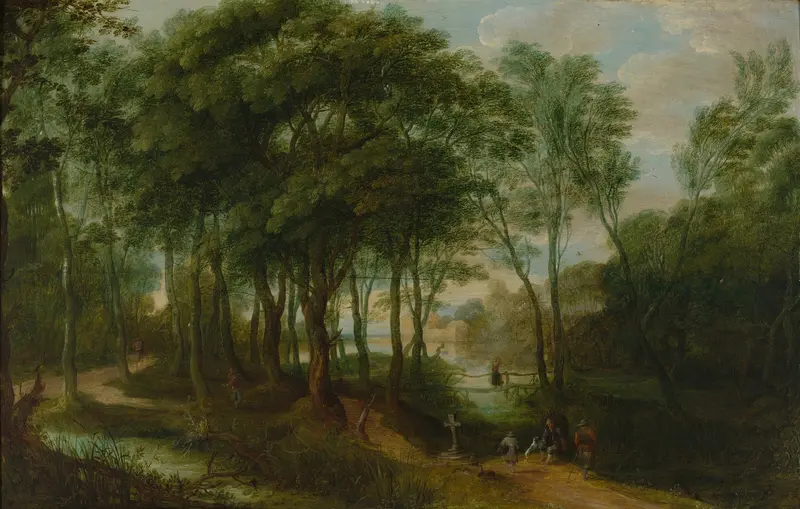
Figures On A Wooded Path, With A Building Behind
Adriaen van Stalbemt
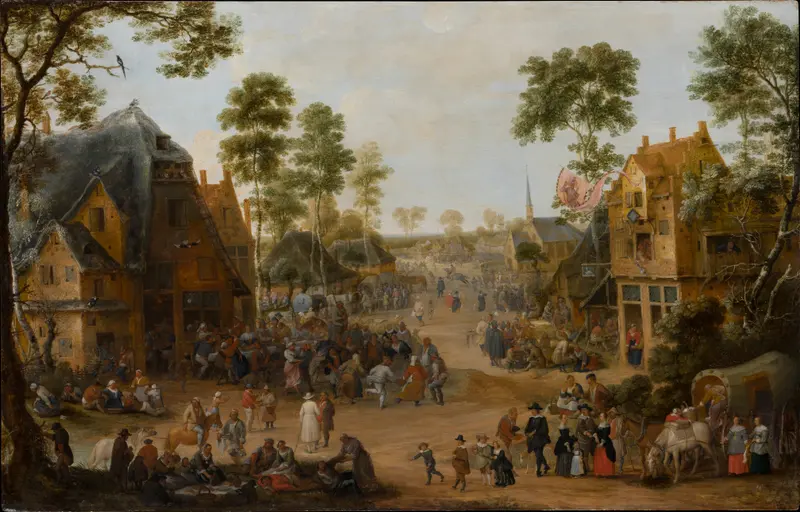
Village Church Festival
Adriaen van Stalbemt
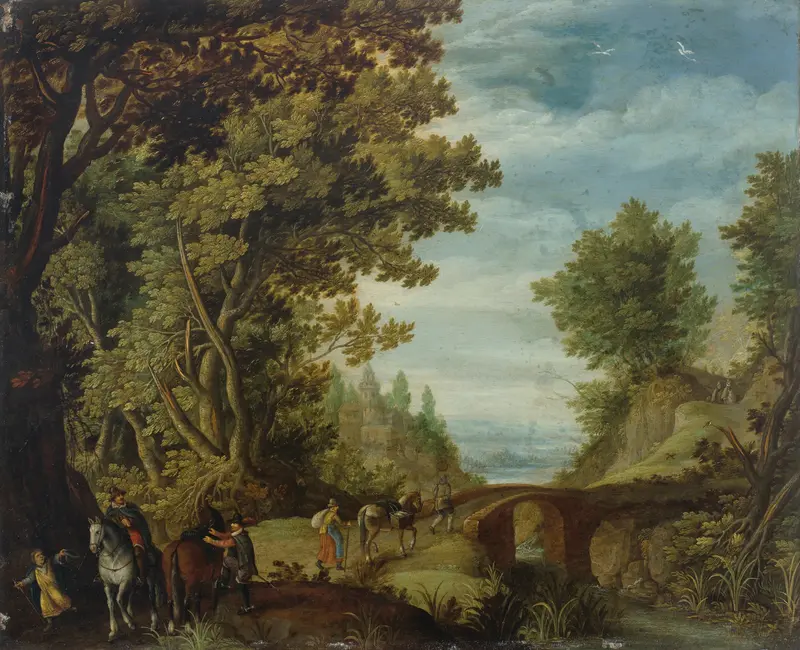
A wooded landscape with travelers crossing a bridge
Adriaen van Stalbemt
Landschap met rivier
Adriaen van Stalbemt





