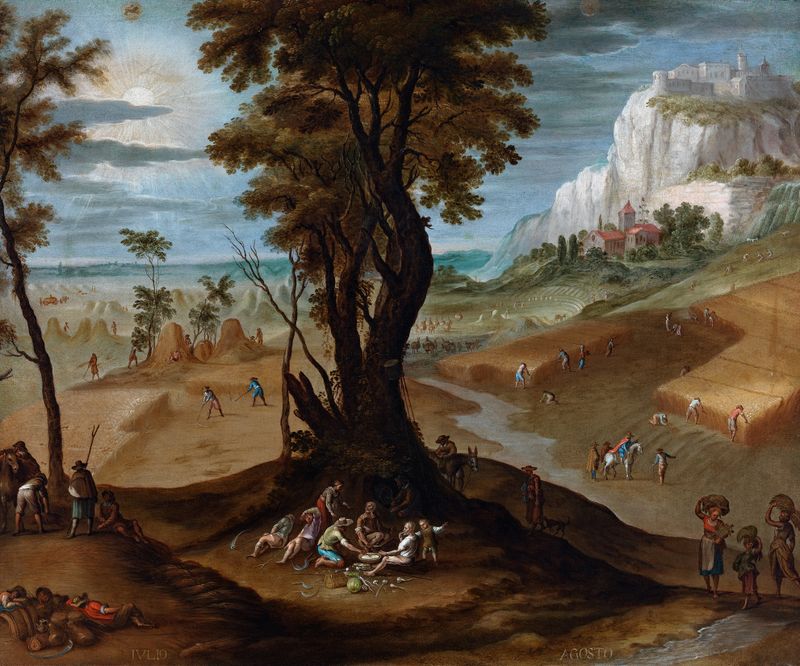
The Twelve Months of the Year, May-June — History & Facts
This thought echoes within the intricate layers of a masterful composition, where time and nature intertwine in a delicate dance. In The Twelve Months of the Year, May-June, the viewer is invited to explore a world that masks its truths beneath a surface of lavish detail and vibrant color. Begin by looking to the lush greenery that envelops the figures, the foliage bursting with life and vitality. Notice how the artist employs a palette of rich greens and soft pastels, drawing your eyes to the radiant flowers that bloom in abundance.
Each brushstroke weaves together a tapestry of nature's glory, yet the figures—the embodiments of May and June—stand poised in a moment that hints at both celebration and the ephemeral nature of time. Within this scene lies a duality. The joyous arrangements of fruit and flowers contrast sharply with the somber expressions of the figures, an unspoken tension that invites contemplation. Each detail, from the shimmering golds that seem to reflect light yet cast shadows, to the poses of the figures caught in a moment of reflection, subtly reveals the fleeting joy of life as it intertwines with the weight of inevitable change. Created in the second half of the 17th century, the artist painted this piece during a time when the Baroque period was flourishing, characterized by opulence and emotional depth.
Espinosa, immersed in this vibrant art scene, sought to capture the essence of seasons as metaphors for life’s cycles amidst the broader effects of societal change. The work stands as a testament to his mastery of illusion and the complexities of human experience.