The Twelve Months of the Year, July-August — History & Facts
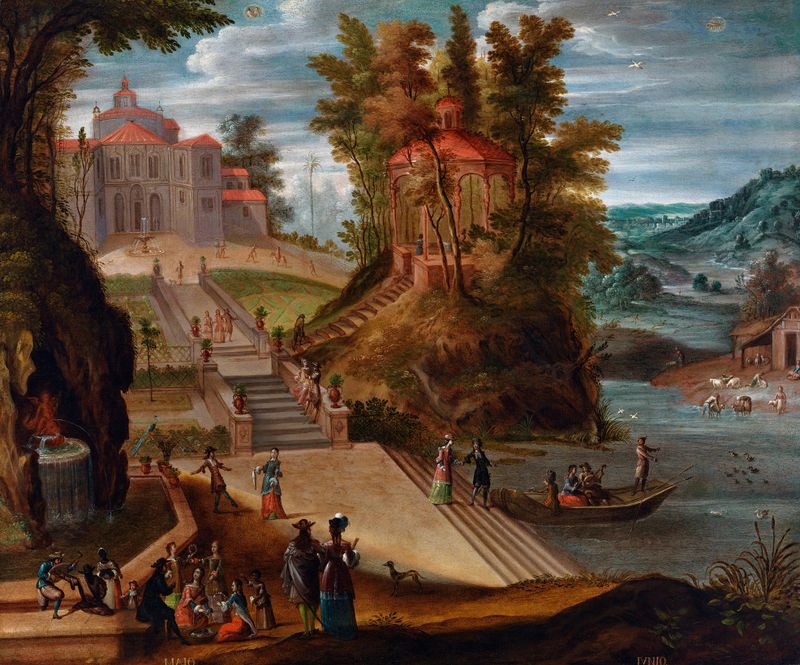
Can paint confess what words never could? In the vibrant interplay of color and detail, nostalgia is woven through every brushstroke, whispering secrets of time and memory. Look to the center of the canvas, where the figures of summer revel in the warmth of golden hues. A woman gathers ripe fruits, her gesture graceful yet purposeful, while children dance in the sun, laughter almost audible in the air. Notice how the light spills across their luminous skin, illuminating the joyous scene, contrasting with the deep, verdant greens of nature that envelop them, creating a gentle embrace of life and abundance. The two distinct months, July and August, bring forth a duality of emotion — celebration intertwined with fleeting moments of innocence.
The fruits laden in the woman’s basket symbolize the richness of summer's bounty, but they also evoke the transient nature of joy as the seasons shift. The children's play, innocent and carefree, holds an undercurrent of bittersweet remembrance, reminding us that such moments, while vivid, are ephemeral. Each element speaks to the heart's longing for the past, encapsulating the duality of joy and melancholy. Antonio de Espinosa painted this work in the second half of the 17th century, a time when Spain was experiencing cultural shifts amidst political decline.
This period was marked by a flourishing of imaginative expression in art, where the interplay of light and detail became paramount in storytelling. Espinosa's work captures not just the essence of the months, but also reflects a collective memory of a world in transition, a nostalgic snapshot of life’s fleeting beauty.