
The Water Reservoirs, the so-called Bends, in Belgrade Forest — History & Facts
Could a single brushstroke hold eternity? In The Water Reservoirs, the so-called Bends, in Belgrade Forest, the essence of rebirth unfolds through the interplay of nature and art. Look to the center where gentle ripples disrupt the surface of the water, reflecting a sky painted in soft pastels. The trees encircling the reservoir lean in, their verdant hues speaking of life and growth. Notice how the light filters through the foliage, dappling the landscape in warm tones, inviting the viewer to wander deeper into this tranquil setting.
Each stroke of the brush seems deliberate, creating a harmonious dialogue between the elements captured. Beneath this serene depiction lies a contrasting tension between stillness and movement, life and decay. The languid waters suggest an eternal cycle of rebirth, while the shadows cast by the trees hint at the impermanence of all things. The careful balance of dark and light in Vollerdt's composition serves as a reminder that beauty often coexists with the fragility of existence, inviting us to contemplate our own place within this cycle. Johann Christian Vollerdt painted this work between 1744 and 1763, during a time when European art was experiencing a shift towards the celebration of nature.
Living in Germany, he was influenced by the burgeoning Romantic movement, which would soon emphasize emotion and the sublime in art. In this period, he sought to capture the tranquility of the natural world, reflecting not only personal exploration but also a growing appreciation for landscapes in the art world.
More Artworks by Johann Christian Vollerdt
Browse all →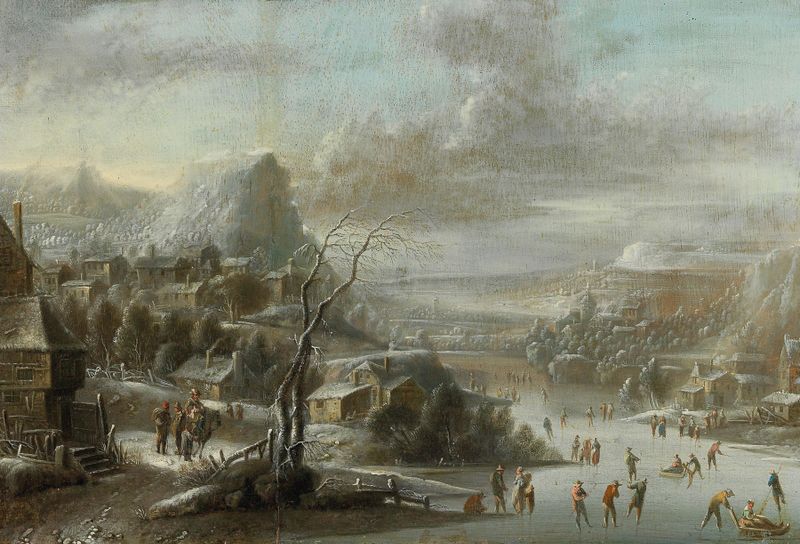
A winter landscape with skaters on a frozen river
Johann Christian Vollerdt
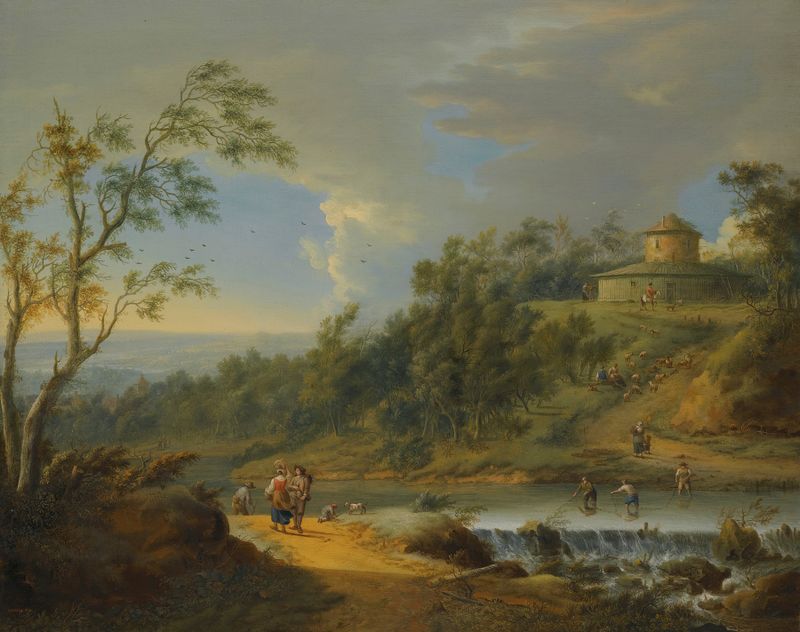
A River Landscape With Fishermen Dredging A Weir
Johann Christian Vollerdt

A River Landscape With Figures On The Bank And Sheep Grazing
Johann Christian Vollerdt
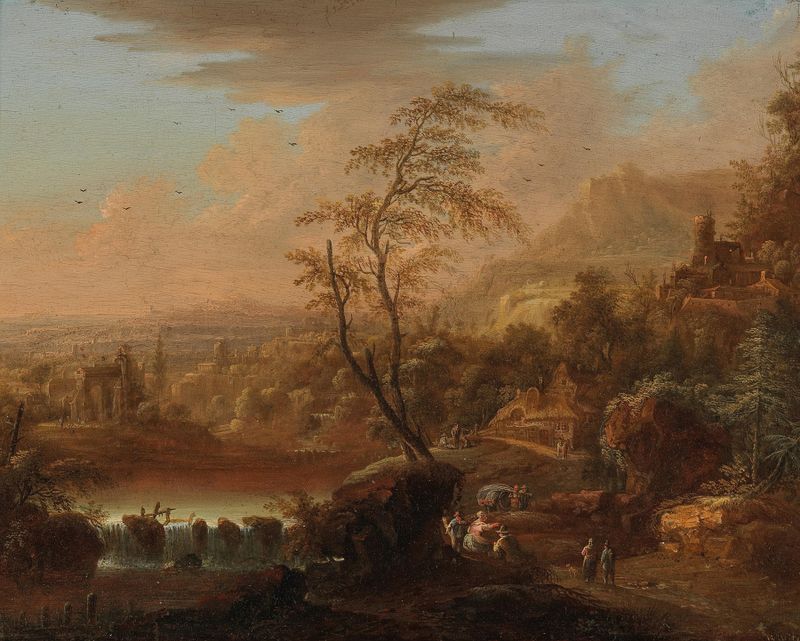
A mountain landscape with travellers
Johann Christian Vollerdt
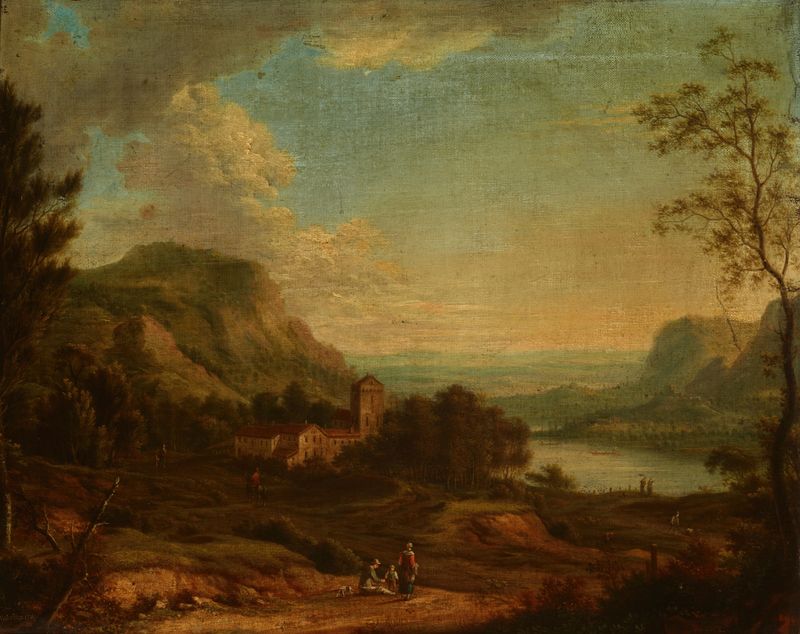
Landscape with a Genre Scene
Johann Christian Vollerdt
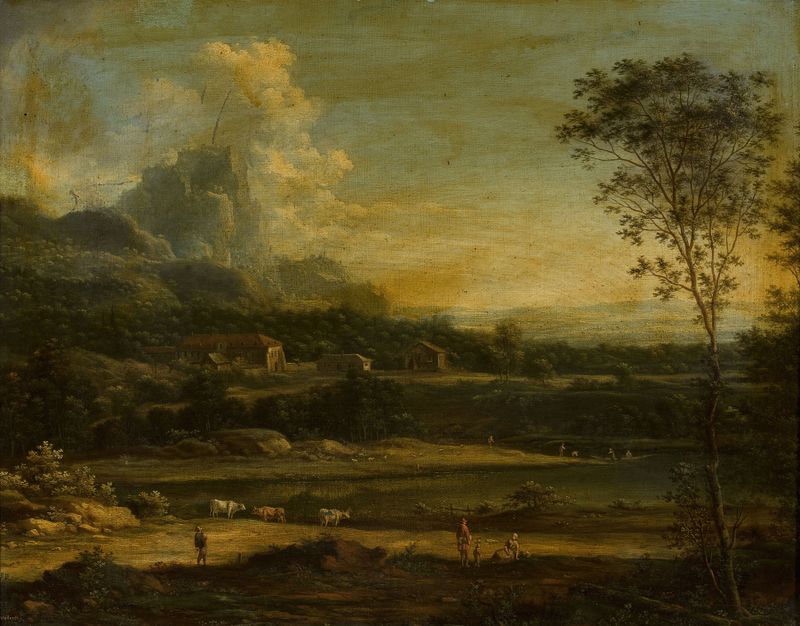
Mountain landscape with a lake and buildings
Johann Christian Vollerdt
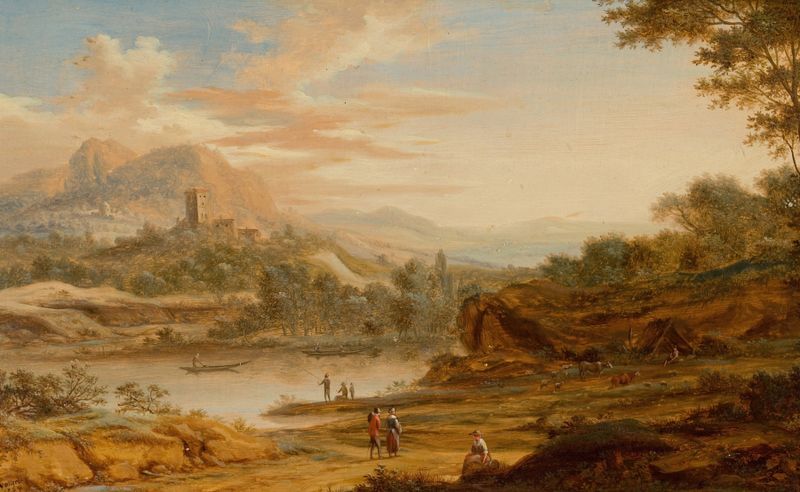
View in Italy
Johann Christian Vollerdt





