The waterfall — History & Facts
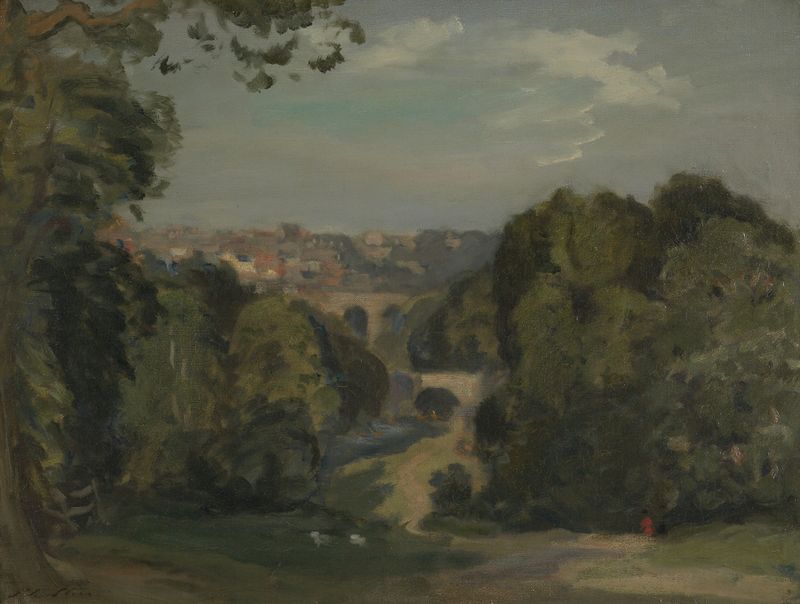
The essence of longing weaves through the heart of this captivating artwork, where the allure of nature intertwines with an unspoken sorrow. Look closely at the foreground, where delicate brushstrokes create a cascade of shimmering water that tumbles over rocky edges, each droplet sparkling with hues of sapphire and emerald. The artist skillfully captures the interplay of light, illuminating the surrounding foliage with a soft, ethereal glow. Notice how the mist rises from the waterfall, merging subtly with the pale sky, drawing the eye upward to the distant horizon, a promise of what lies beyond but perhaps forever out of reach. Beneath the surface, the painting resonates with deeper themes of yearning and transience.
The vibrant greens contrast sharply with the cooler tones of the water, suggesting a life force often overshadowed by melancholy. The juxtaposition of the powerful waterfall and the frail beauty of the surrounding flora evokes a sense of struggle between nature's splendor and its inherent fragility — a reminder that even in beauty, there lies an undercurrent of loss. In 1896, Philip Wilson Steer painted this piece at a time when the art world was embracing Impressionism, a movement that celebrated the ephemeral qualities of light and color. Living in England, Steer was influenced by his contemporaries, exploring the delicate balance between representation and emotional experience.
This painting reflects not only his mastery of technique but also the tumultuous era of artistic exploration he was immersed in, capturing the essence of longing through nature's breathtaking beauty.