Boating at Maldon, Essex — History & Facts
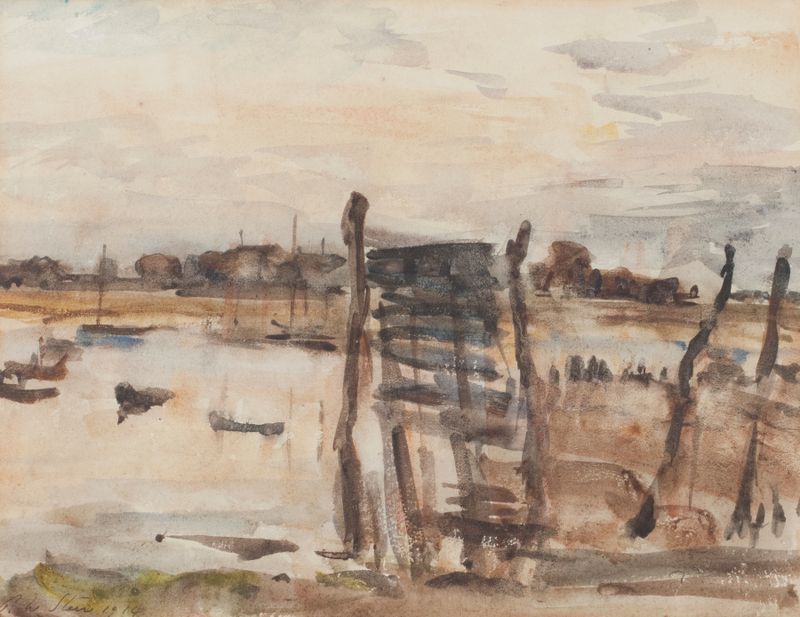
What if beauty was never meant to be finished? In Boating at Maldon, Essex, a fleeting moment captures the essence of chaos amid serenity, invoking the delicate interplay between nature and human activity. Look to the lower left at the vibrant splashes of color that merge together to depict a group of boats. The swirling brushstrokes, layered with lush greens and blues, create a sense of movement, as if the water itself is alive. Notice how the light dances across the surface, illuminating the sails and reflecting the tumult of the sky.
The composition draws the eye towards the center, where figures engaged in leisure contrast sharply with the frenetic energy surrounding them. Amidst the apparent calm, there is an underlying tension between the chaos of nature and the tranquility sought by individuals. The boats, though seemingly peaceful, navigate the unpredictable waters, symbolizing humanity's eternal struggle against the forces of the environment. The juxtaposition of vivid colors against muted tones further emphasizes this balance—life’s complexities coexisting with moments of respite. In 1933, Philip Wilson Steer painted this work during a period of significant change in Britain and the art world.
After the tumult of World War I, artists sought new ways to express their experiences, combining traditional techniques with modern impressions. Exploring the dynamic relationship between human activity and the natural landscape, Steer pioneered a fresh approach to British impressionism, forever altering the course of contemporary art.