Theatre Decoration — History & Facts
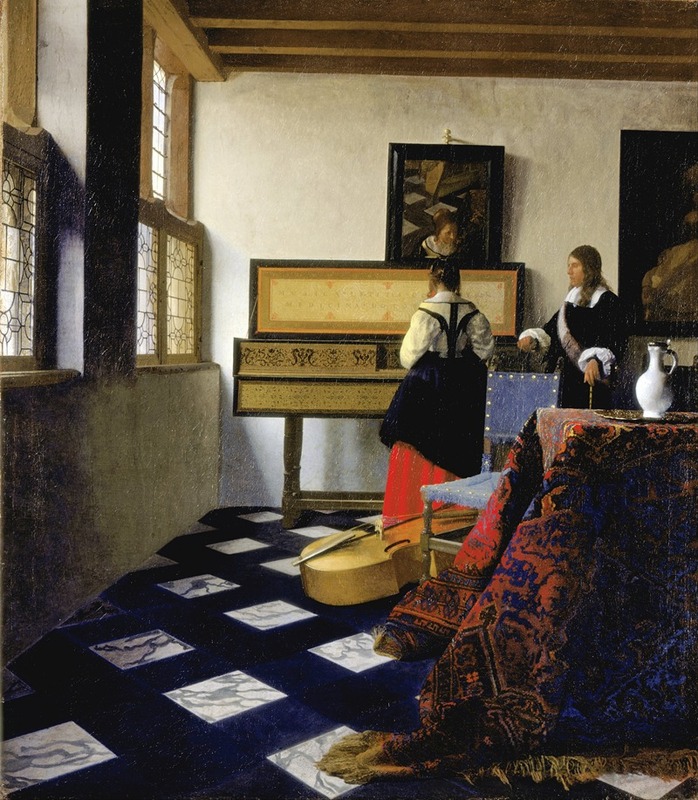
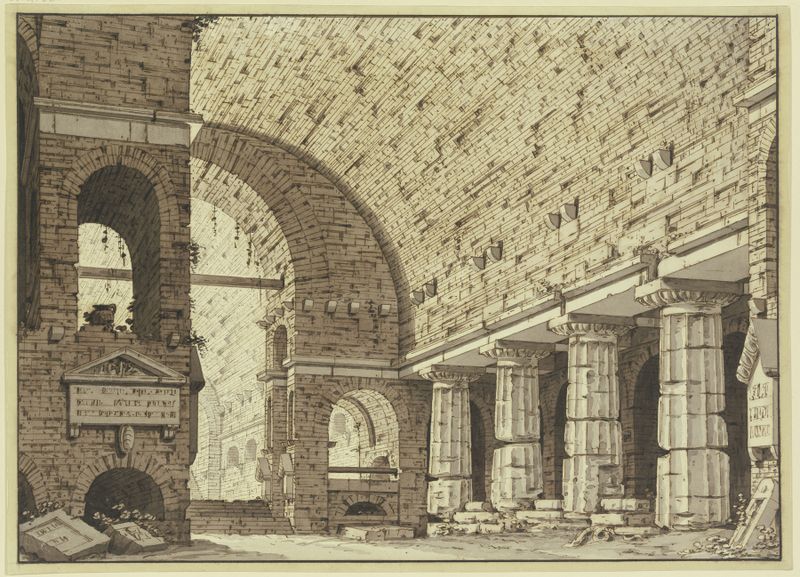
Could a single brushstroke hold eternity? In an artwork where every stroke seems deliberate, the pursuit of balance emerges as a profound reflection on life and art itself. Look to the center where intricate patterns intertwine, drawing your gaze like a magnet. The vibrant colors harmonize, from deep crimson to rich gold, creating a dynamic tension in the composition. Notice how the artist employs sharp contrasts, juxtaposing strong lines with soft curves, invoking a sense of movement within the stillness.
Each element is positioned with precision, almost as if choreographed, embodying the very essence of theatricality. The scene encapsulates the delicate balance between chaos and order, inviting viewers to ponder the duality of emotions. The interplay of light and shadow breathes life into the decorations, suggesting a transient yet eternal quality. This tension between the opulent and the restrained may reflect not just the artist's intent but also the societal movements of the late 18th century, where art served both as a spectacle and a means of expression. Giorgio Fuentes created Theatre Decoration between 1796 and 1800, during a period marked by artistic transition and the rise of Neoclassicism.
Living in Italy, he was influenced by the cultural shifts that accompanied the decline of the Baroque and the embrace of more structured forms. This work, with its grandiosity and intricate detail, showcases his commitment to the evolving dialogue in the art world, as stage decorations became a vital aspect of theatrical experiences at the time.
More Artworks by Giorgio Fuentes
Browse all →
Vorhalle eines italienischen Bauernhauses
Giorgio Fuentes
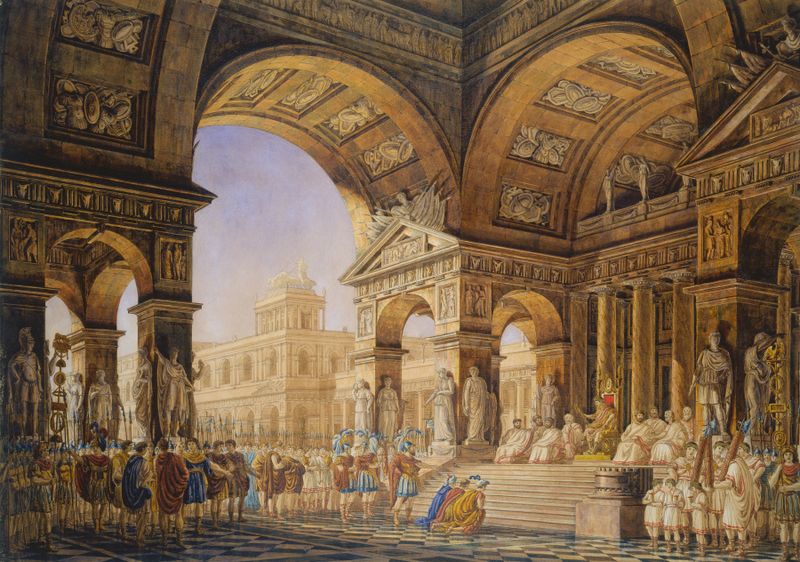
Szene aus Mozarts Titus-Oper
Giorgio Fuentes
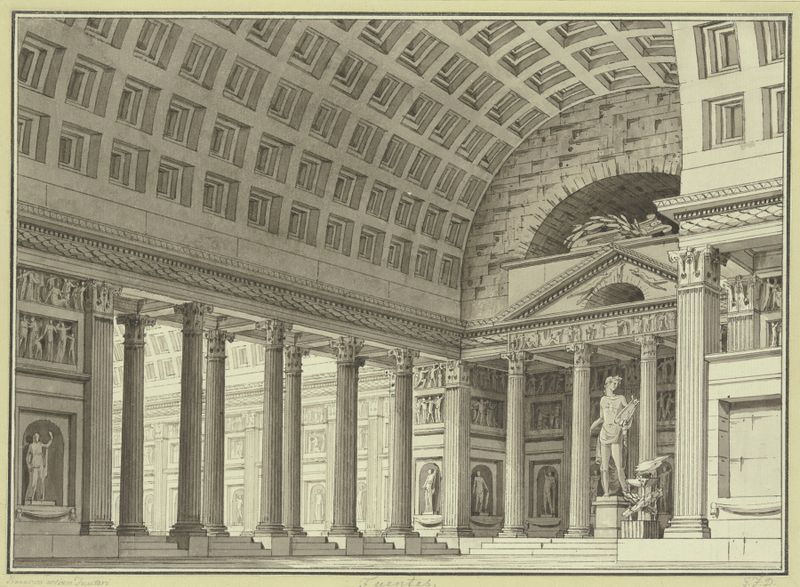
Römischer Tempel mit einer Apollostatue
Giorgio Fuentes
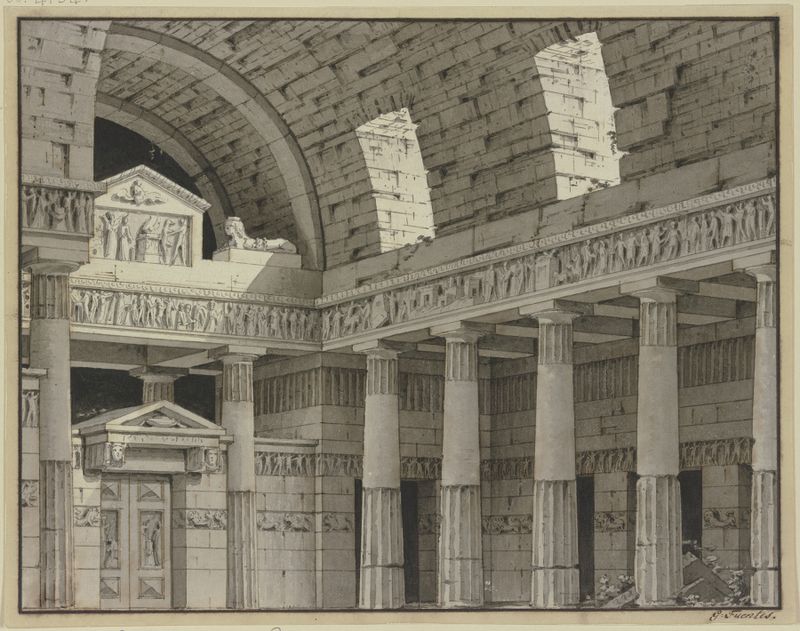
Dorische Säulenhalle mit Rundbogengewölbe und einem Portal mit einer Sphinx
Giorgio Fuentes
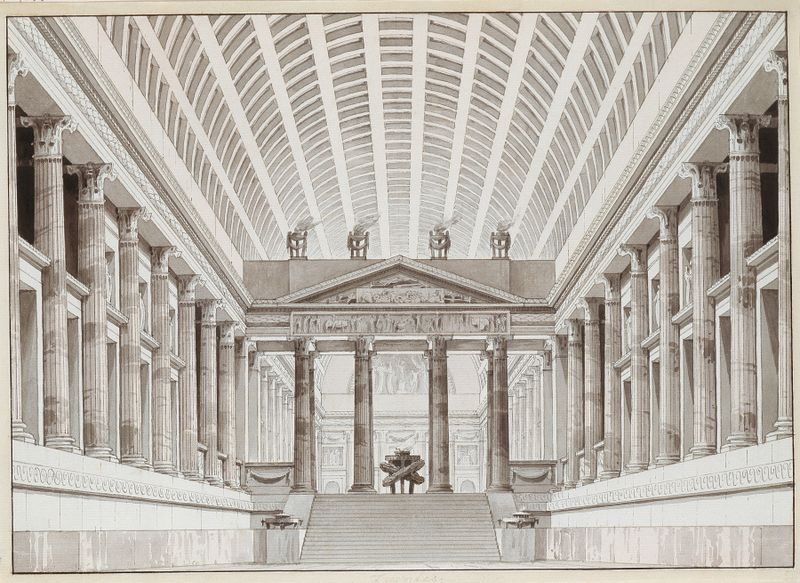
Korinthischer Festsaal mit großem kassettiertem Rundbogengewölbe
Giorgio Fuentes
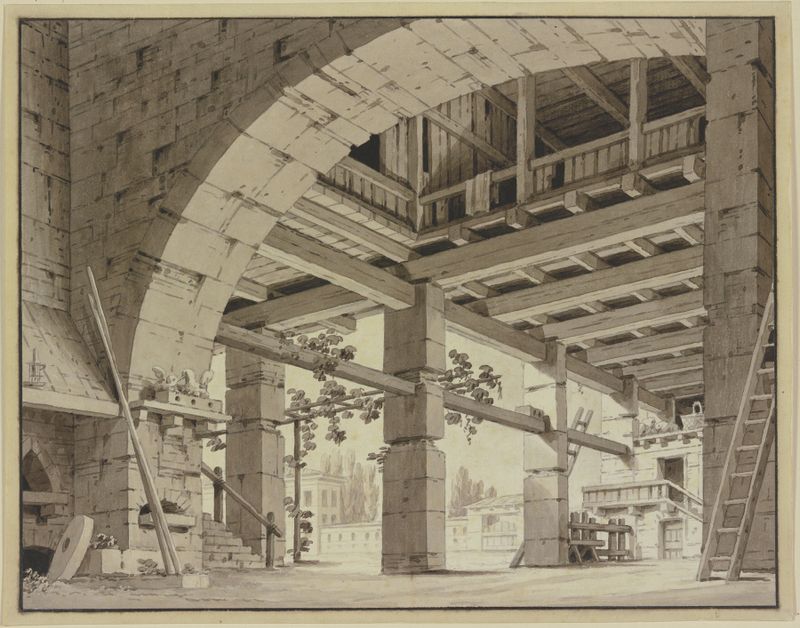
Bogenhalle mit einer Weinlaube
Giorgio Fuentes
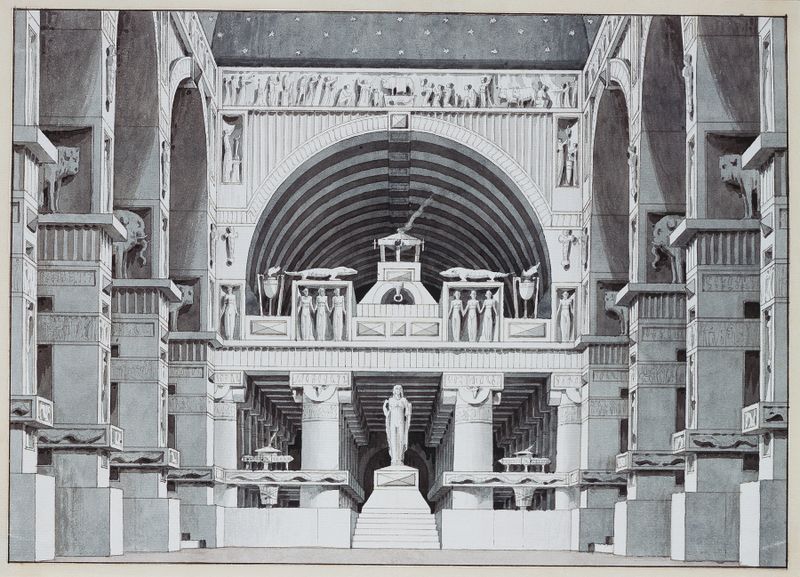
Indian temple
Giorgio Fuentes

Italian farm
Giorgio Fuentes
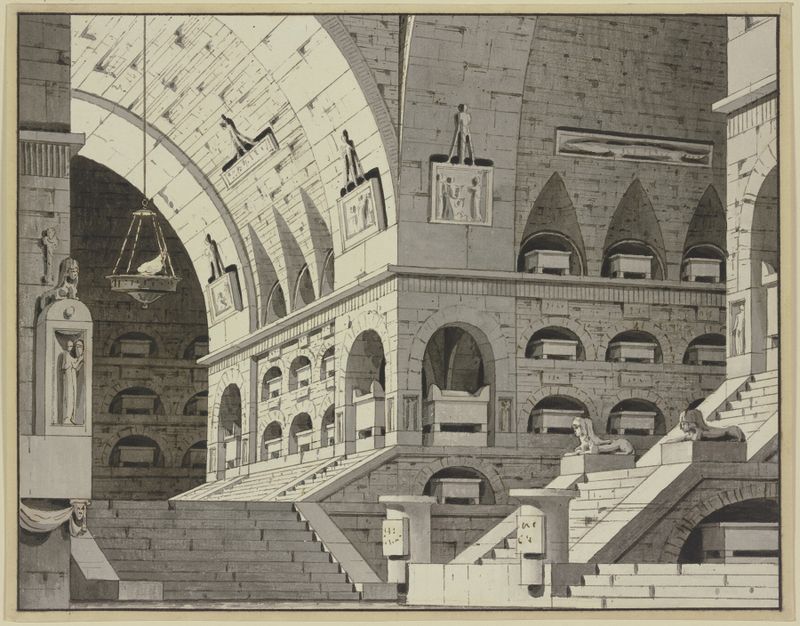
Ägyptisches Grabgewölbe mit vielen Sarkophagen
Giorgio Fuentes
Zerstörtes dorisches Gewölbe
Giorgio Fuentes