This village changed hands five times during the war — History & Facts
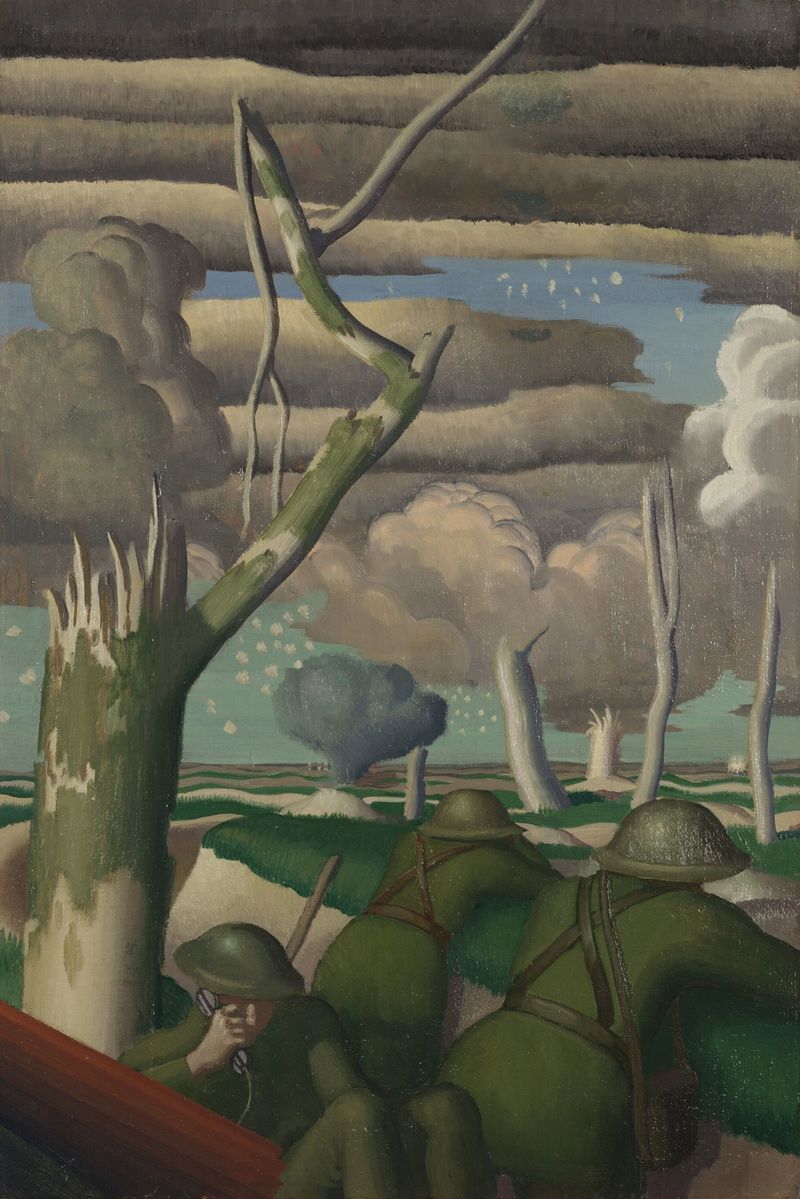
Did the painter know this moment would outlive them? Memory is a fragile thread, often frayed by time and conflict, yet it binds us to the past in unexpected ways. Focus on the foreground, where a village stands resolute amid chaos. Gill’s use of muted earth tones evokes a sense of loss — the browns and greys contrasting sharply with the fleeting remnants of brighter hues in the sky. The horizon is sharp, almost jagged, suggesting the scars of war, while the delicate brushwork captures the texture of the village’s buildings, hinting at stories held within their walls.
Your gaze is drawn to the figures in the background, silhouettes rendered in shadow, emphasizing their isolation and the weight of their memories. Hidden within this landscape lies a tension between destruction and survival. Each building, though marred by conflict, retains a sense of resilience, suggesting that memory itself is a battleground. The absence of lush detail in nature juxtaposes the crumbling architecture, symbolizing the loss of innocence and the harsh reality of life during wartime.
The quietness of the scene speaks volumes, inviting contemplation on the unseen scars left in the wake of upheaval. Colin Gill created this poignant work in 1918, at the tail end of World War I, while grappling with the emotional and physical aftermath of the conflict. Working in Britain during a time of transformation in the art world, he sought to convey the complexities of human experience through poignant imagery. His focus on the impact of war on daily life resonated deeply, capturing a moment in history that still echoes today.