Three fir trees in the mountains — History & Facts
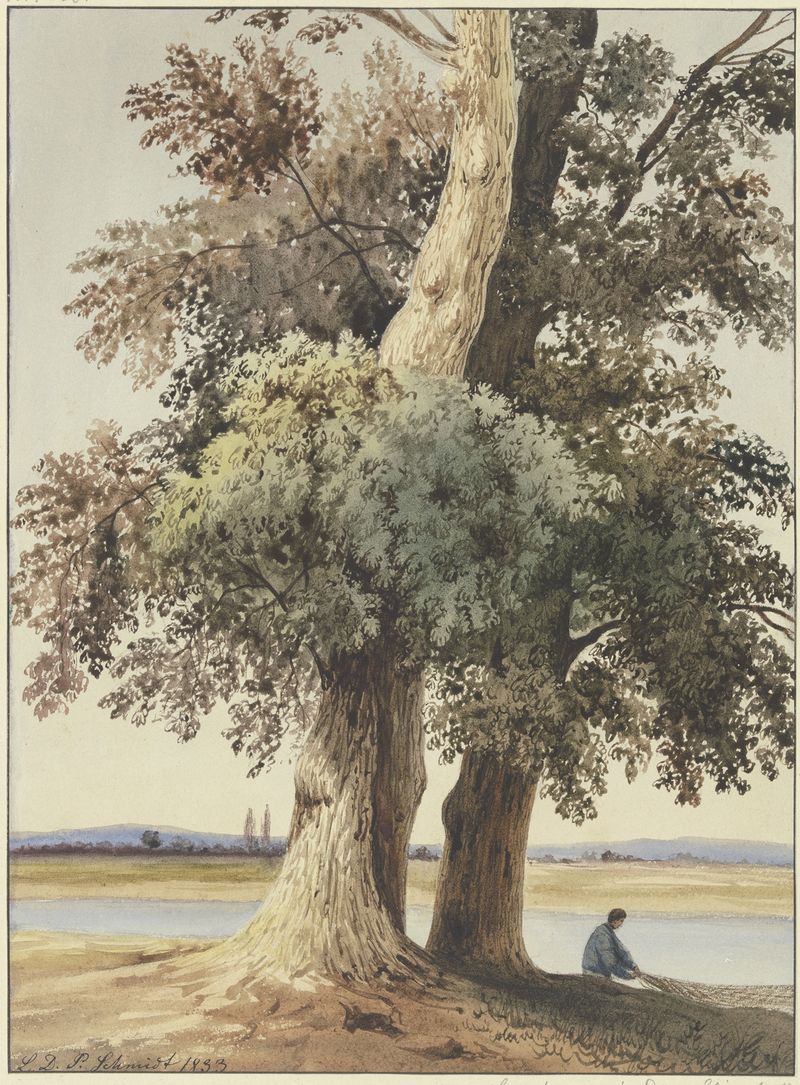
Where does light end, and longing begin? In Three Fir Trees in the Mountains, the answer unfurls with every brushstroke, inviting the viewer to explore a silent dialogue between nature and spirit. Look to the foreground, where three fir trees stand resolute against an expansive landscape. The rich greens of their needles contrast sharply with the lighter hues of the mountain backdrop, creating a visual tension that draws the eye upward. Notice how the golden sunlight kisses the tops of the trees, casting elongated shadows on the gravelly ground.
The painter’s deft use of light not only highlights the trees' sturdy forms but also breathes life into the surrounding atmosphere, evoking a profound sense of place and peace. Yet within this serene setting lies an undercurrent of emotional complexity. The trees, stoic and unyielding, symbolize resilience amidst the transience of nature. Each layer of color, from the earthy browns to the vibrant greens, speaks of growth and stability, yet they are rooted in a world that constantly changes.
This juxtaposition of permanence against the ephemeral essence of light enchants the viewer, subtly invoking feelings of nostalgia, hope, and yearning for connection with the untamed wilderness. In 1833, Schmidt created this work during his time in the idyllic landscapes of Bavaria. It was an era ripe with Romantic ideals, celebrating the beauty and spirituality of nature as a response to the industrial changes sweeping through Europe. During this period, the artist’s explorations in color and light marked a significant step in landscape painting, reflecting both personal introspection and the broader artistic movement towards nature’s sublime power.