Tiere In Landschaft — History & Facts
When did color learn to lie? Is it not the chaos within nature that reflects the struggles of existence, where every hue manipulates our perception and emotion? Look to the foreground, where a cluster of animals rests beneath a turbulent sky, their forms rendered in muted browns and grays. Notice how the brushwork captures the tension of their stillness against the swirling backdrop, suggesting an impending storm. The contrast between the animals' serene presence and the chaotic landscape invites you to dwell on the uncertainty lurking just beyond their calm. Beyond the obvious, the painting speaks to the relationship between humanity and the untamed world.
The animals, though tranquil, provoke an unsettling awareness of vulnerability amidst nature's capriciousness. The heavy, dark clouds loom overhead, echoing a sense of foreboding while the vibrant greens of the landscape beckon life, revealing the duality of beauty and peril. In this dance of chaos, Mahlknecht unveils the fragility of existence itself. Edmund Mahlknecht created Tiere In Landschaft in 1854, during a time when Romanticism was still resonating across Europe.
He was working in a region where the tensions of the Industrial Revolution were beginning to shape landscapes, yet he chose to focus on the raw, unfiltered essence of nature. This era marked a fascination with the sublime, and the artist's emphasis on the wild chaos of the natural world reflects both personal introspection and the broader cultural dialogue surrounding humanity's place within it.
More Artworks by Edmund Mahlknecht
Browse all →
A View of the Dachstein Massif
Edmund Mahlknecht

Returning Home With An Approaching Storm
Edmund Mahlknecht

Landschaft mit Bergsee
Edmund Mahlknecht

Idylle am Bauernhof
Edmund Mahlknecht

Kühe am Seeufer
Edmund Mahlknecht
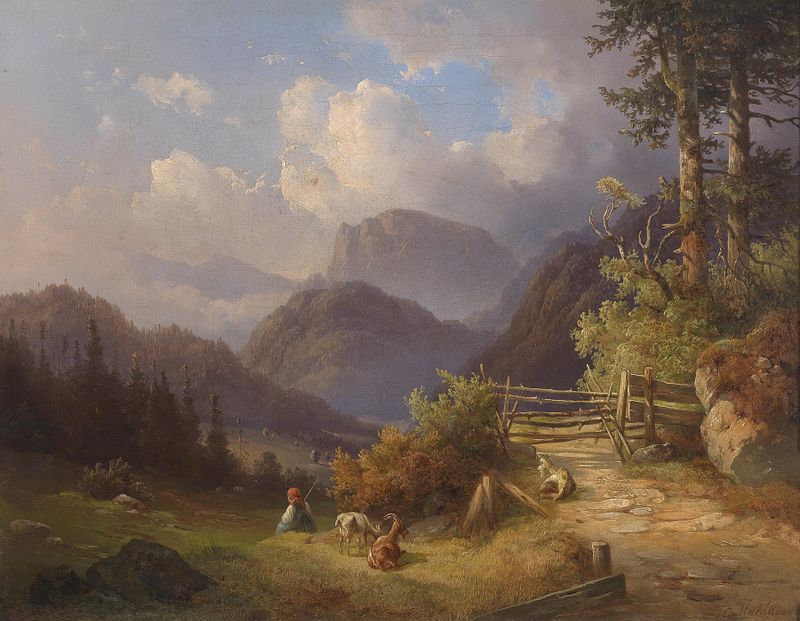
Die junge Ziegenhirtin
Edmund Mahlknecht
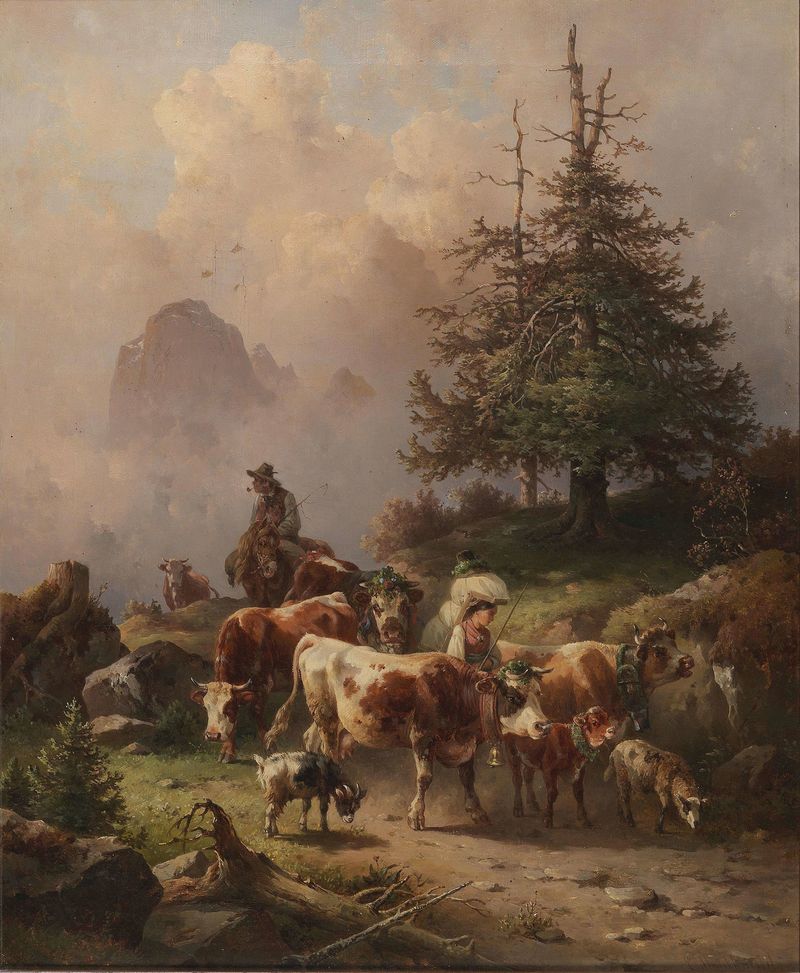
Driving the Cattle down from the Alpine Pastures
Edmund Mahlknecht

Beim Hufschmied
Edmund Mahlknecht
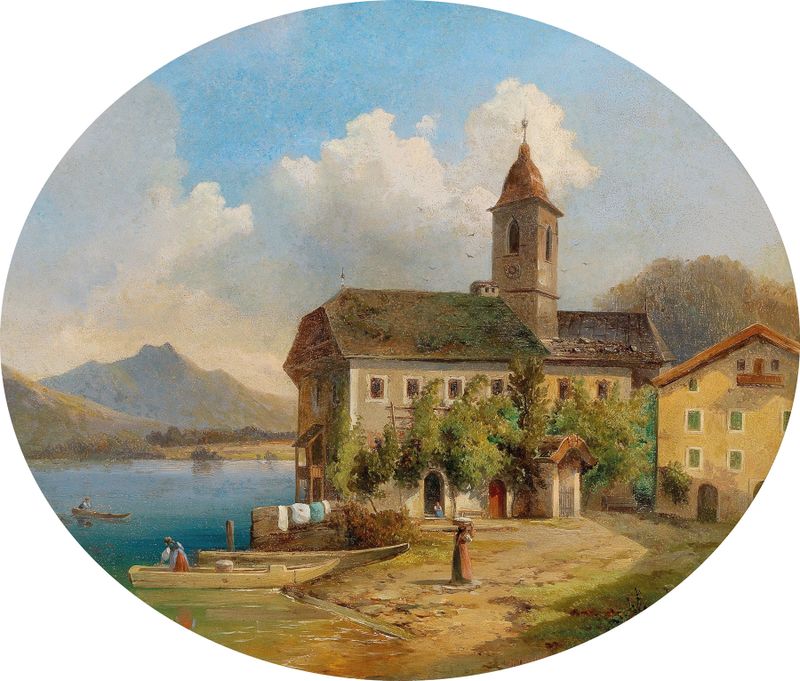
View of St. Wolfgang
Edmund Mahlknecht

Kühe mit Hirten an der Furt
Edmund Mahlknecht