Tiroler Berge — History & Facts
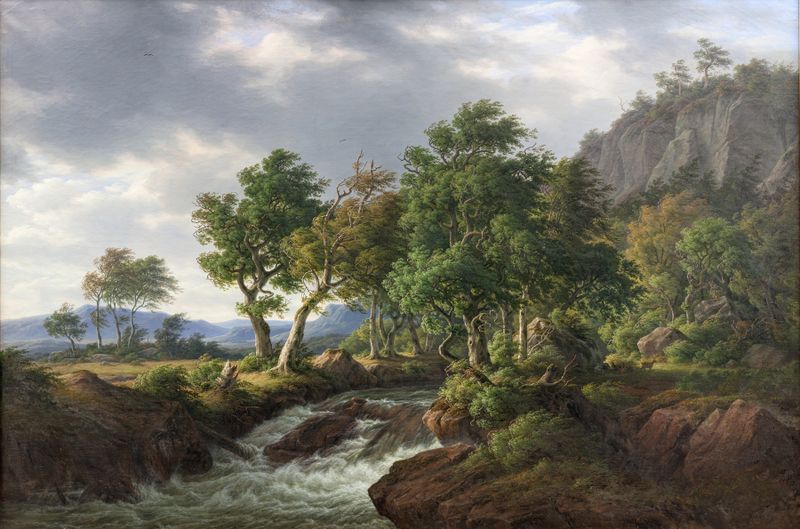
In Tiroler Berge, the essence of illusion dances across the canvas, inviting viewers to question the boundaries of reality and perception. Look to the left at the towering peaks, their jagged silhouettes piercing the soft morning mist. The artist employs a delicate blend of greens and blues, creating a sense of depth that pulls the eye into the landscape’s embrace. Notice how the light filters through the clouds, casting a gentle glow that illuminates the valleys below, suggesting hidden life and secrets waiting to be unveiled.
Each stroke vibrates with a sense of movement, as if the mountains themselves are breathing. The interplay between shadow and light evokes an emotional tension, with the mountains symbolizing both majesty and isolation. The small details—perhaps a solitary bird in the sky or the minute highlights on the water—underscore a duality of freedom and solitude. The contrast of serene beauty against an underlying sense of mystery poses questions about human existence within nature’s grandeur, hinting at both the allure and the potential peril of such landscapes. Frederik Christian Jakobsen Kiærskou painted Tiroler Berge in 1840 while based in Denmark.
At that time, he was influenced by the Romantic movement, which emphasized emotion and the sublime in nature. The work reflects not just personal exploration but also the wider European fascination with alpine scenery, as artists sought to convey the overwhelming beauty and power of the natural world during a period of societal change and industrialization.