
Tivoli and the Roman Campagna — History & Facts
In an era where the noise of industry threatened to drown out the whispers of nature, the soft hues of a painted landscape emerge as a sanctuary of color and calm. Look to the vibrant greens that dominate the foreground, painting a lush tapestry that invites you to step into the scene. Notice how the artist deftly contrasts these verdant tones with the warm gold of the sunlit hills in the distance. The cool blues of the sky cradle the entire composition, guiding your eyes across the horizon where earth meets ethereal.
Each brushstroke captures the serenity of the Roman Campagna, allowing light to dance on the surface and breathe life into the landscape. Diving deeper, the intricate details reveal emotional undercurrents. Observe the playful clouds, which seem to whisper secrets of former glories, and the winding path that suggests a journey, perhaps a metaphor for exploration and introspection. The juxtaposition of the vibrant vegetation with the distant ruins hints at the fragility of beauty—a reminder that even in decay, there is a poignant allure that draws us in.
This delicate balance fosters a sense of longing, encapsulating the fleeting nature of time and memory. Created in 1820, this work emerged during a period of significant change for the artist, who was grappling with the tensions and transformations of his own identity within the Romantic movement. Klein painted this piece in his native Germany, reflecting a desire to connect with the classical past while foreshadowing the impending social upheaval of the 19th century. Amidst this backdrop, the landscape serves as both a celebration and an elegy—a vivid reminder of what remains in our collective consciousness.
More Artworks by Johann Adam Klein
Browse all →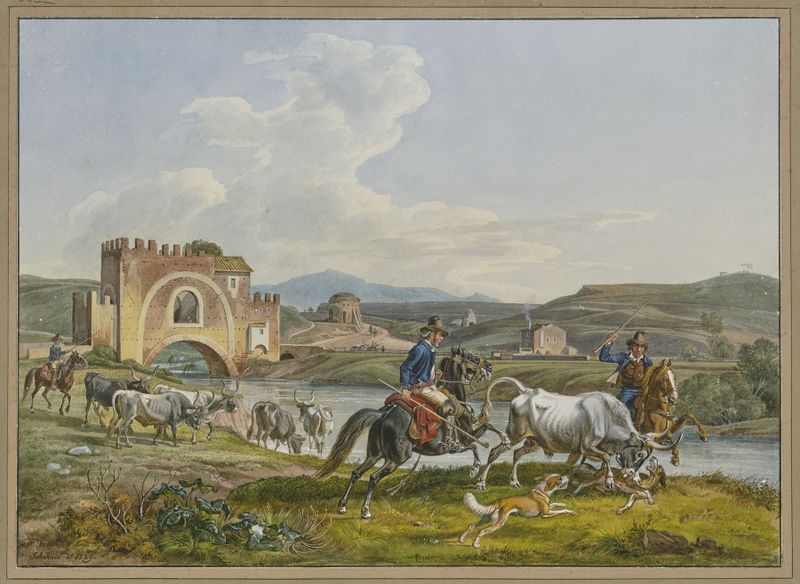
Römische Campagnoli zu Pferde fangen mit Hunden einen Stier ein
Johann Adam Klein
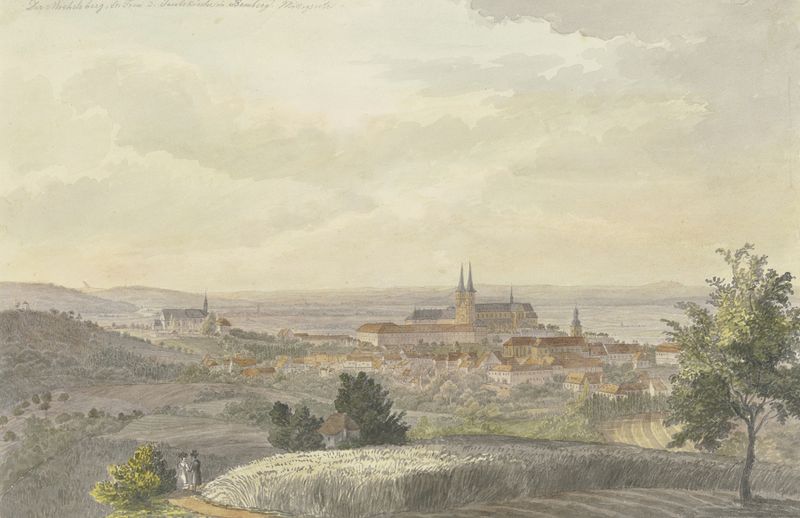
Ansicht von Bamberg von Süden
Johann Adam Klein
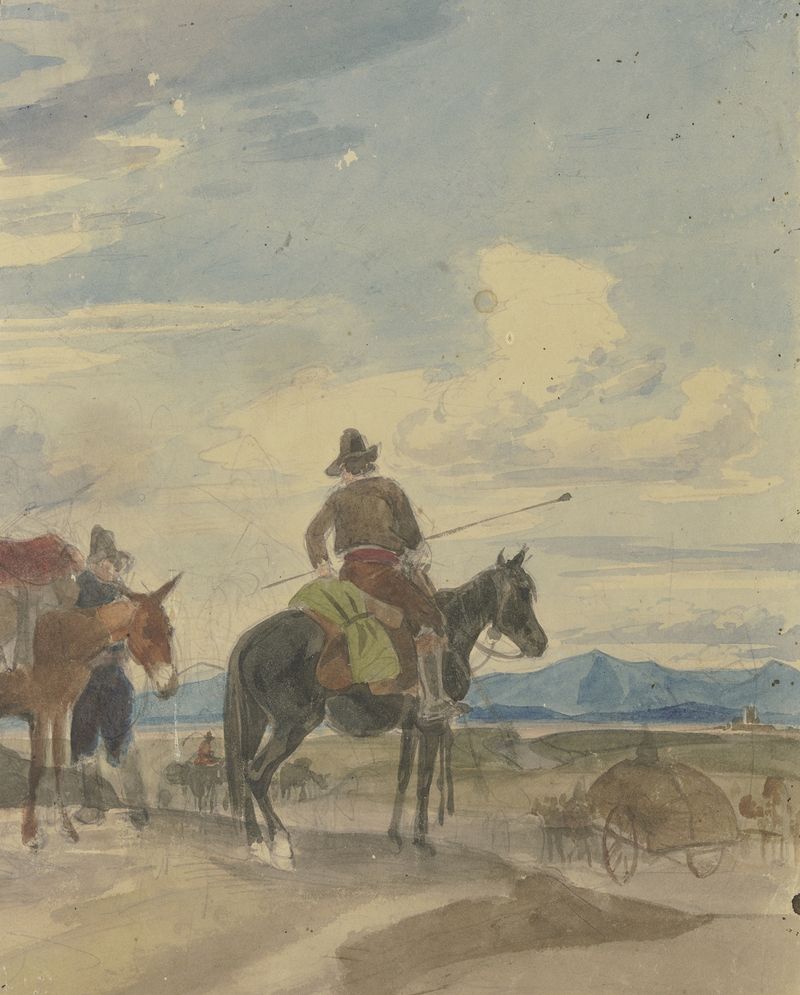
Bauer zu Pferde und Maultiertreiber aus der römischen Campagna
Johann Adam Klein
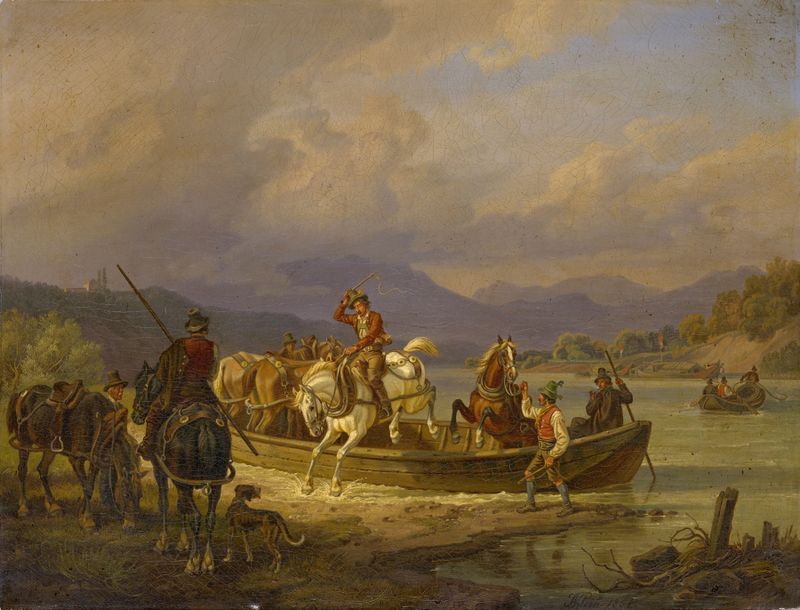
Riders Disembarking a Ship
Johann Adam Klein
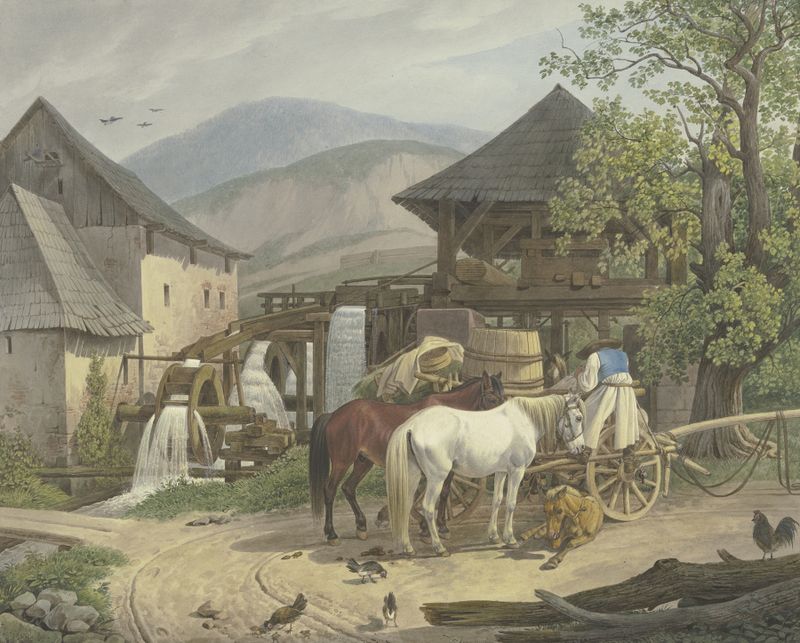
Schneid- und Mahlmühle im Stickelberger Tal unweit der Wienerischen Neustadt an der ungarischen Grenze
Johann Adam Klein





