
Bauer zu Pferde und Maultiertreiber aus der römischen Campagna — History & Facts
In the stillness of life, emptiness holds a haunting beauty, inviting us to contemplate what lies beneath the surface. Focus on the bold strokes of earth tones and muted palettes that dominate the canvas. As you examine the composition, notice how the figures of the horseman and muleteer are positioned against the expansive backdrop of the Roman Campagna. The tension of the scene is subtly crafted through the juxtaposition of the rugged terrain and the laborers, hinting at the delicate balance of man and nature.
The light subtly caresses their forms, creating an intimate connection with the land, while the muted hues suggest a history etched in silence. Delve deeper into the painting’s layered meanings, where emptiness is not merely void but a space for reflection. The horseman's poised stance contrasts sharply with the muleteer’s labor, symbolizing the dichotomy of freedom and toil. This contrast invites us to reflect on the human experience—life’s burdens versus the pursuit of liberation.
The vastness of the Campagna mirrors the emptiness, suggesting a longing for connection amid solitude. During a period yet undated, Johann Adam Klein immersed himself in landscapes that conveyed the essence of rural life in Italy. His contemporaries were captivated by the Romantic movement, emphasizing emotional depth and connectivity with nature. Klein’s focus on themes of labor and companionship, amid the backdrop of a timeless landscape, reflects both personal and cultural resonances, forging a lasting dialogue with the viewer.
More Artworks by Johann Adam Klein
Browse all →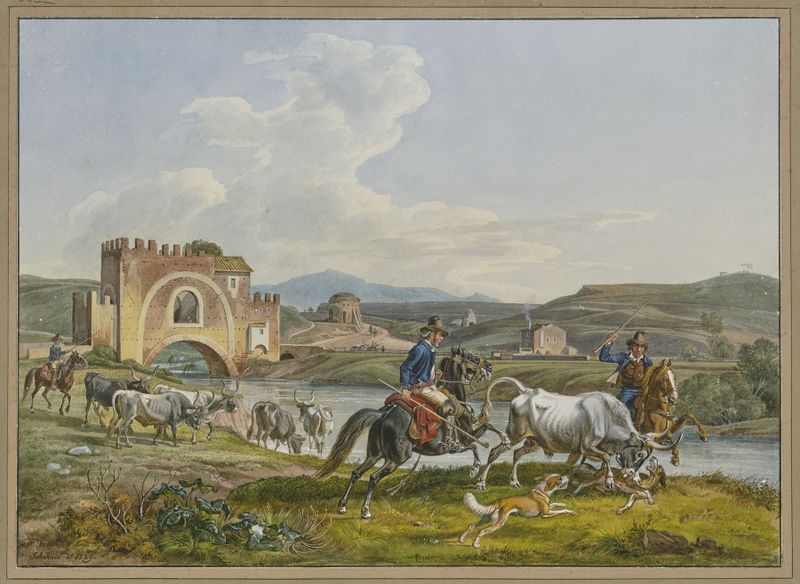
Römische Campagnoli zu Pferde fangen mit Hunden einen Stier ein
Johann Adam Klein
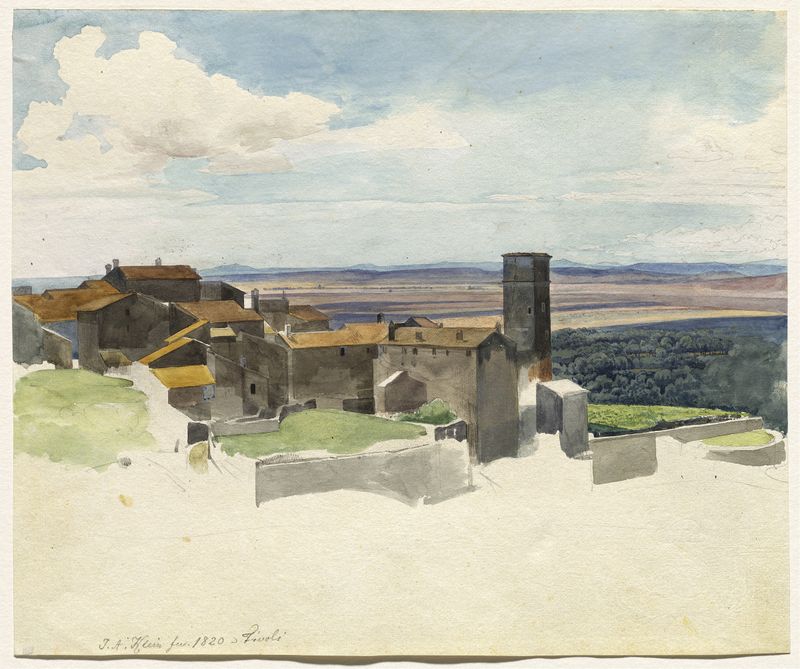
Tivoli and the Roman Campagna
Johann Adam Klein
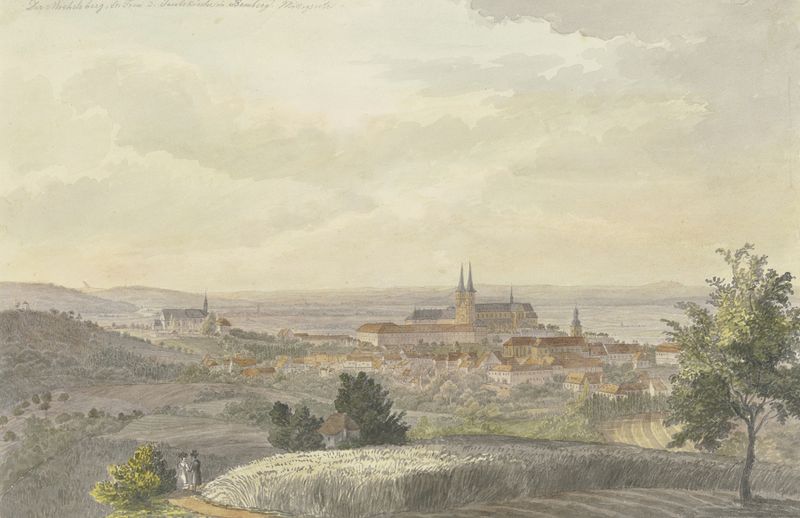
Ansicht von Bamberg von Süden
Johann Adam Klein
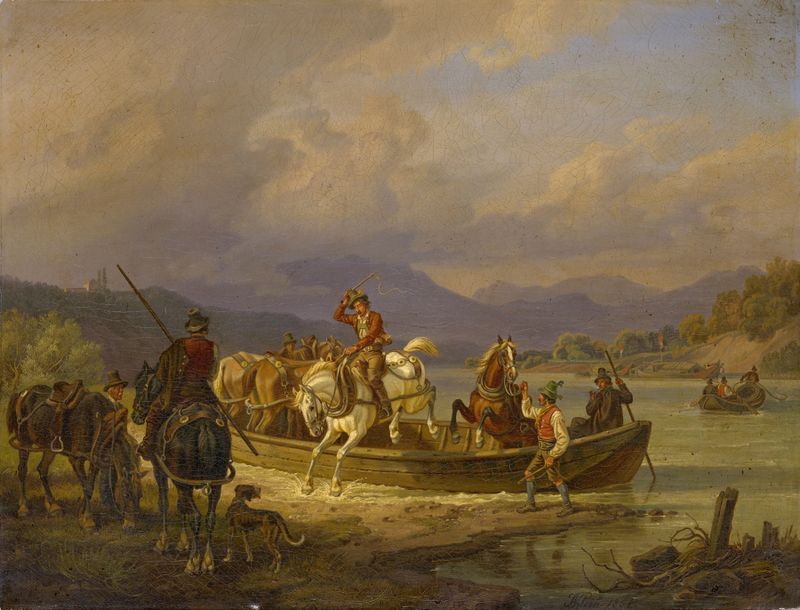
Riders Disembarking a Ship
Johann Adam Klein
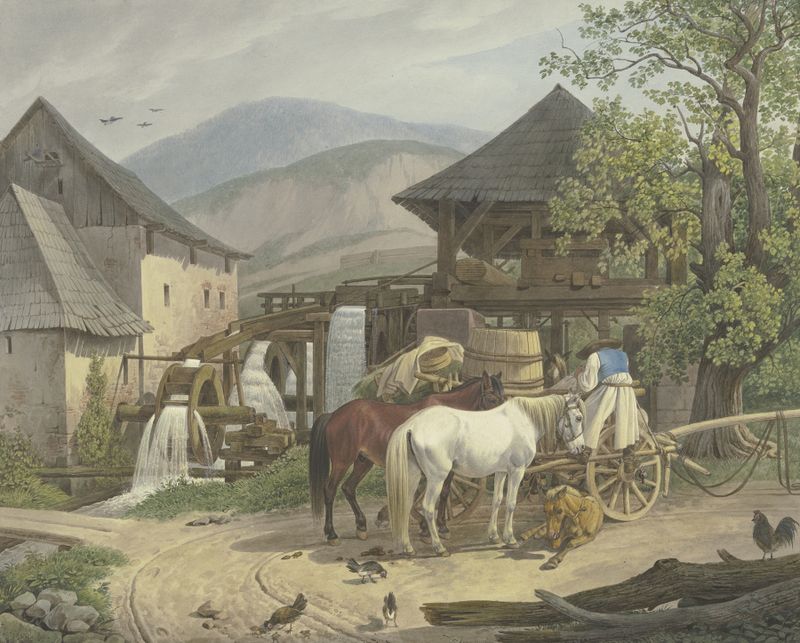
Schneid- und Mahlmühle im Stickelberger Tal unweit der Wienerischen Neustadt an der ungarischen Grenze
Johann Adam Klein





