
Tobias and the Angel — History & Facts
When did color learn to lie? In the delicate brushstrokes of this artwork, the interplay of light and hue speaks volumes of unspoken faith and hidden truths. It invites contemplation on the nature of belief, questioning what is seen and what lies beneath. Focus first on the gentle embrace of the two figures, Tobias and the Angel, at the center of the composition. Their connection is palpable, reinforced by the soft, radiant light that bathes them, drawing the eye immediately to their faces.
Notice how the warm, earthy tones of their garments contrast with the ethereal glow surrounding the Angel, highlighting the divine nature of their encounter. The surrounding landscape, executed in cooler, muted colors, allows the figures to emerge as beacons of hope and trust. Yet, there is a deeper tension at play. The way Tobias clutches the fish — a symbol of providence — reveals his vulnerability and reliance on guidance.
The Angel’s serene expression juxtaposes the uncertainty in Tobias’s posture, hinting at the struggle between faith and doubt. This subtle interplay suggests that belief is not merely a certainty, but a journey through layers of fear and revelation. In 1878, Cazin created this piece during a period marked by the rise of Impressionism, as he sought to convey emotional depth through color and light. Living in France, he was influenced by the shifting approaches to realism and spirituality in art, often blending traditional themes with modern techniques.
This work reflects not only his personal exploration of faith but also the broader quest for meaning amidst a changing artistic landscape.
More Artworks by Jean Charles Cazin
Browse all →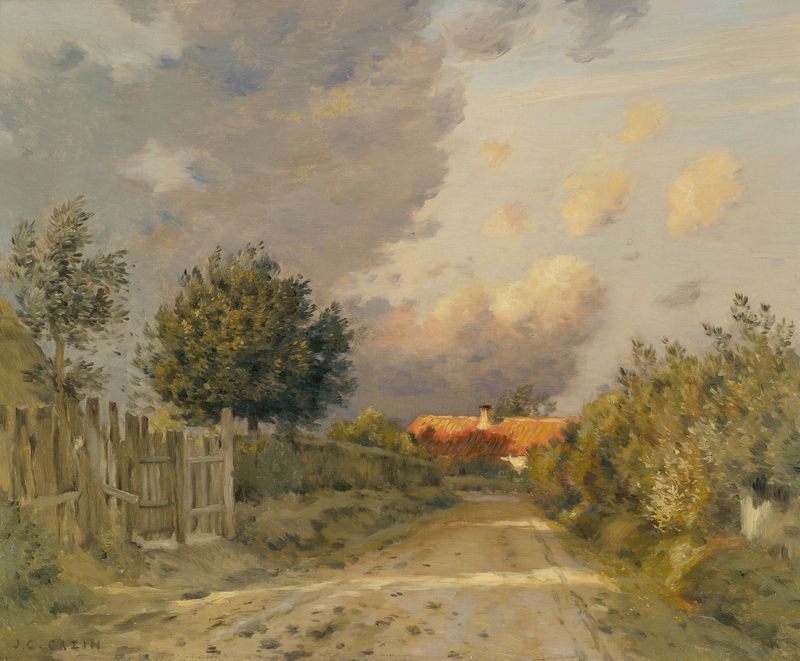
Early Evening In The French Countryside
Jean Charles Cazin
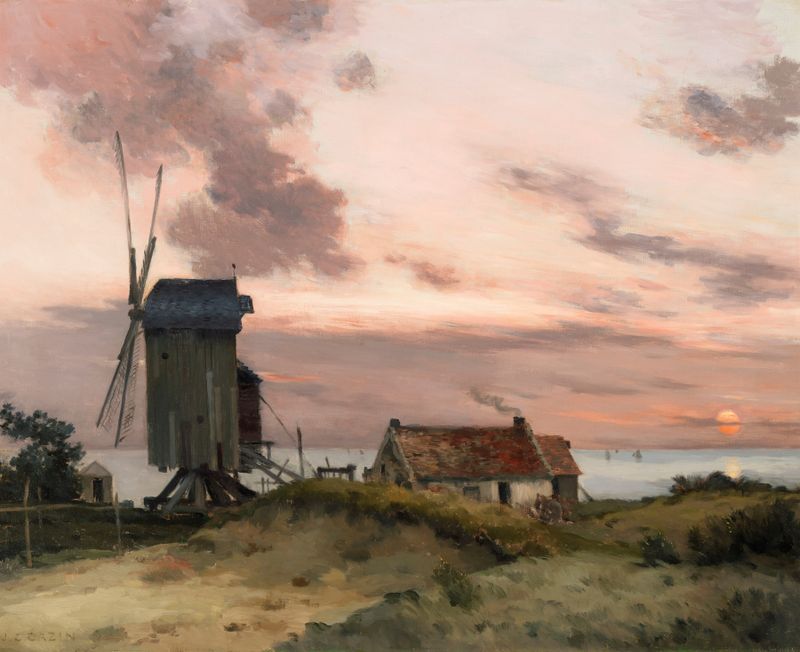
Windmill on a Beach
Jean Charles Cazin
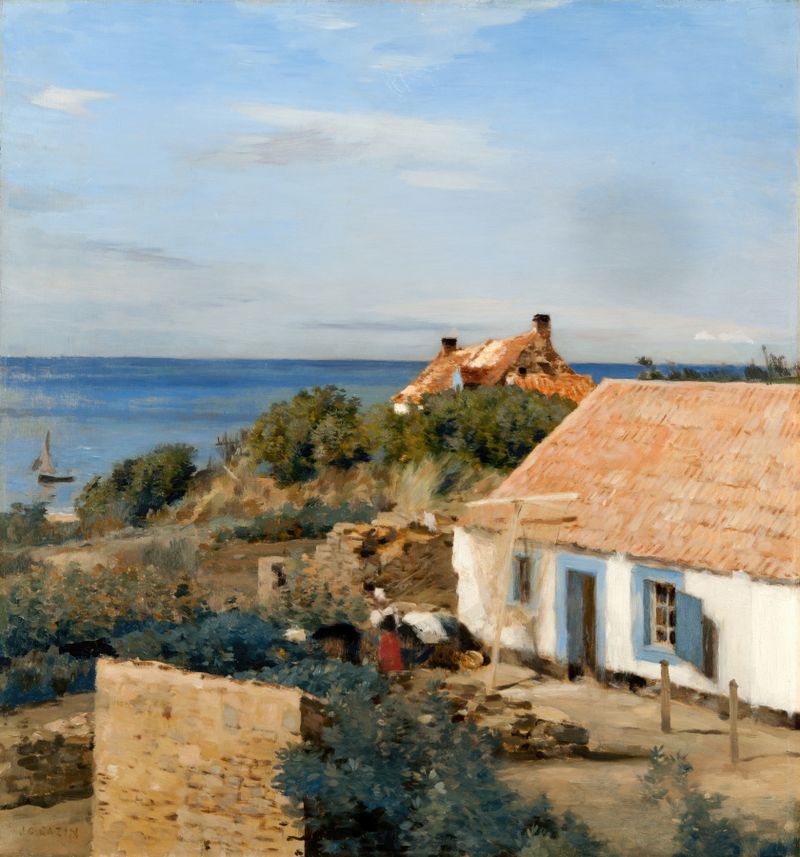
French Landscape
Jean Charles Cazin
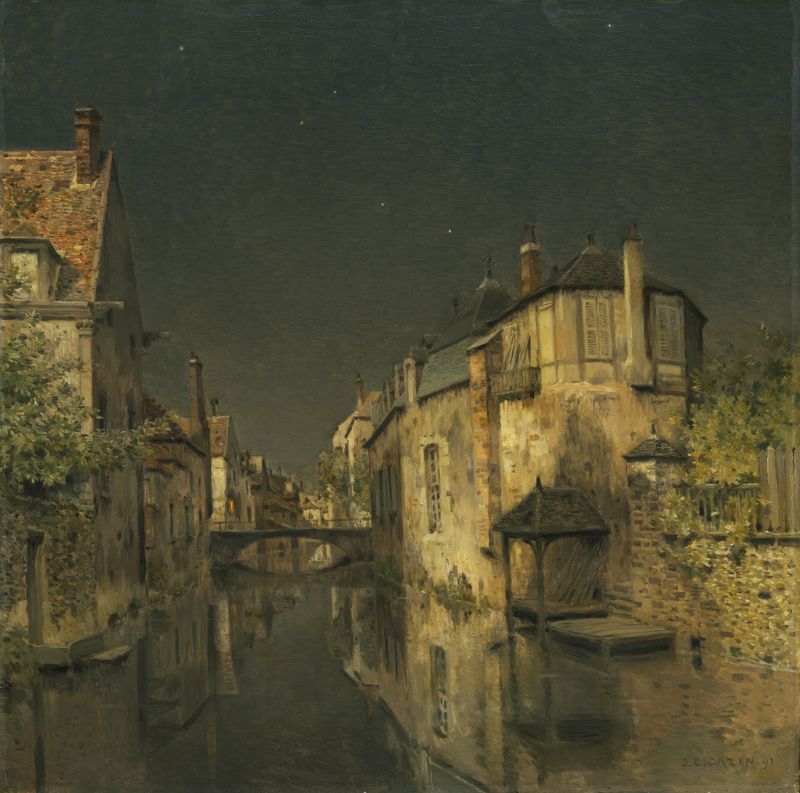
Midnight
Jean Charles Cazin

October Day
Jean Charles Cazin

Paysage au clair de lune
Jean Charles Cazin
Rest on the Flight into Egypt
Jean Charles Cazin
Cottage in the Dunes
Jean Charles Cazin

The Boatyard
Jean Charles Cazin

The Last Rays
Jean Charles Cazin
More Religious Art
Browse all →
The Return of the Prodigal Son
Rembrandt van Rijn

The Garden of Earthly Delights
El Bosco

Count Orgaz’ funeral
El Greco

The Hundred Guilder Print: the central piece with Christ preaching, the plate arched
Rembrandt van Rijn

The Descent from the Cross
Rogier van der Weyden

The return of the prodigal son
Rembrandt van Rijn