Traveler Crossing a Bridge in a Landscape — History & Facts
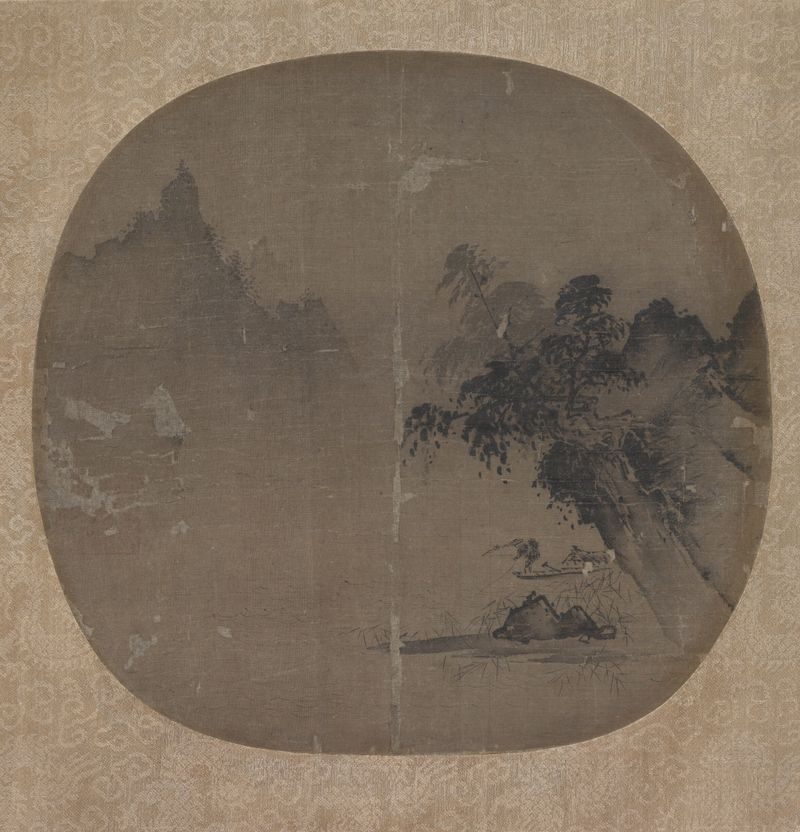
When did color learn to lie? In the delicate strokes of this piece, a world unfolds where light dances upon water and whispers secrets of the unseen. Focus your gaze on the gentle curve of the bridge, elegantly rendered in muted tones that blend seamlessly with the surrounding landscape. The artist’s mastery of ink wash captures a serene yet dynamic interplay of light and shadow, leading the eye across the water's reflective surface. Notice how the delicate brushstrokes create a hazy atmosphere, inviting contemplation and a sense of tranquility, as silhouettes of trees frame the composition, their softness contrasting against the solidity of the bridge. Beneath the surface, hidden meanings emerge: the bridge symbolizes transition, a passage between realms, while the solitary traveler hints at introspection and the journey of the self.
The subtle variations in ink density evoke emotional tension — the darker tones suggesting depth and contemplation, while lighter strokes convey hope and serenity. Together, these elements weave a narrative about the balance between solitude and connection with nature. During the 15th and 16th centuries, the artist was immersed in the evolving landscape of Chinese painting, particularly within the Southern Song tradition. Xia Gui's work reflects a period marked by a fascination with nature and philosophy, as artists sought to convey not just representation but an emotional resonance with their subjects.
His innovative use of light and ink captures the essence of landscape, making it a poignant reflection of the time’s artistic exploration.