Tree, Capri — History & Facts
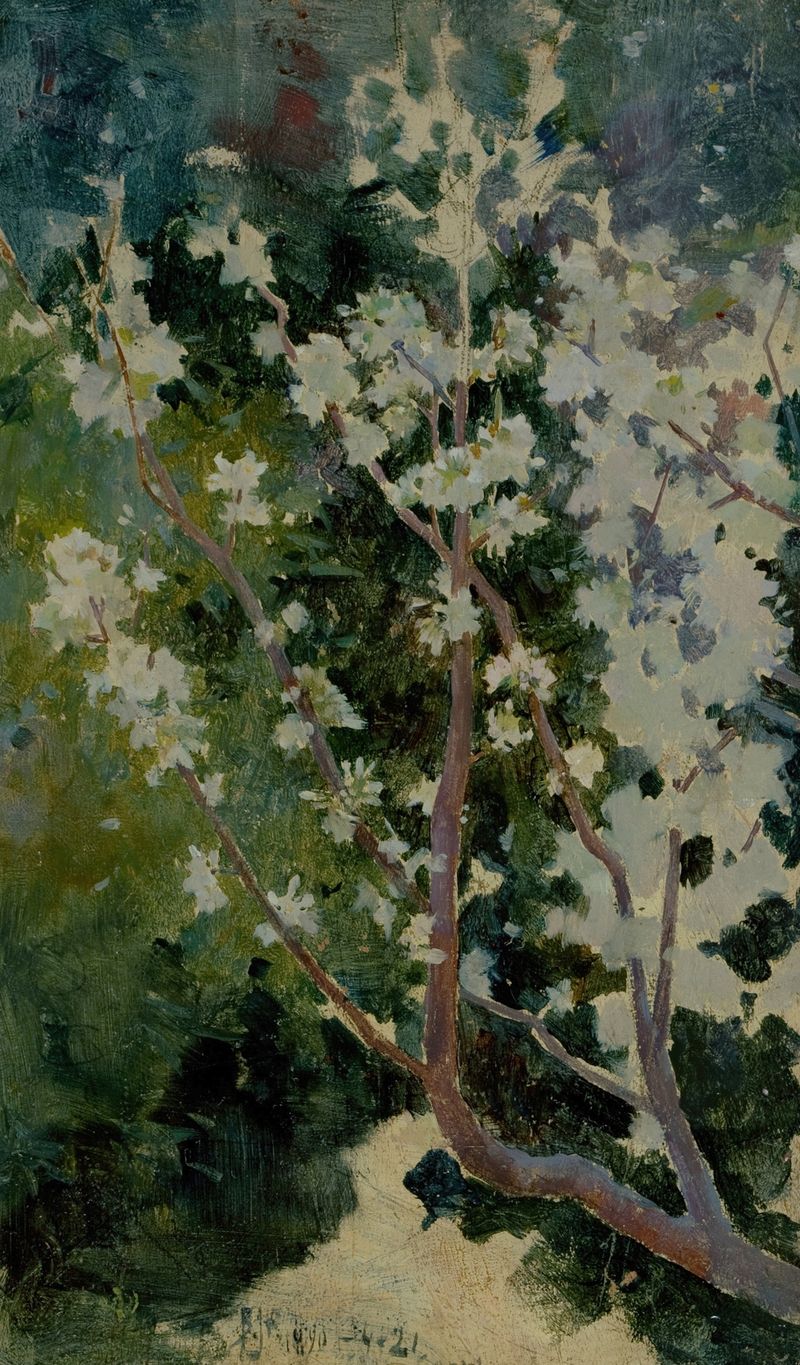
Where does light end, and longing begin? In George Randolph Barse's Tree, Capri, the interplay of sun and shadow invites contemplation of faith and permanence. Look to the left at the gnarled trunk of the tree, its textured bark subtly illuminated by soft, golden light. The lush green leaves create a canopy above, casting dappled shadows that dance across the ground beneath. The pale blue sky peeks through, offering a serene backdrop that contrasts with the earthy tones of the tree.
Notice how the play of light not only enhances the natural beauty of the scene but also evokes a sense of spiritual elevation, a visual hymn to the divine presence in nature. Delve into the emotional tensions that emerge from the juxtaposition of the sturdy tree and the ethereal light. The tree, rooted and robust, symbolizes resilience and faith, while the gentle radiance hints at fleeting moments of inspiration and transcendence. The scene captures a fragile balance; the permanence of the tree is countered by the ephemeral quality of light, suggesting a longing for connection amidst the uncertainties of life.
This duality speaks to the viewer's own experiences of grounding and aspiration. In 1891, Barse painted this piece during a formative period of his career, while living in Capri, a place that inspired many artists with its enchanting landscapes. The late 19th century was marked by a growing appreciation for the Impressionist movement, which sought to capture the fleeting impressions of light and color. Barse's work reflects this evolution, revealing his desire to convey both the solidity of nature and the ephemeral beauty of the light that envelops it.