Capri — History & Facts
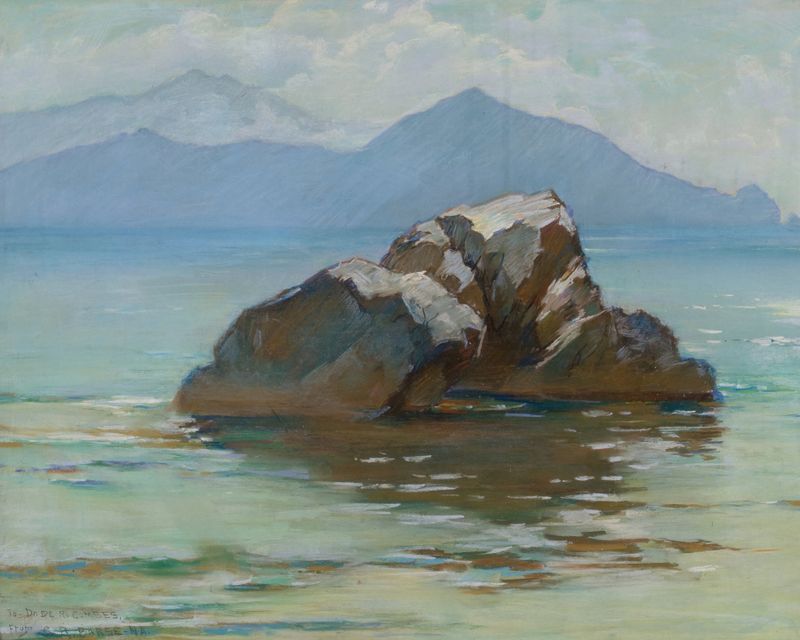
Grief, in its quietest form, lingers in the spaces we leave behind, woven through the colors of our past. The essence of loss paints a portrait far richer than mere representation, and this piece embodies that complexity with grace. Look to the serene blues and greens that dominate the canvas, evoking the Mediterranean glimmer of Capri’s coastline. Notice how the subtle interplay of shadow and light creates a sense of depth, drawing your eye towards the distant cliffs that cradle the horizon.
The gentle waves appear to ripple with a soft rhythm, mirroring the emotional undertones that pulse beneath the surface. The brushwork is both confident and delicate, inviting contemplation while simultaneously suggesting the fleeting nature of beauty. Delve deeper, and the contrasts emerge: the vibrancy of nature’s palette juxtaposed with the stillness of the scene hints at a duality of joy and sorrow. The delicate swirls of paint may symbolize cherished memories, yet the muted tones embedded within speak to the ache of absence.
Every detail—the wavering lines of the shoreline, the fragmented clouds—holds significance, representing not only a landscape but the emotional landscapes we traverse when we confront our own memories. In 1890, George Randolph Barse created this work during a period of artistic exploration and personal introspection. Living in an era where American Impressionism was gaining traction, he sought to capture the essence of his experiences through light and color. The world was rapidly changing, and against this backdrop, Barse's reflections on beauty and grief in Capri reveal both his artistic journey and a poignant longing for connection amidst the transience of existence.