Trenches by Danube — History & Facts
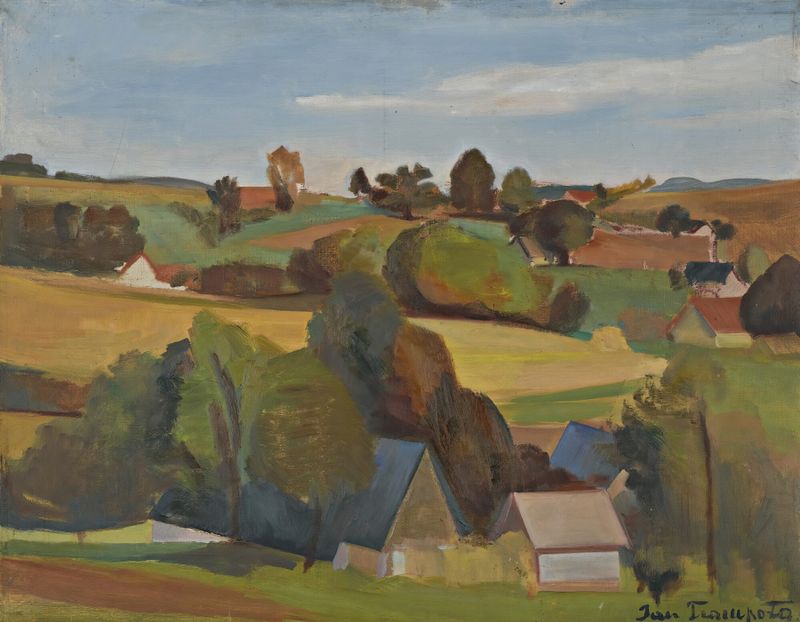
In Trenches by Danube, light dances delicately upon the surface, revealing a landscape that is both haunting and sublime. Within the interplay of shadow and luminosity lies a poignant reflection on the scars of war, suggesting that every shimmering facade conceals deeper sorrows beneath. Look to the foreground where the Danube flows, its waters alive with a scintillant glow. The artist's brushwork creates rippling waves, cascading into each other as they capture fleeting glimpses of sunlight.
Notice how the muted palette of browns and greens lends a somber tone, contrasting sharply with the ethereal brightness that punctuates the scene. This juxtaposition of color not only evokes the fluidity of life but hints at the remnants of conflict lurking just out of sight. Delve deeper into the artwork and you’ll find a tension between nature and destruction. The laden skies above, streaked with hints of gold, suggest both a promise of rebirth and a lingering melancholy.
The trenches, though absent in direct depiction, are felt through the somber earth tones, their presence echoing the burden of memory. Each brushstroke resonates with the duality of beauty and trauma, inviting viewers to ponder the bittersweet legacy of a landscape marked by history. In 1920, Jan Trampota created this piece while grappling with the aftermath of World War I and its impact on Central Europe. As he painted, the world was in recovery, striving for renewal amidst widespread devastation.
Trampota, influenced by the burgeoning modernist movements, sought to capture the complex emotions of his time, blending realism with a personal touch that speaks to the resilience of the human spirit.