Olsany — History & Facts
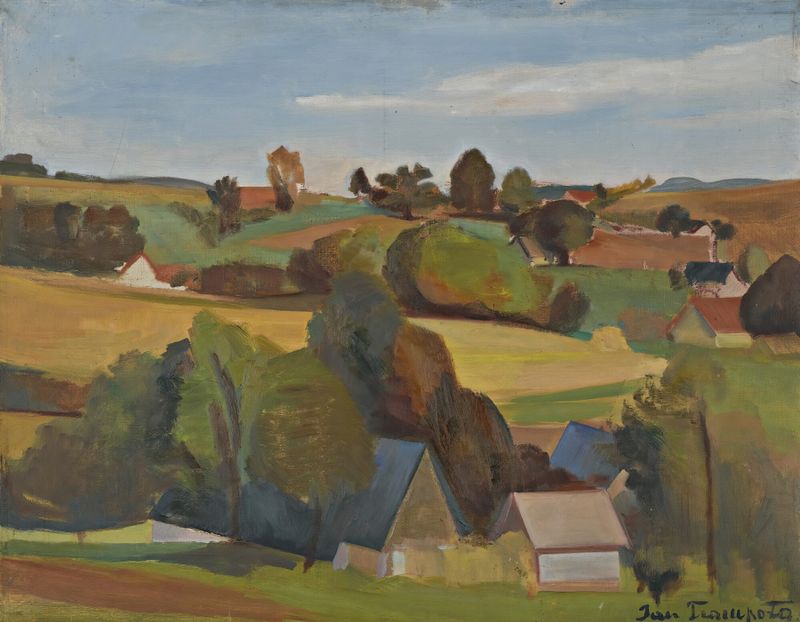
What secret hides in the quiet of the canvas? The stillness of Olsany invites us to peer deeper, to unearth the reflections that whisper among the shades of its colors. Look to the center, where a tranquil pond mirrors the soft hues of a twilight sky, inviting a sense of serenity. The artist’s brushstrokes create a delicate interplay between water and land, imbuing the surface with a shimmering texture that captures the fleeting nature of light. Soft greens and muted blues blend seamlessly, while bold strokes of orange punctuate the horizon, evoking a sense of warmth against the coolness of the water.
Each element guides the eye toward the gentle caress of nature, culminating in a composition that feels both expansive and intimate. Beneath this peaceful visage lies a tension that speaks to the emotional landscape of the time. The contrasting shades of light and dark suggest an underlying narrative—perhaps a moment of contemplation amidst the chaos of the world outside. The reflections in the water hint at duality; they evoke the fragility of life and the depth of thought hidden beneath the serene surface.
This delicate balance prompts viewers to consider their own reflections, both in the artwork and in life. Jan Trampota painted Olsany in 1916, during a tumultuous period marked by World War I. Living in Europe, he witnessed the profound upheaval and transformation of society. This artwork emerged from a time when artists sought solace in nature, creating works that encapsulated both personal introspection and broader existential themes.
As Trampota navigated his artistic journey, Olsany stands as a testament to his response to the world around him, blending tranquility with an echo of the era's unrest.