Étude pour le Cercle de l’île de Puteaux — History & Facts
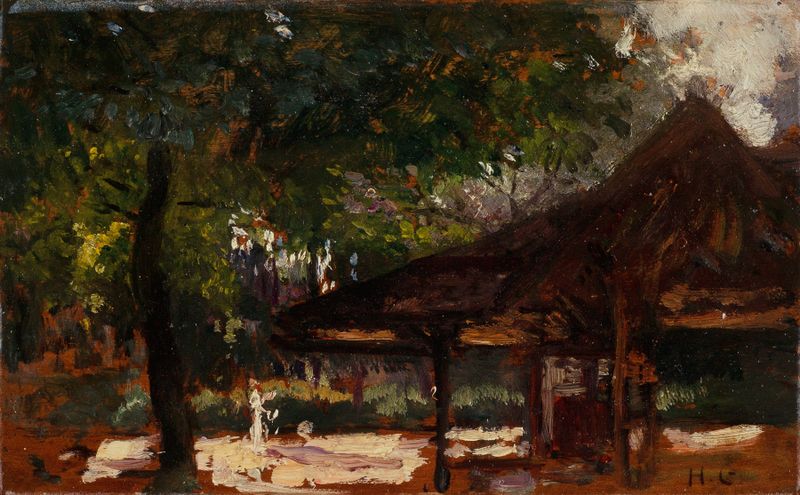
Can paint confess what words never could? In Étude pour le Cercle de l’île de Puteaux, Henri Gervex captures an ineffable sense of awe, inviting the viewer to contemplate the sublime convergence of nature and artistry. Focus on the central circle of figures, where light embraces the vibrant palette of blues and greens. The meticulous brushwork creates a dynamic interplay between movement and stillness, guiding the eye around the composition like a spiral dance. Notice how the sunlight filters through the trees, casting dappled shadows that accentuate the figures' soft contours.
This technique unveils the delicate balance between the harmony of the scene and the emotional undercurrents that pulse beneath its surface. Hidden within this idyllic setting are tensions that speak to the fragility of human connections. The serene poses of the figures contrast with their seemingly detached gazes, hinting at an unspoken longing or yearning. Moreover, the circular formation suggests unity while simultaneously evoking a sense of isolation, as if each figure is lost in their own world amidst the beauty of nature.
This dichotomy prompts contemplation of the human experience, where moments of joy and solitude often coexist. In 1907, Gervex was immersed in the vibrant artistic milieu of Paris, a city alive with the burgeoning movements of Impressionism and Post-Impressionism. At this time, he was honing his style, blending traditional techniques with emerging modern sensibilities. This painting emerged from a period of personal reflection for the artist as he navigated the shifting landscapes of both his own life and the art world, capturing not only a scene but also the essence of a fleeting moment in time.