
Two Gulls and Cliffs — History & Facts
What legacy do we leave behind when the natural world becomes our canvas? In the stillness of Two Gulls and Cliffs, the answers quietly unfold. Focus first on the gentle arch of the cliffs, their earthy tones juxtaposed against the bright, almost ethereal blues of the sky. The gulls, painted with delicate strokes, seem to float above the craggy coastline, their presence lending life to the serene yet rugged landscape. Notice how light bathes the scene, creating soft shadows and inviting an almost meditative quality that draws the viewer’s gaze deeper into the horizon. Beneath the surface, the painting contrasts freedom and confinement.
The gulls, symbols of liberty, soar effortlessly amidst the looming cliffs, which stand as steadfast guardians of the shore. This dichotomy evokes a deeper reflection on nature’s duality: the beauty of unshackled flight shadowed by the permanence of the earth beneath. The artist’s choice of colors—soft pastels infused with muted tones—encourages a contemplation on transience and endurance. During the years from 1913 to 1921, Eilshemius was navigating personal upheavals and the shifting tides of the art world, where modernism was beginning to take root.
Living in New Jersey, he was influenced by both the local landscapes and the emerging avant-garde movements. In this period of introspection and experimentation, he crafted Two Gulls and Cliffs, capturing the tension between the fleeting moments of life and their lasting impact.
More Artworks by Louis Michel Eilshemius
Browse all →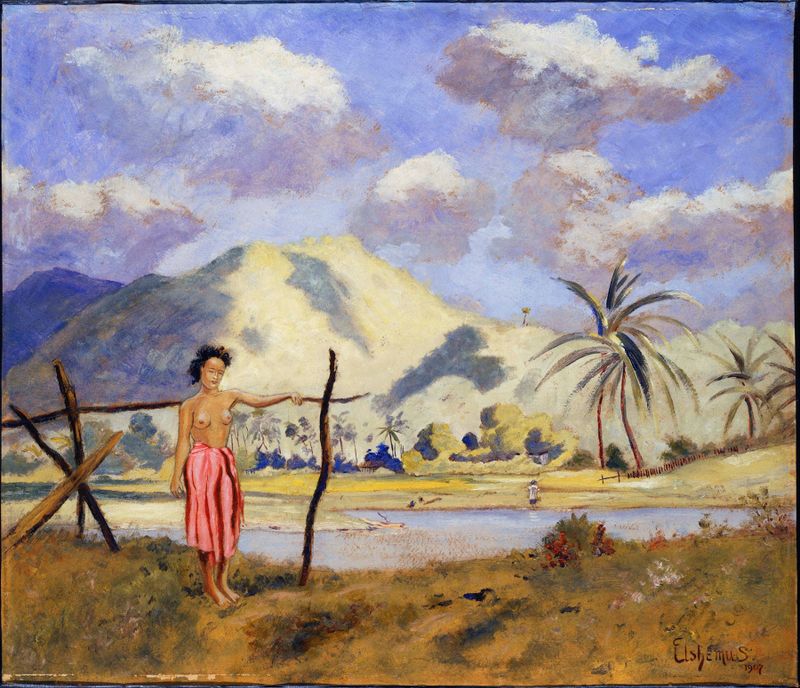
Samoa
Louis Michel Eilshemius
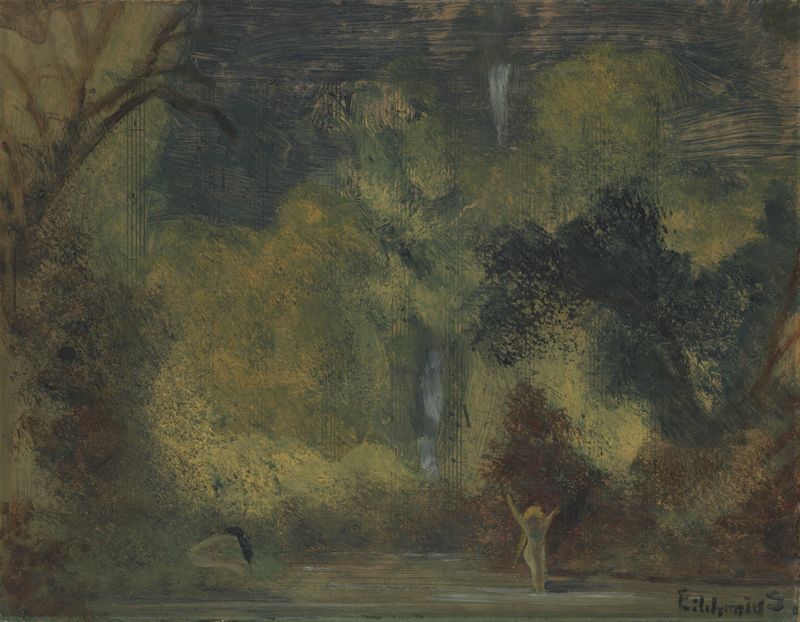
The Pool
Louis Michel Eilshemius

Overhanging Branches
Louis Michel Eilshemius

Fifty-Seventh Street
Louis Michel Eilshemius

Approaching Storm
Louis Michel Eilshemius
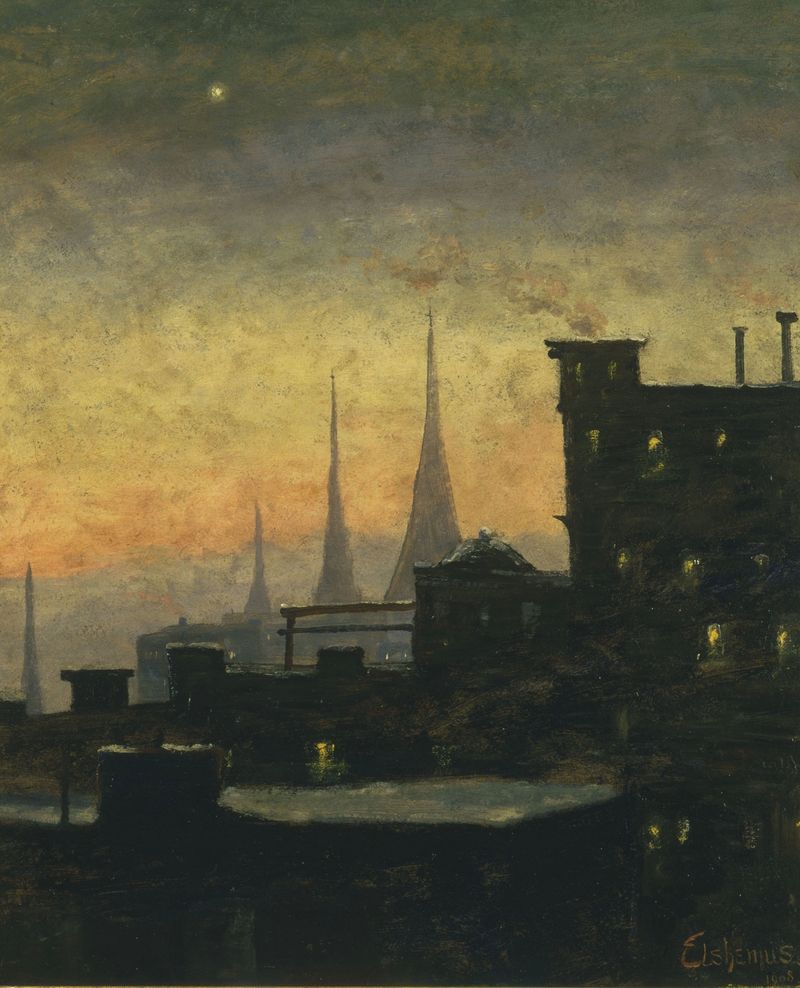
New York Roof Tops
Louis Michel Eilshemius
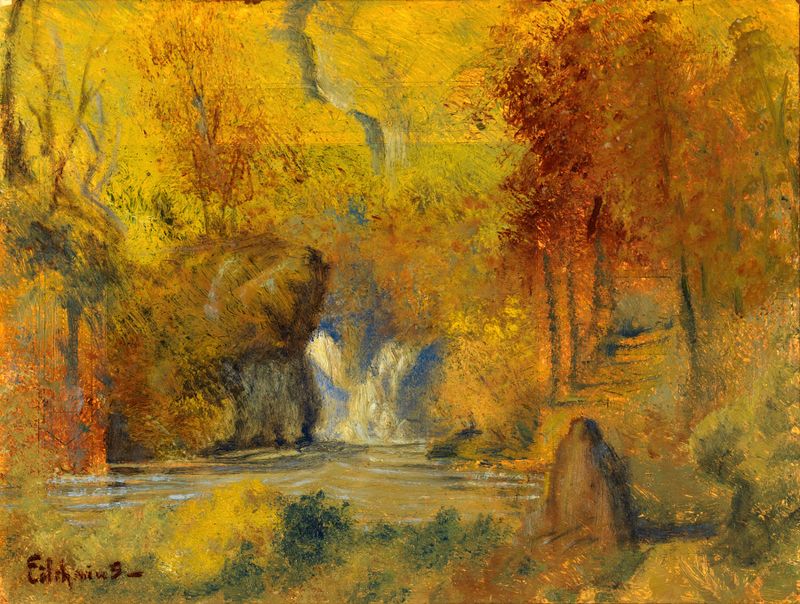
Autumn Landscape
Louis Michel Eilshemius

Sunset with Man Standing on Shore
Louis Michel Eilshemius

New York at Night
Louis Michel Eilshemius

Delaware Water Gap Village
Louis Michel Eilshemius





