
Uitreiking van het Lombokkruis door Koningin Wilhelmina op het Malieveld in Den Haag, 6 juli 1895 — History & Facts
Where does light end, and longing begin? In Mari ten Kate's Uitreiking van het Lombokkruis, the boundary between duty and desire appears perilously thin, captivating the viewer with its intricate narrative. Focus on the central figure of Queen Wilhelmina, adorned in regal attire, her hand poised gracefully as she presents the Lombok Cross. The light cascades from above, illuminating her face with a celestial glow, while shadows cloak the onlookers, casting them into the depths of reverence and anticipation. The composition draws the eye along the diagonal lines formed by the crowd, creating a palpable tension — a collective breath held in unison. As you explore the canvas, consider the emotional weight of the scene: the juxtaposition of royal authority and the humility of the recipients speaks to the complex relationship between power and sacrifice.
The expressions on the faces of the awarded are a blend of pride and humility, revealing the duality of honor and obligation. The lush greens and vibrant garments contrast starkly with the muted earth tones of the spectators, highlighting the divide between the exalted and the common. Ten Kate painted this significant work in 1895, during a period of national pride in the Netherlands. Living in The Hague, he was immersed in the political and social currents of the time, as colonial endeavors stirred both fascination and controversy.
The painting embodies the complexities of monarchy in a changing world, capturing a moment when history intertwined with the personal aspirations of a nation.
More Artworks by Mari ten Kate
Browse all →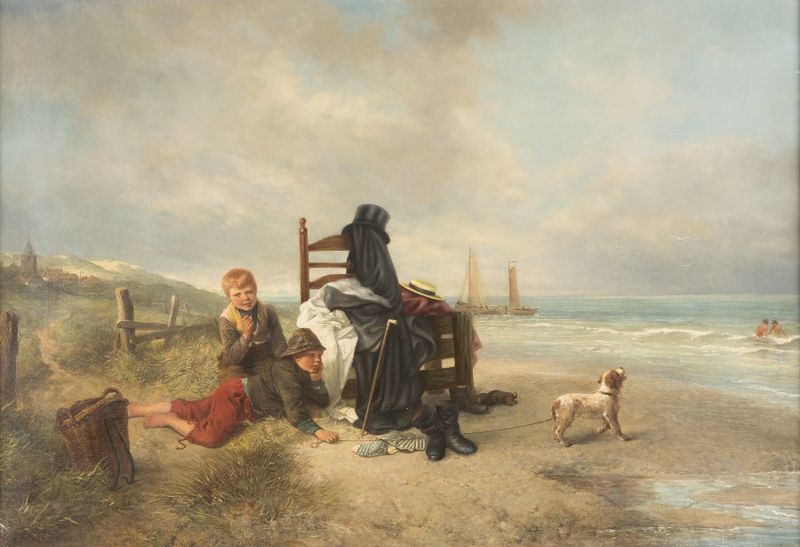
More Historical Art
Browse all →
The Night Watch Militia Company of District II under the Command of Captain Frans Banninck Cocq
Rembrandt van Rijn
Lincoln Memorial
Henry Bacon
The Third of May 1808
Francisco de Goya

Isaac and Rebecca, Known as ‘The Jewish Bride’
Rembrandt van Rijn
The Charge of the Mamelukes (1814)
Francisco de Goya

De vier ruiters van de apocalyps
Albrecht Dürer