Unterirdisches Gewölbe mit Wachposten — History & Facts
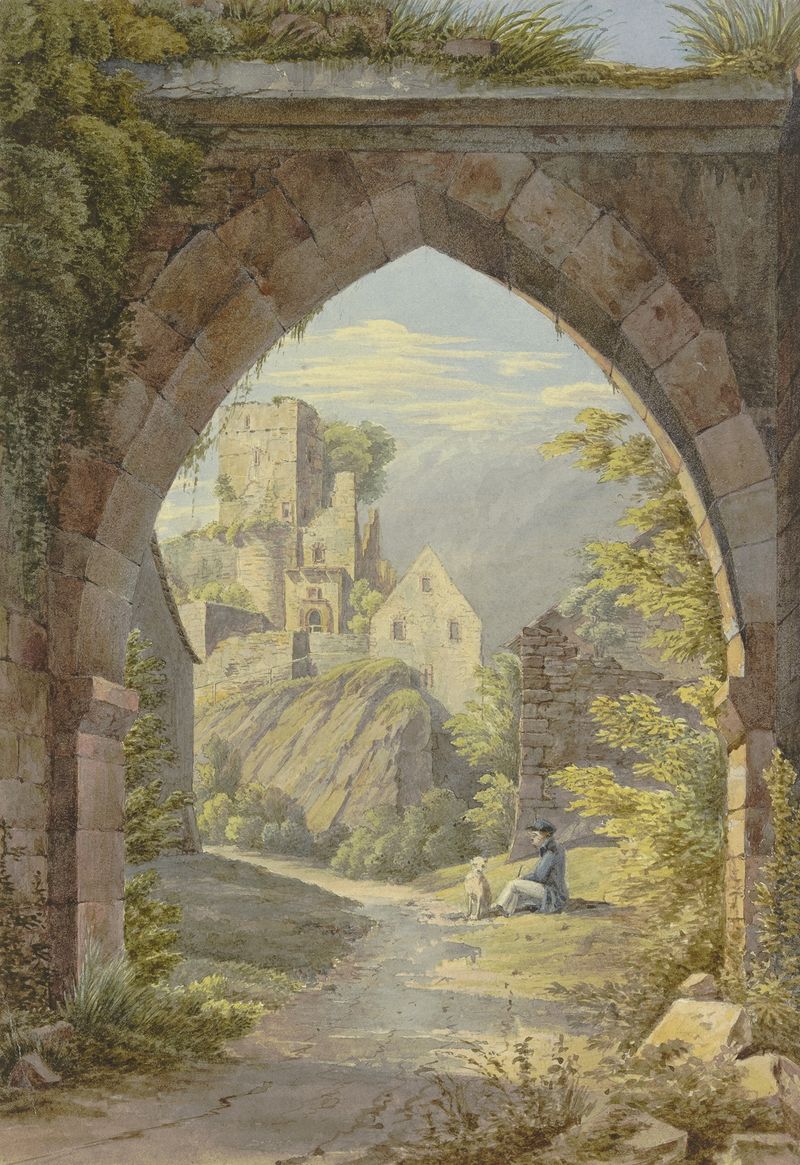
Could a single brushstroke hold eternity? In Unterirdisches Gewölbe mit Wachposten, fragility intertwines with strength, inviting the viewer to contemplate the delicate balance between existence and decay. Focus on the stark contrasts that define the composition. Look to the center where shadows loom, enveloping figures in an eerie embrace. The muted palette of grays and browns creates a somber atmosphere, while sharp, angular lines suggest tension.
Notice how the light, a mere whisper against the darkness, highlights the watchman’s resolute posture, juxtaposed against the ethereal, almost ghostly presence of the arching vault above. The painting whispers of solitude within a cavernous expanse, where each figure appears both anchored and unmoored, embodying the weight of their duty. The watchman, a sentinel amidst the ruins, symbolizes vigilance yet is rendered vulnerable by the overwhelming architecture surrounding him. The interplay of light and shadow not only enhances the emotional depth of the scene but also hints at the impermanence of their world, a fragility echoed in the decay that encroaches upon the stark solidity of stone. Georg Von Krieg painted this work during a turbulent period in the late 19th century, likely in a moment of introspection while wrestling with the socio-political upheavals of Europe.
As the art world transitioned from Romanticism to a more modern approach, his exploration of haunting spaces and emotional landscapes captured the zeitgeist, reflecting both personal and collective anxieties of the age.