Uprooted Tree (Windthrow) — History & Facts
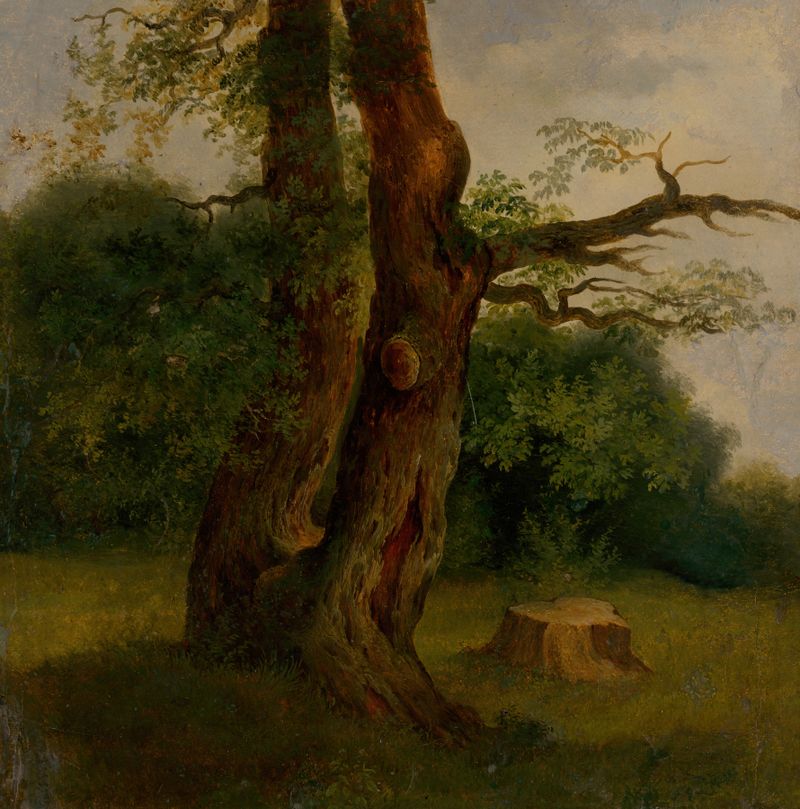
In the stillness of an uprooted tree, we encounter a poignant reflection on fragility and resilience. Look to the central focus of the composition, where the massive, gnarled roots twist skyward, stark against the muted earth. The artist employs a palette of earthy browns and soft greens, capturing the rawness of nature’s aftermath. Notice how the light filters through the branches of nearby trees, casting gentle shadows that dance upon the uprooted trunk, revealing the intricate texture of the wood.
Each brushstroke whispers the story of a moment frozen in time, inviting the viewer to contemplate the silence that follows such upheaval. Within this scene lies a tension between destruction and rebirth. The tree, once a towering symbol of strength, now lies vulnerable, exposing its intricate network of roots that grasp desperately at the soil. This stark contrast evokes feelings of loss but also of potential regeneration, as nature, in its relentless cycle, prepares for renewal.
The surrounding foliage, lush yet encroaching, hints at the inevitable return of life, even amidst the chaos of disruption. Jozef Božetech Klemens painted Uprooted Tree between 1860 and 1870, a time when the art world was evolving with the rise of realism, capturing authentic representations of nature. During this period in his life, Klemens focused on landscape painting, navigating the complexities of both personal and artistic growth. His work reflects an era increasingly drawn to the delicate interplay between humanity and the natural world.