Veduta Di Napoli Da Santa Lucia — History & Facts
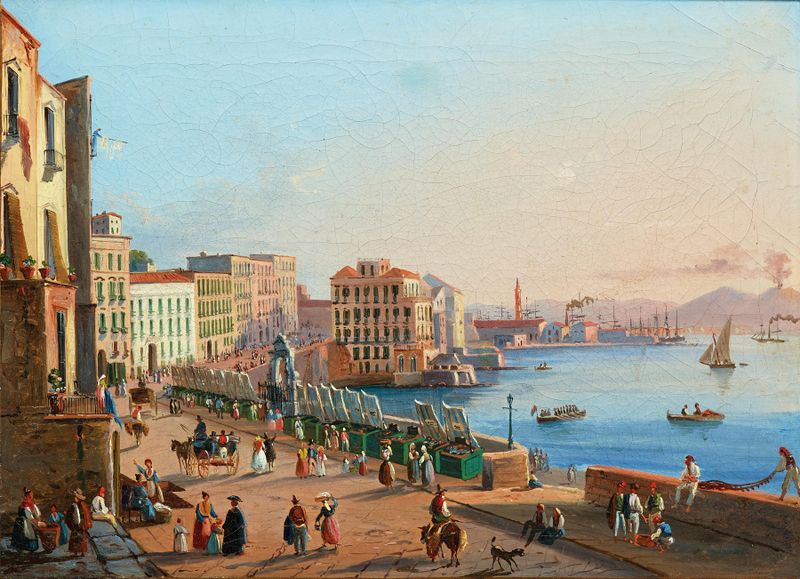
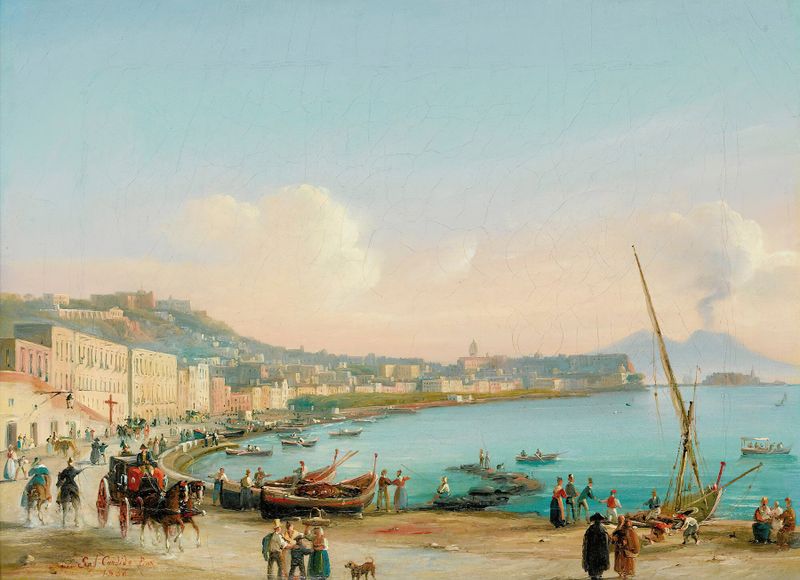
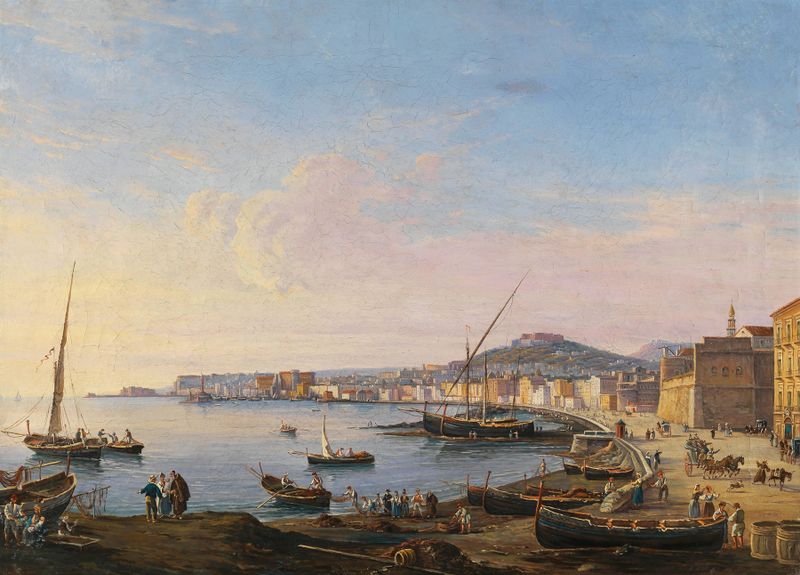
Can beauty exist without sorrow? In Veduta Di Napoli Da Santa Lucia, the serene landscape whispers a poignant truth, capturing the delicate balance between joy and loss. Look to the right at the sprawling expanse of the Bay of Naples, where the cobalt waters stretch toward the horizon, kissed by the soft glow of the descending sun. Notice how the light dances upon the rippling waves, illuminating the distant silhouettes of Vesuvius. The artist’s meticulous brushwork renders the buildings lining the shore with a tender affection, each structure a testament to the lives lived within.
Warm earth tones mingle with cool blues, creating a harmonious palette that draws the viewer into this idyllic scene. Yet, beneath the surface beauty lies an emotional undercurrent. The tranquil waters and picturesque skyline serve as a facade, concealing the volcanic tumult of Mount Vesuvius, a reminder of nature’s fierce power and the fragility of existence. The few scattered boats seem vulnerable against the vastness, echoing the isolation felt by those mourning loss while surrounded by beauty.
Here, grief intertwines with serenity, inviting contemplation on how joy can coexist with sorrow. In 1850, Salvatore Candido painted this view during a period of social upheaval in Italy, as the country grappled with political change and the aftermath of revolution. Working in Naples, he was influenced by a romantic approach to landscape painting, aiming to evoke a sense of place that resonated emotionally with viewers. This work reflects not only the stunning vistas of his homeland but also captures the emotional complexities of life during a time of transition.