View of the bay of Naples — History & Facts
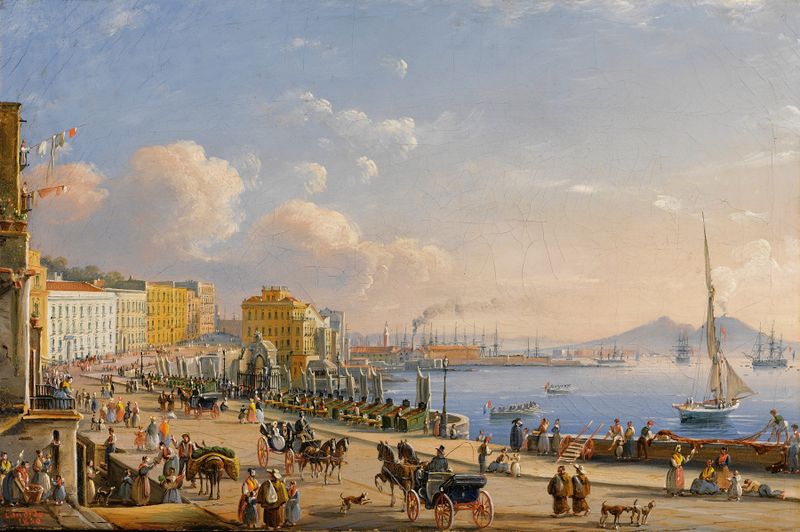
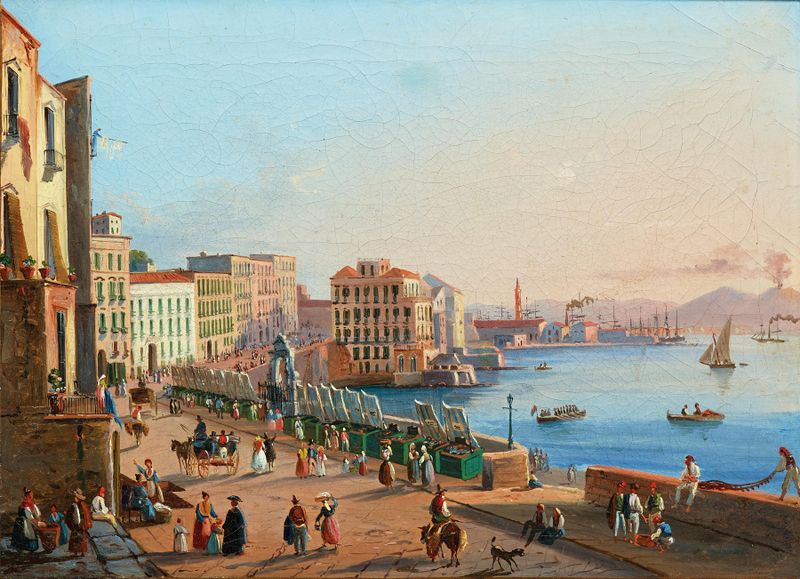
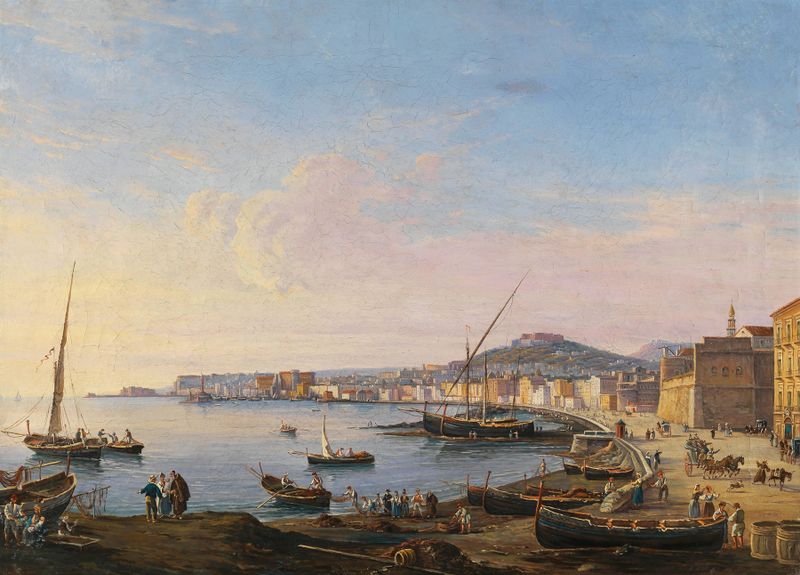
When did color learn to lie? Through the brushstrokes of Salvatore Candido, we find ourselves questioning the very nature of truth and illusion in art. Focus first on the vibrant blues of the sea. Look closely at the interplay of light and shadow as it dances across the water's surface, inviting the viewer into a world where reality blurs with fantasy. The pastel hues of the sky gently cradle the landscape, while the distant silhouettes of hills rise majestically, creating an ethereal backdrop that captivates the imagination.
Each color seems to breathe, stirring a sense of awe, as if the artist has forged a gateway to a realm untouched by time. Beneath this picturesque facade lies a deeper narrative. The softness of the clouds contrasts with the ruggedness of the land, revealing an emotional tension between serenity and turmoil. One can sense the weight of history in the landscape; the bay, a witness to centuries of human endeavor, whispers stories of both triumph and struggle.
The delicate balance of nature and civilization reflects the complex relationship between humanity and its environment, prompting introspection. In 1836, Candido captured this enchanting view during a period marked by the Romantic movement, which sought to emphasize emotion and individual experience over the strictures of neoclassicism. Living in Naples, a city rich in history and culture, he painted amidst a vibrant artistic community eager to explore new expressions. This work emerged at a time when the beauty of the natural world was being celebrated, as artists sought to document landscapes with both fidelity and imagination.