Venetian Scene — History & Facts
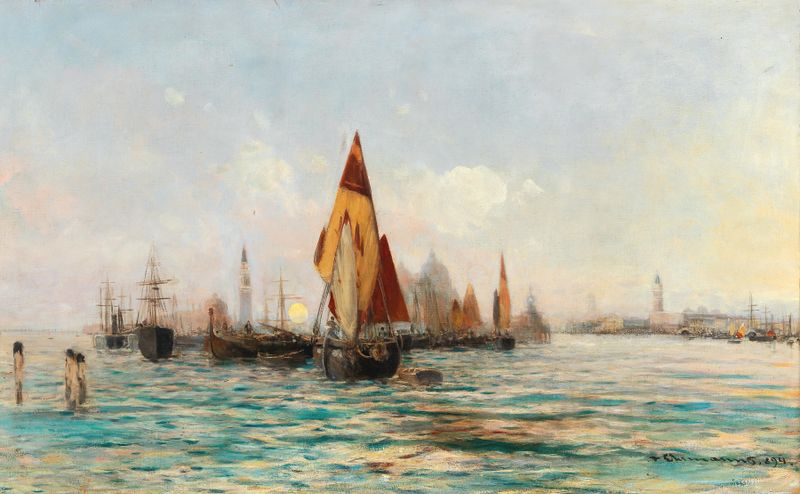
It beckons us to pause, to breathe, and to connect with the essence of our existence amidst the relentless tide of life. Capturing a moment steeped in rebirth and rejuvenation, this artwork invites viewers to explore the beauty that emerges from stillness. Look to the right at the delicate reflections shimmering on the water’s surface, where vibrant hues of blue and gold dance in harmony. The brushwork is meticulous yet fluid, evoking a sense of movement that belies the stillness of the scene.
Notice how the light filters through the arches of the buildings, illuminating the intricate details of their facades and casting soft shadows that enhance the three-dimensionality of the composition. The gentle interplay between color and form reveals the artist's intention to create a vivid tableau of life in Venice, a city where every corner holds a story. As you delve deeper, consider the interplay of tranquility and activity depicted in the painting. While the water appears calm, it serves as a mirror reflecting both the serenity of the architecture and the vibrant energy of the people moving about their daily lives.
The juxtaposition of static and dynamic elements symbolizes the cyclical nature of existence—how life continuously evolves, yet often finds solace in moments of stillness. These layers of meaning resonate with the viewer on a personal level, urging contemplation of their own paths of rebirth. During the time this piece was created, the artist was part of a vibrant artistic community, influenced by the Romantic movement that celebrated nature, emotion, and individual experience. Living in a period where the world was shifting towards modernity, this work embodies a bridge between the old and new, reflecting both personal and societal transformations.
Though the exact date remains unknown, the distinctive style and themes mark a significant contribution to the era's exploration of urban life and its hidden depths.