View of Klosterneuburg — History & Facts
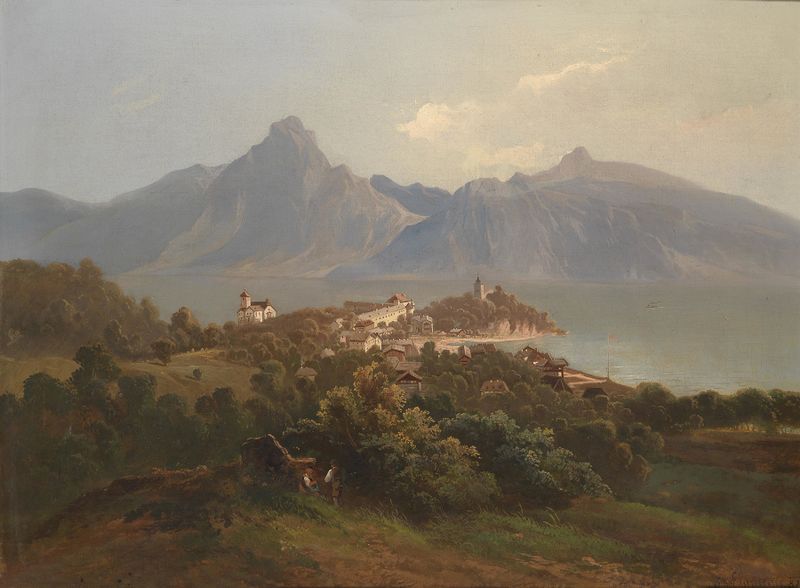
What if silence could speak through light? In View of Klosterneuburg, a serene landscape captures the essence of nostalgia, inviting viewers to explore the depths of memory embedded within nature's embrace. Look to the foreground where lush greenery unfurls, inviting you into the scene. Notice how the delicate strokes of verdant hues blend seamlessly, creating a sense of tranquility. The composition draws your gaze toward the distant monastery, its stately architecture standing resilient against a backdrop of soft blues and grays.
The subtle play of light dances across the canvas, illuminating the contours of the hills and enhancing the meditative quality of the space. As you immerse yourself in the details, consider the contrast between the vibrant life of the foreground and the stillness of the monastery. This juxtaposition evokes a tension between the passage of time and the permanence of memory. The artist’s careful rendering of light suggests a fleeting moment, urging the viewer to reflect on what lies beyond the canvas—memories that ebb and flow like the distant river, forever shaping our sense of place. Created during an unspecified moment in Theodor Freiherr von Ehrmanns' career, View of Klosterneuburg embodies the artist's intimate connection to the Austrian landscape.
Little is recorded about his life during this period, yet the painting mirrors a time of burgeoning Romanticism in art, where the exploration of emotional landscapes took precedence. The work, enveloped in the tranquility of the natural world, serves as a testament to the peaceful nostalgia that characterized an era of profound reflection.