
Venice, a Moonlit Night in the Bacino — History & Facts
Who listens when art speaks of silence? In Venice, a Moonlit Night in the Bacino, the masterful brushstrokes whisper of a timeless legacy, where echoes of the past linger in the still waters. Look to the left at the shimmering reflections on the canal, where moonlight dances upon the surface, casting an ethereal glow. The gondolas, silhouetted against the luminous backdrop, draw your eye inward, leading you through the soft blues and silvers that envelop this nocturnal scene. Notice how the soft gradient of light transcends the boundaries of the sky and the water, creating a harmonious connection that invites contemplation. The painting captures not just a moment but a profound sense of tranquility, where the interplay of light and shadow suggests the passage of time and the weight of memories.
The serene water represents a mirror to the soul, while the distant architecture stands both proud and melancholic, evoking a longing for the splendor of Venice’s past. This juxtaposition reveals the artist's intention to convey the beauty of solitude within a bustling world, a reflection on both the serenity and the fleeting nature of existence. Completed in 1894, during a period of great artistic transition, the artist found inspiration in the enchanting vistas of Venice. Living in a time when Impressionism was reshaping the boundaries of art, he sought to capture the beauty of nocturnal landscapes, reflecting the shift toward personal interpretation of light and atmosphere.
In this work, Kaufmann immortalizes an intimate moment, painting not just a scene but an experience that resonates through generations.
More Artworks by Karl Kaufmann
Browse all →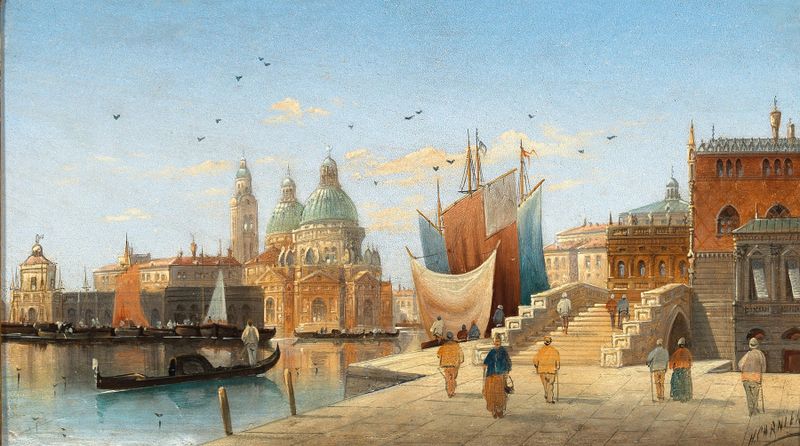
Venice, a View of Santa Maria della Salute
Karl Kaufmann
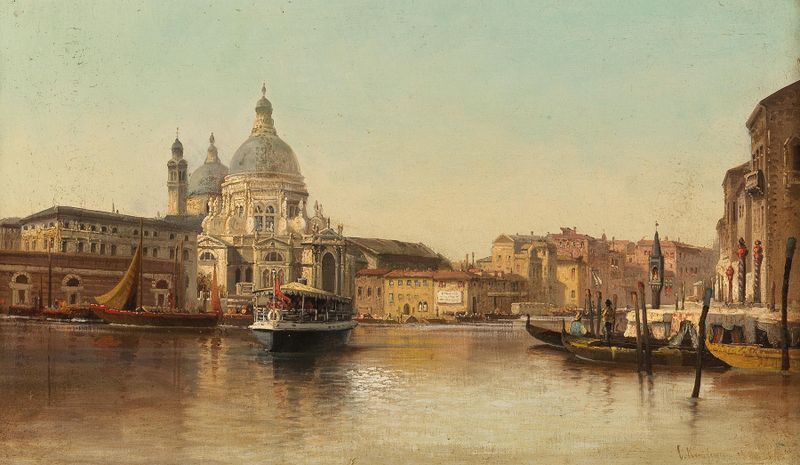
Venedig, Kanal Grande mit Blick auf Santa Maria della Salute
Karl Kaufmann
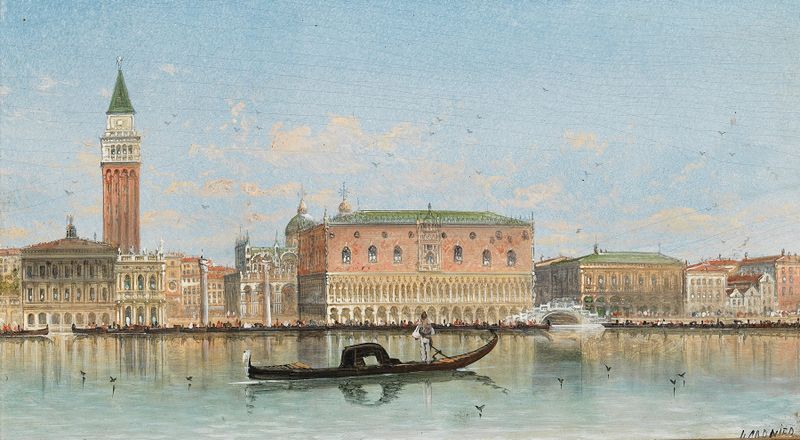
Venice, a View of St Mark’s Colum
Karl Kaufmann

Venedig Mit Santa Maria Della Salute
Karl Kaufmann
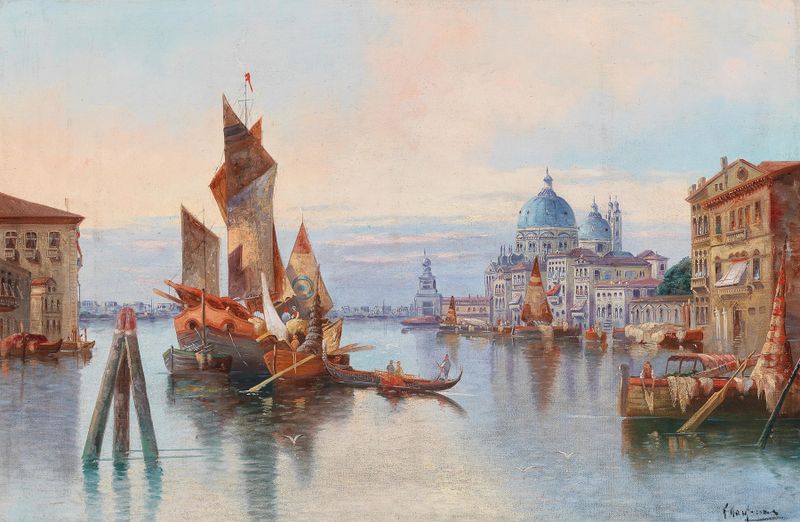
Venice, A View of Santa Maria della Salute
Karl Kaufmann
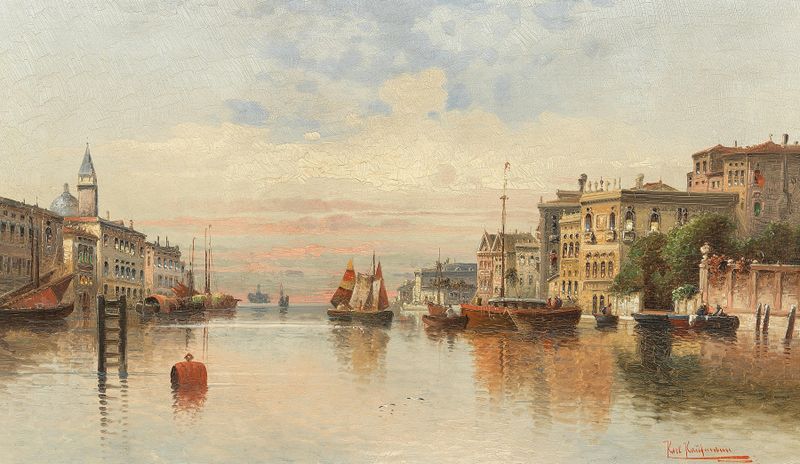
Venice, a View of a Canal
Karl Kaufmann

Fishermen By The Coast
Karl Kaufmann

Venice, Canal Scene
Karl Kaufmann
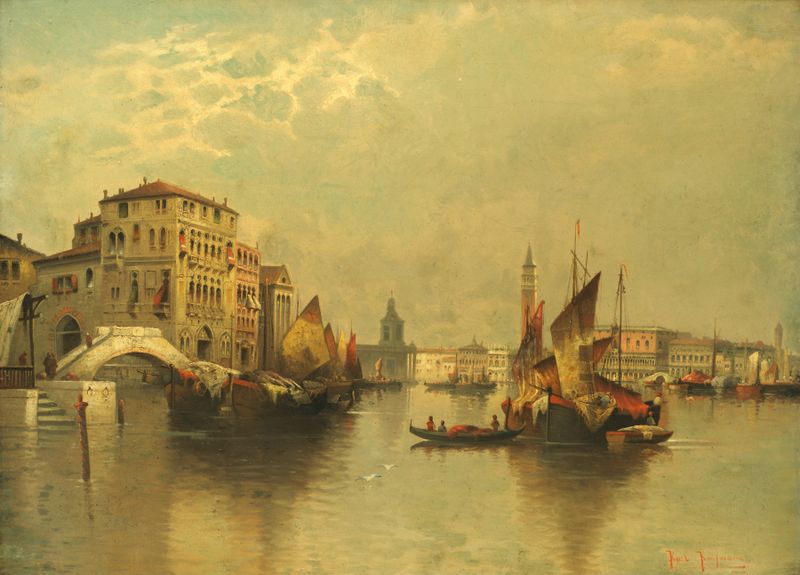
View of Venice
Karl Kaufmann
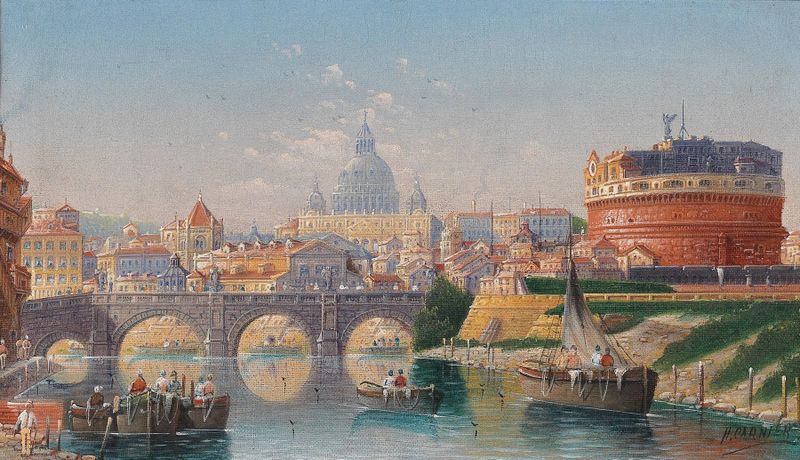
Rome, View Of The Castel Sant’angelo
Karl Kaufmann





