
Venice, Campo Santi Giovanni e Paolo with the Zanipolo Church and the Scuola Grande di San Marco — History & Facts
When did color learn to lie? In Venice, Campo Santi Giovanni e Paolo, the vibrant hues and soft shadows dance together, weaving a tale that both enchants and deceives the viewer. Here, movement transcends the physical, inviting us to question the reality that art presents. Focus on the left, where the warm tones of the Zanipolo Church's façade shimmer under the Venetian sun, casting an alluring glow that beckons you closer. Notice the juxtaposition of the cool blue shadows pooling at the church’s base, suggesting depth and mystery.
As your gaze traverses the canvas, the meticulous brushwork conveys a bustling sense of life, with figures painted in mid-movement, their gestures capturing the timeless rhythm of the square. Delve deeper into the details: the figures, though small, embody the diverse lives that intersect in this space, each one a story of devotion and daily endeavor. The interplay of light and shade does not merely illuminate but also creates a tension between the sacred and the mundane, blurring the lines of the spiritual and the earthly. The dynamic composition draws your eye through the scene, while the looming presence of the Scuola Grande di San Marco stands as a silent witness to the unfolding life below. In 1860, Luigi Querena painted this piece during a period of artistic exploration in Italy, where the vividness of the Romantic style began to merge with emerging Realist trends.
Living in Venice, he found inspiration in the city's rich history, its cultural landmarks, and the complex interplay of life within its streets, reflecting a profound understanding of both place and moment.
More Artworks by Luigi Querena
Browse all →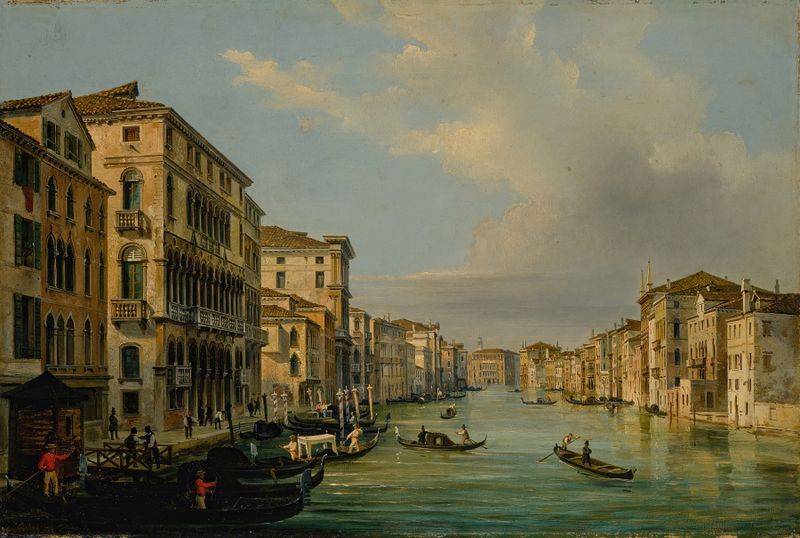
Venice, a view of the Grand Canal
Luigi Querena
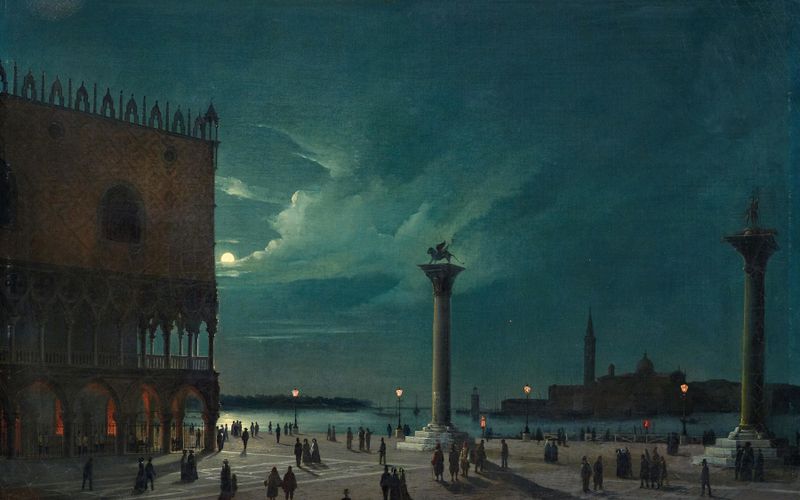
Venice the Piazzetta in the moonlight
Luigi Querena
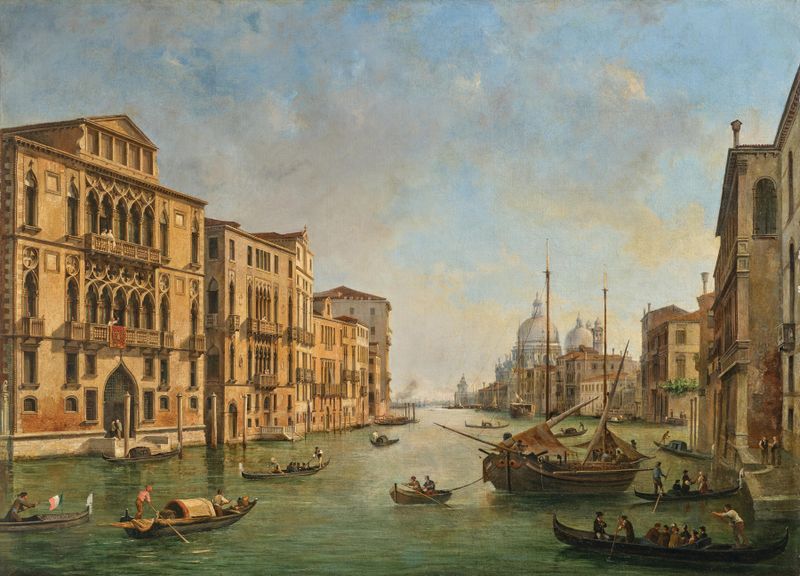
Venice, View of the Grand Canal from Palazzo Cavalli-Franchetti with Santa Maria della Salute in the Distance
Luigi Querena

Gondolas and Boats on the Molo, Looking West Towards Santa Maria Della Salute
Luigi Querena
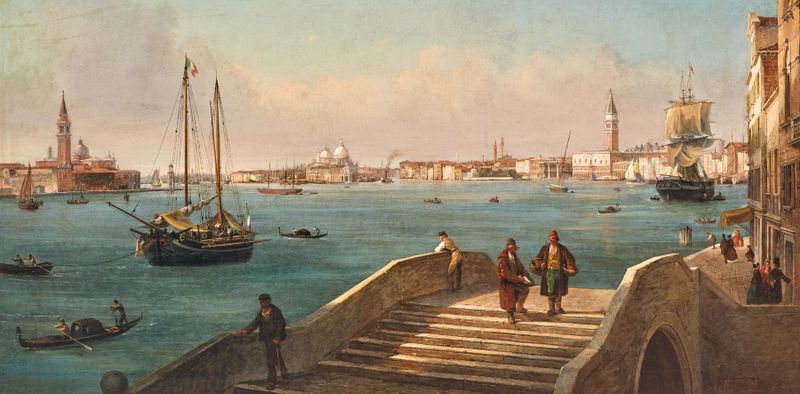
Venice, the Riva degli Schiavoni
Luigi Querena

Venice, the Riva degli Schiavoni
Luigi Querena
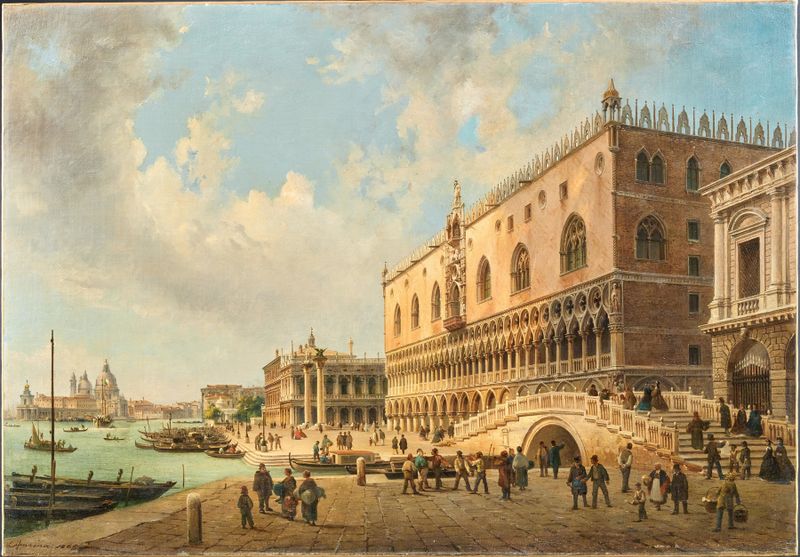
The Doge’s Palace, the Piazzetta and the Biblioteca in Venice, with Santa Maria della Salute beyond
Luigi Querena
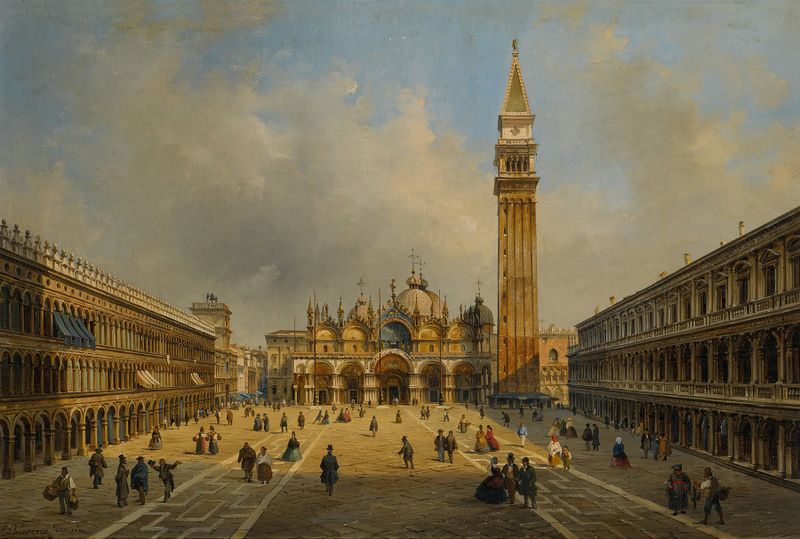
Venice, a view of St. Mark’s Square
Luigi Querena
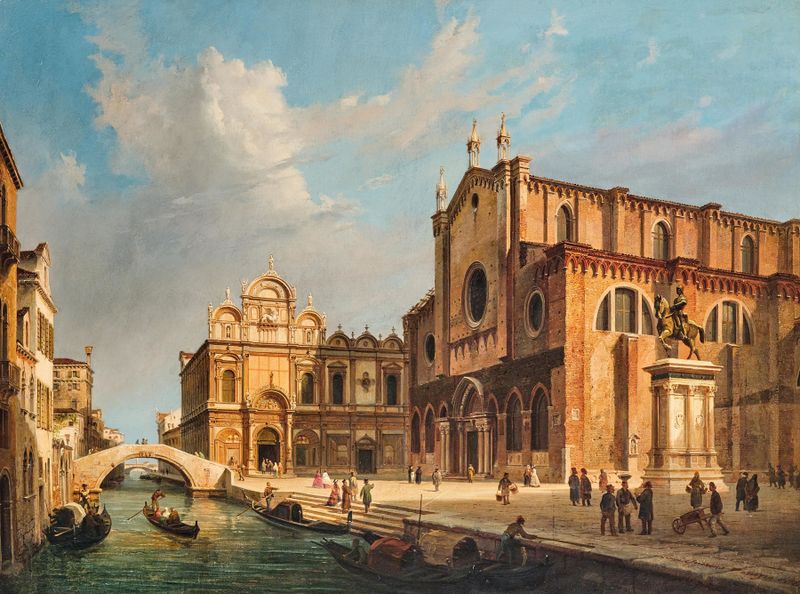
Venice, Campo Santi Giovanni e Paolo
Luigi Querena
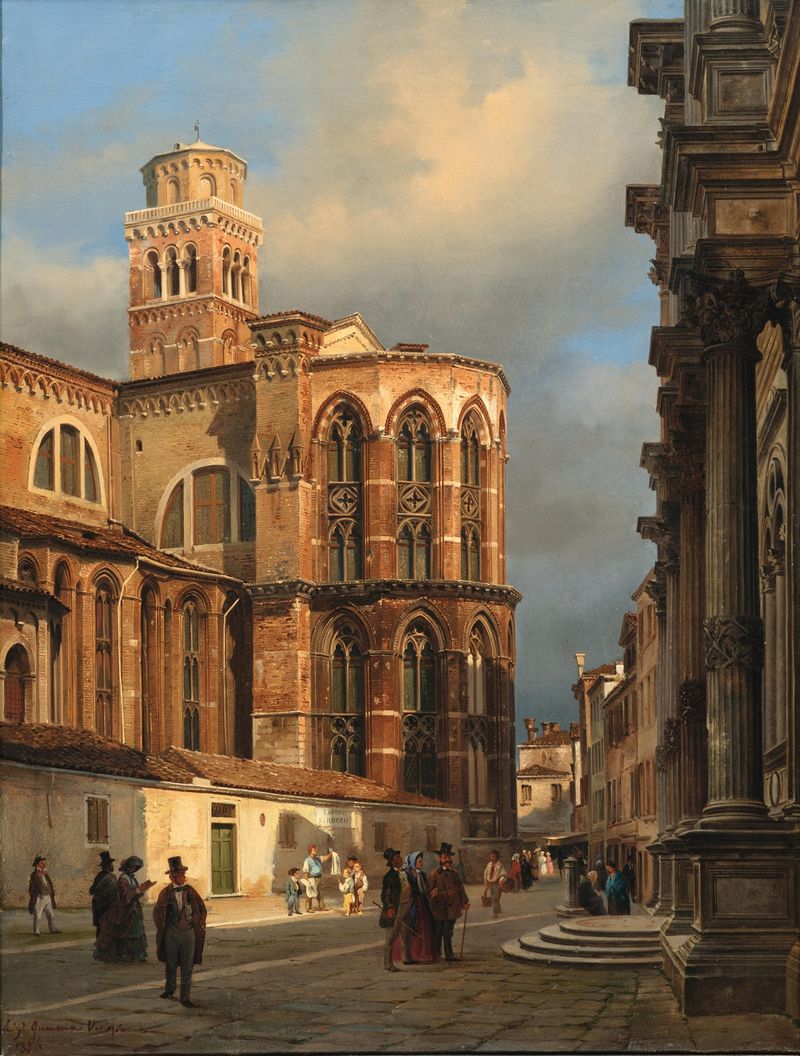
Venice, a View of the Church of San Rocco
Luigi Querena





