Venice, Grand Canal — History & Facts
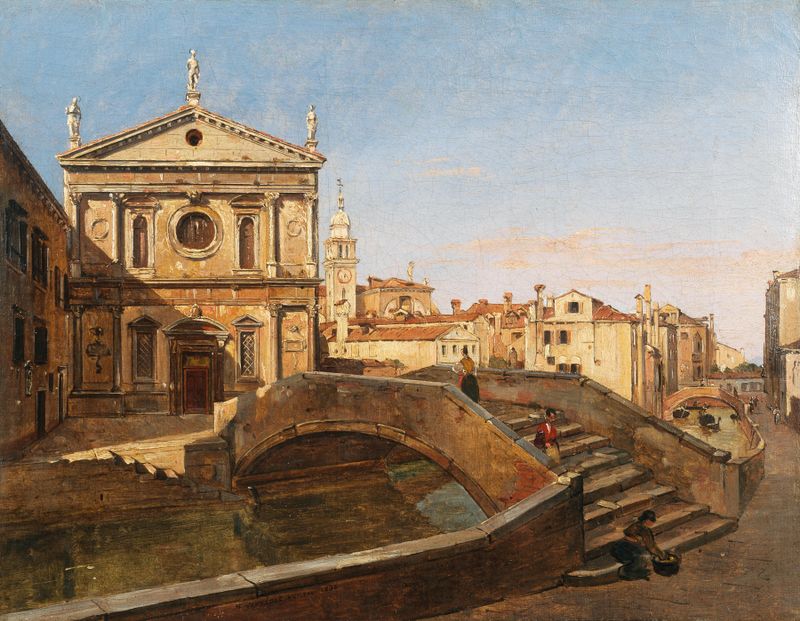
Where does light end, and longing begin? As sunlight dances upon the gentle ripples of the Grand Canal, it reveals an intricate tapestry of beauty and decay, blurring the lines between the two. Look to the left at the shimmering surface of the water, where reflections of weathered facades swirl into the depths. The subtle interplay of warm and cool tones captures the essence of twilight, casting a nostalgic glow that envelops the scene. Notice how Vervloet skillfully employs delicate brushstrokes to accentuate the crumbling edges of the buildings, their faded splendor telling stories of a rich past intermingled with the relentless march of time. Amidst the picturesque elegance, an underlying tension simmers.
The vibrant hues of the sky contrast sharply with the muted earthiness of the structures, emphasizing the fragility of beauty amid decay. These elements evoke a deep sense of longing, as if the artist is holding a mirror to Venice's own relationship with time—its grandeur forever intertwined with its inevitable decline. Each brushstroke hints at a history that lingers in the air, making the viewer ponder what has been lost and what still remains. Created during an unspecified moment in the artist's life, this work exemplifies his keen eye for capturing atmospheric nuances.
Vervloet, influenced by the Romantic movement, sought to portray the emotional landscapes of urban settings, often reflecting the complexities of a world in transition. At this time, Venice was grappling with modernization, making the themes of beauty and decay particularly poignant within the framework of his artistic vision.