
Venice, Rialto bridge at night — History & Facts
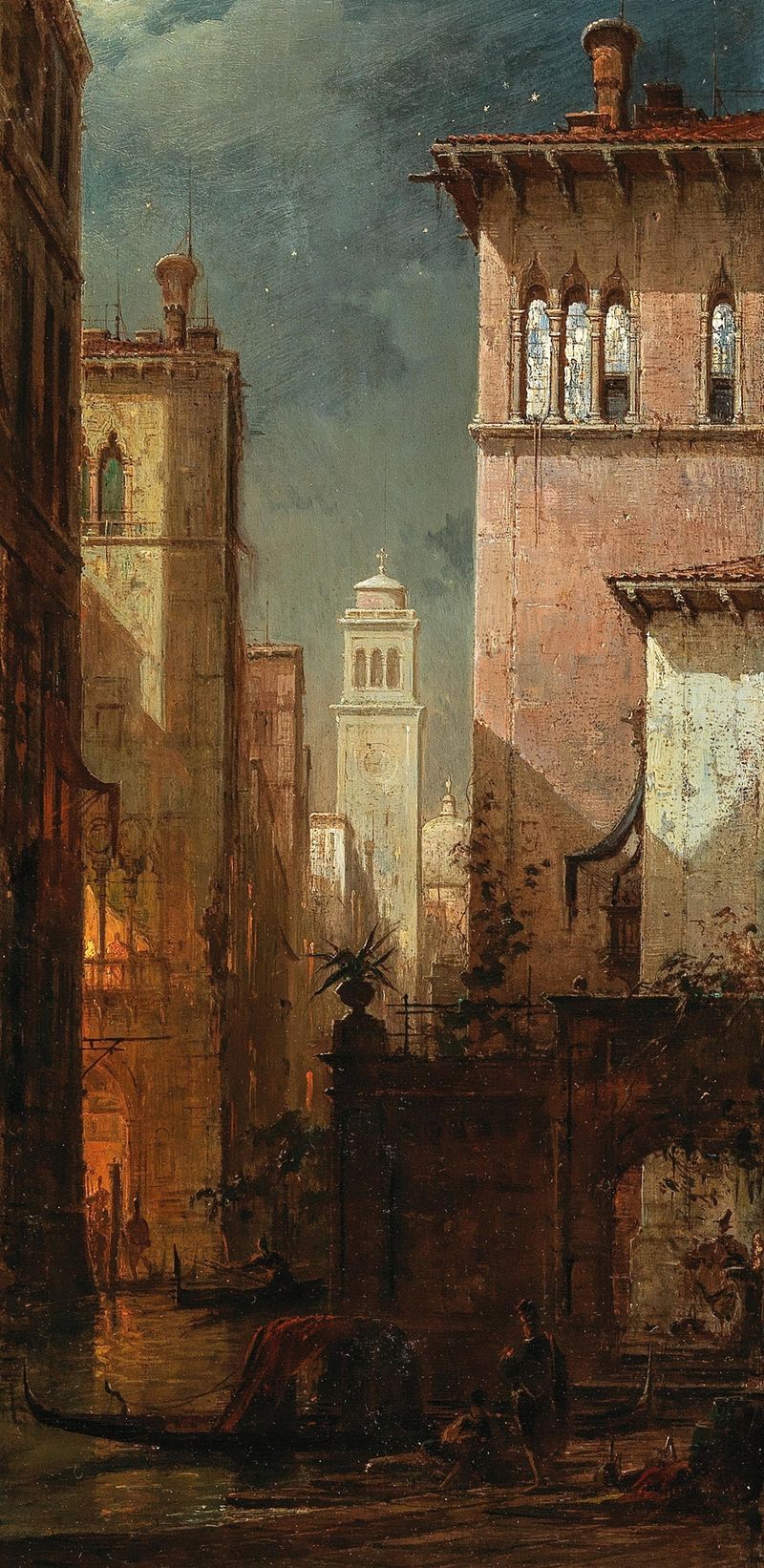
Each brushstroke holds a secret, a whisper of betrayal that lurks beneath the shimmering surface of the night. Focus on the deep blues and silvers that envelop the scene, inviting the viewer to gaze upon the Rialto Bridge. Look to the left where the water’s reflection dances with hints of moonlight, creating a mirror of intrigue. Notice how the arch of the bridge rises, almost like a sentinel watching over the veil of darkness, with figures cloaked in mystery crossing its path.
The soft glow of gaslights punctuates the night, casting long shadows that beckon both wonder and suspicion. Hidden within the tranquil beauty lies an undercurrent of tension. The juxtaposition of the serene canal against the bustling foot traffic above hints at the duality of the scene — a vibrant community thriving amidst the potential for deception. Each figure, shrouded in darkness, carries their own stories that may speak of trust or treachery, blurring the lines between light and shadow.
The calmness of the night belies an anticipation, suggesting that not everything is as it seems beneath the glistening facade of Venice. In 1864, the artist worked in a world increasingly captivated by the interplay of light and emotion, inspired by the changing perceptions of Impressionism. Living in Germany, he sought to capture the essence of urban life, and the Rialto Bridge served as a symbol of both connectivity and the complexities of human relationships. As Mecklenburg painted this nocturnal scene, he reflected not only the charm of Venice but also the intricate layers of trust and betrayal that define our interactions.
More Artworks by Ludwig Mecklenburg
Browse all →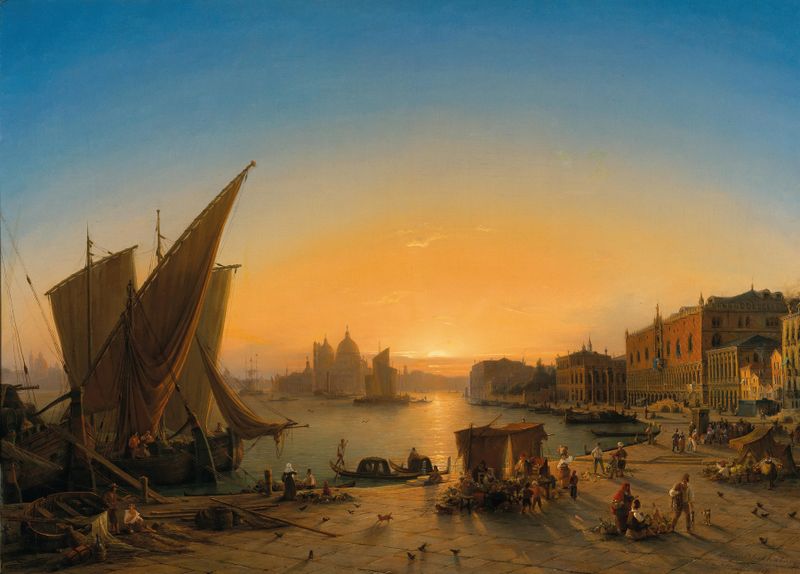
Venice, a View of the Bacino di San Marco from Riva degli Schiavoni, with Palazzo Ducale on the Right, Santa Maria della Salute in the Background
Ludwig Mecklenburg

Blick auf Venedig mit Dogenpalast und Markusturm
Ludwig Mecklenburg
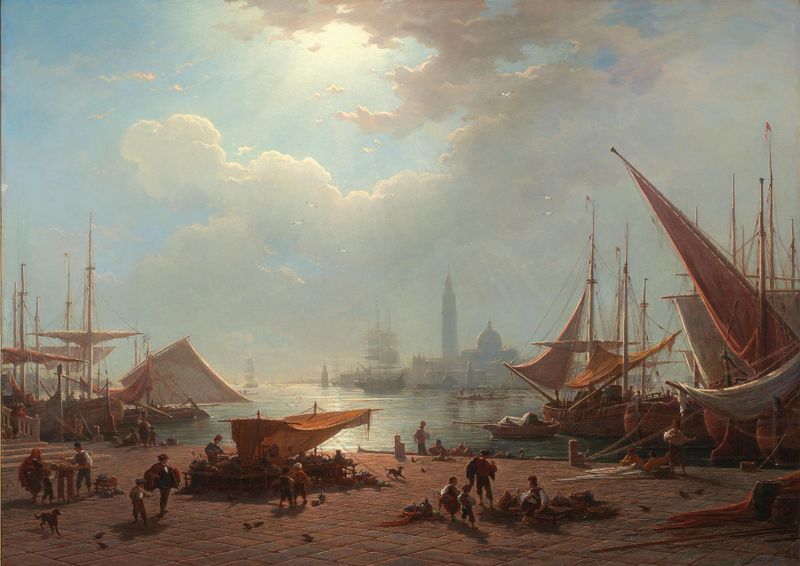
Venice, a View of San Giorgio Maggiore from the Piazzetta
Ludwig Mecklenburg
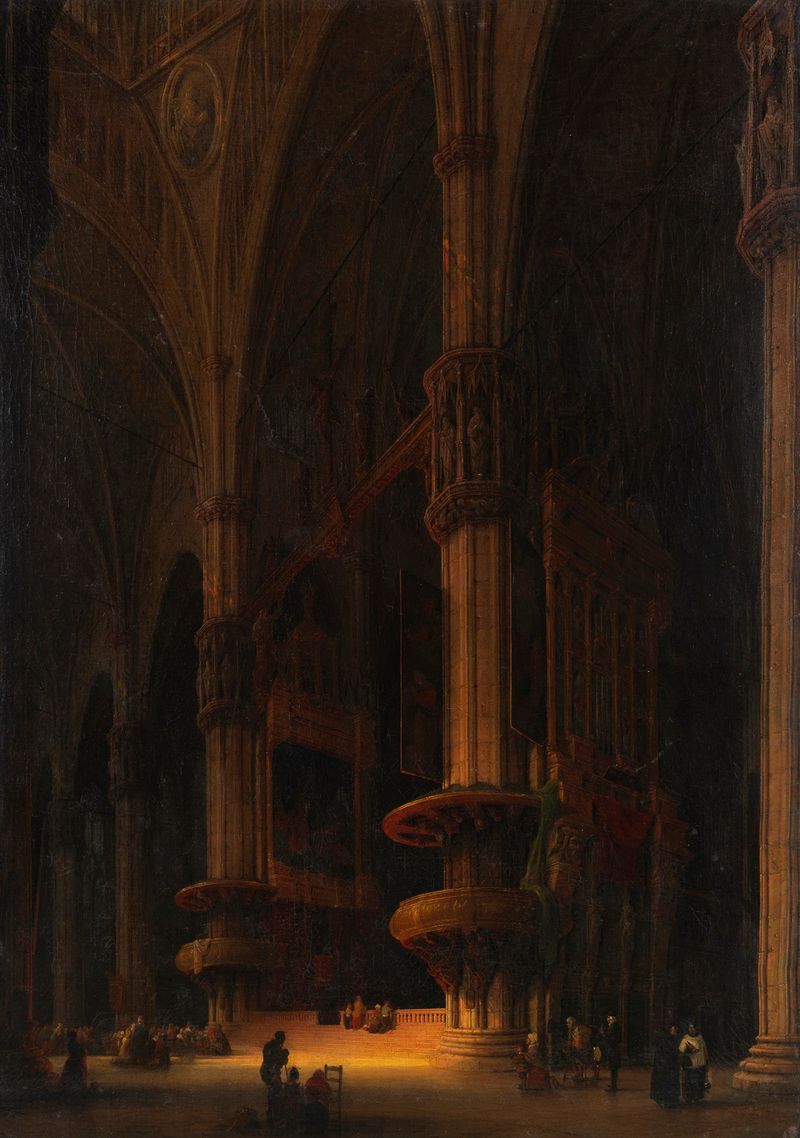
Das Innere des Doms zu Mailand
Ludwig Mecklenburg
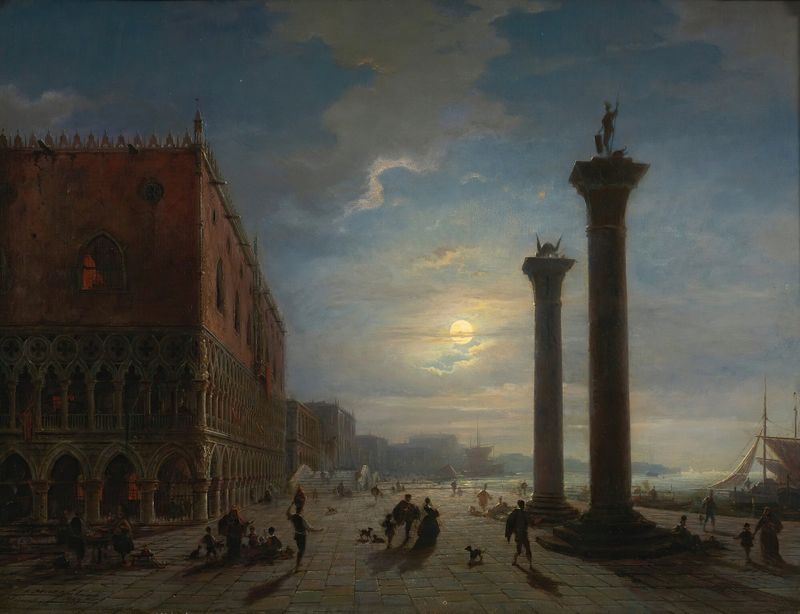
Venice By Moonlight
Ludwig Mecklenburg
Venice, a Canal in the Moonlight
Ludwig Mecklenburg

Venedig im Abendlicht
Ludwig Mecklenburg
More Architecture Art
Browse all →
The statue of Liberty
Frédéric Auguste Bartholdi

View of Houses in Delft, Known as ‘The Little Street’
Johannes Vermeer

View of Houses in Delft, Known as ‘The Little Street’
Johannes Vermeer

The Cathedral in Rouen. The portal, Grey Weather
Claude Monet

The yellow house
Vincent van Gogh

The Church in Auvers-sur-Oise, View from the Chevet
Vincent van Gogh